
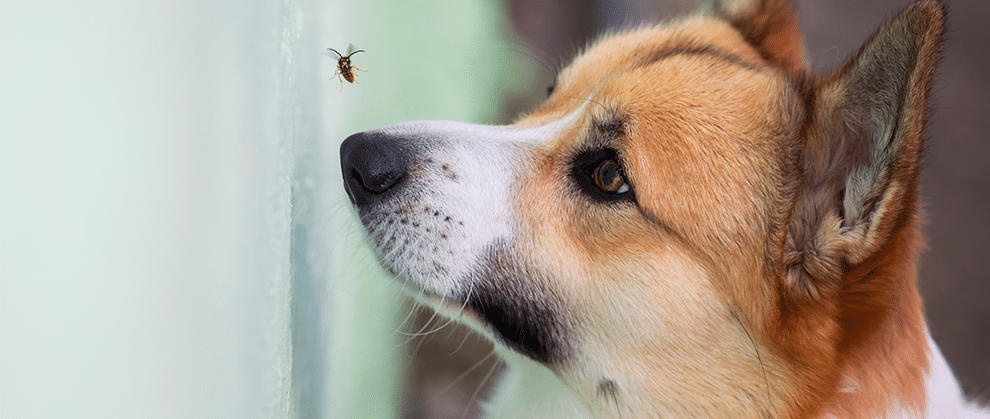
Despite the lack of a consensual definition, anaphylaxis can be described as the acute onset of either an immune-mediated (immunoglobulin E [IgE]-related) or a non-immune-mediated hypersensitivity reaction after allergen reexposure. Multiple drugs, vaccines, foods, encounters with bees and other insects, and the administration of blood products have been reported to induce anaphylaxis.
Clinical Signs
Histamine is the main mediator released during anaphylaxis, but many others have also been described.1-3 Clinical manifestations vary by species: In dogs, signs are often gastrointestinal (e.g., abdominal pain, vomiting, diarrhea) and hepatic (e.g., liver congestion, portal hypertension), whereas in cats, respiratory distress caused by bronchoconstriction and airway secretions is most common. Cardiovascular collapse (anaphylactic shock) may also occur, represented by hypotension, concurrent hypovolemia, and/or myocardial dysfunction. Thus, immediate recognition and prompt intervention are essential. Other organs, including the skin, are also commonly affected.4,5
Diagnosis
Diagnosis can be challenging, particularly in cats, due to the absence of definitive diagnostic criteria, although new criteria have been recently proposed.6 Important differentials include heat stroke, mast cell tumor, sago palm toxicosis, hemoabdomen, and asthma (in cats).4,6
Treatment
Delayed or inappropriate treatment may result in rapid cardiovascular collapse, acute abdomen, respiratory failure, and death. The cornerstone of therapy is rapid stabilization based on fundamental life support principles, with treatment prioritized over diagnostics.2,7 Epinephrine, particularly in patients with cardiovascular and respiratory compromise, remains the mainstay of therapy and may be administered intramuscularly, intravenously, or as a continuous infusion. Supportive interventions include oxygen therapy, fluid resuscitation, bronchodilators, antihistamines, glucocorticoids, and additional vasopressors when indicated. Stable patients (i.e., those with dermal presentation only) may benefit from antihistamines to reduce pruritus and erythema, as well as short-term glucocorticoid therapy to minimize late activation of inflammatory cascades; however, their benefits remain controversial.
Monitoring
Prolonged monitoring (typically 24 to 72 hours) is crucial for identifying inadequate therapeutic response or recurrence, particularly in unstable patients. This includes evaluation of gastrointestinal losses, blood pressure, perfusion parameters (e.g., capillary refill time, lactate), heart rate, and oxygen saturation. Follow-up during the first 2 weeks is recommended, with emphasis on reassessment of liver and kidney function.4-6
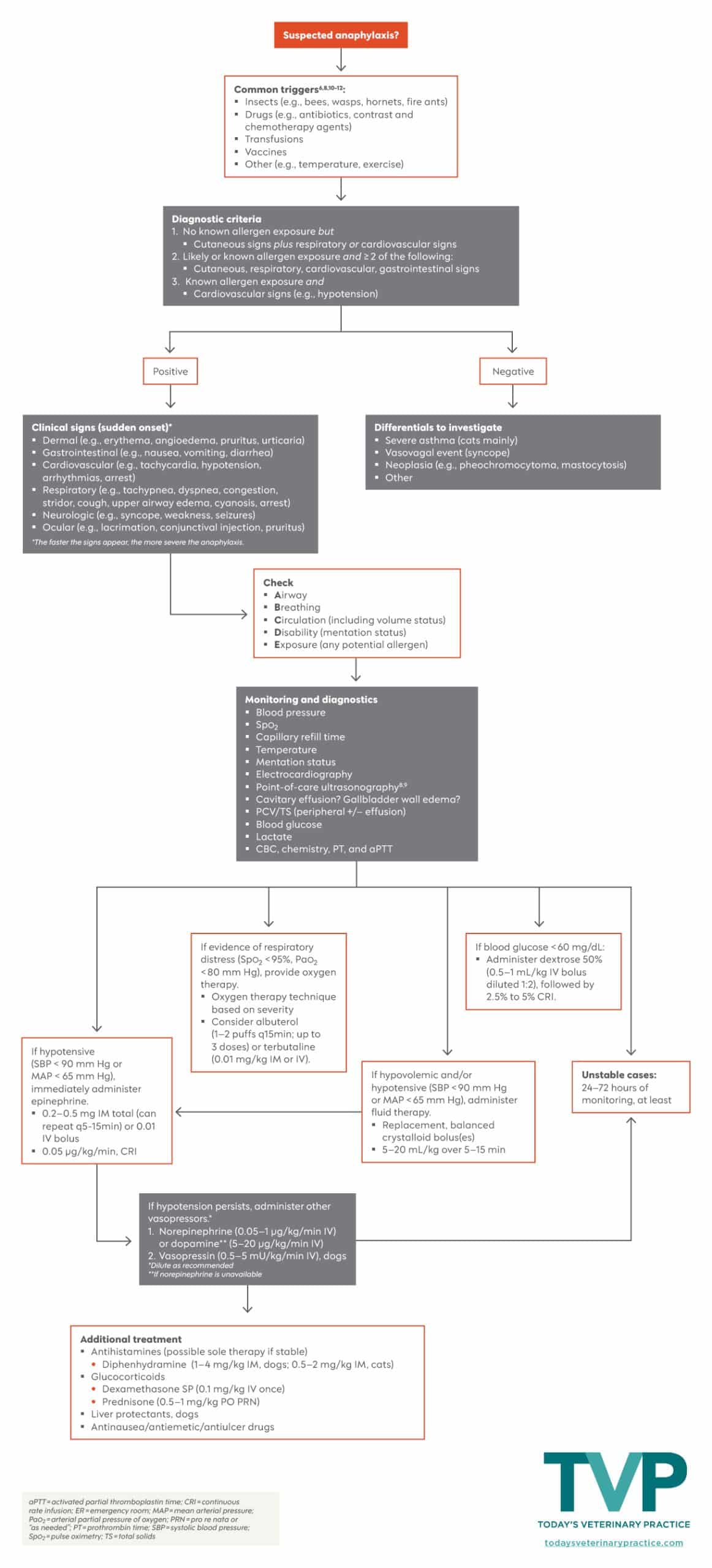
This algorithm provides clinicians with a systematic framework for decision making during anaphylactic emergencies, synthesizing current evidence and clinical expertise, thereby standardizing patient care. However, management must always be tailored to individual patient factors and the specific clinical scenario.
References
- Tizard IR. Type I hypersensitivity. In: Tizard IR, ed. Veterinary Immunology. 9th ed. Elsevier; 2013:326-345.
- Hoehne SN, Hopper K. Hypersensitivity and anaphylaxis. In: Drobatz KJ, ed. Textbook of Small Animal Emergency Medicine. 1st ed. Wiley-Blackwell; 2019:1701-1712.
- Muraro A, Worm M, Alviani C, et al. EAACI guidelines: anaphylaxis (2021 update). Allergy. 2022;77(2):357-377.
- Shmuel DL, Cortes Y. Anaphylaxis in dogs and cats. J Vet Emerg Critic Care. 2013;23(4):377-394. https://doi.org/10.1111/vec.12066
- Lyons JL, Scherk JR. Anaphylactic shock: how to effectively diagnose and treat. Todays Vet Pract. 2017;7(4):1-17.
- Pashmakova M. Anaphylaxis. In: Silverstein DC, Hopper K, eds. Small Animal Critical Care Medicine. 3rd ed. Elsevier; 2023:826-830.
- de Silva D, Singh C, Muraro A, et al. Diagnosing, managing and preventing anaphylaxis: systematic review. Allergy. 2021;76(5):1493-1506. doi:10.1111/all.14580
- Turner K, Boyd C, Stander N, Smart L. Clinical characteristics of two‐hundred thirty‐two dogs (2006–2018) treated for suspected anaphylaxis in Perth, Western Australia. Aust Vet J. 2021;99(12):505-512. doi:10.1111/avj.13114
- Hnatusko AL, Gicking JC, Lisciandro GR. Anaphylaxis‐related hemoperitoneum in 11 dogs. J Vet Emerg Critic Care. 2021;31(1):80-85. doi:10.1111/vec.13017
- Maker JH, Stroup CM, Huang V, James SF. Antibiotic hypersensitivity mechanisms. Pharmacy. 2019;7(3):122. doi:10.3390/pharmacy7030122
- Girard NM, Leece EA. Suspected anaphylactoid reaction following intravenous administration of a gadolinium–based contrast agent in three dogs undergoing magnetic resonance imaging. Vet Anaesth Analg. 2010;37(4):352-356. doi:10.1111/j.1467-2995.2010.00545.x
- Jeong Y, Kim YH, Ahn JO, Chung JY. Simultaneous hypersensitivity reactions to trimethoprim-sulfamethoxazole and amoxicillin-clavulanate in a dog. J Vet Sci. 2023;24(6):e77. doi:10.4142/jvs.23188