
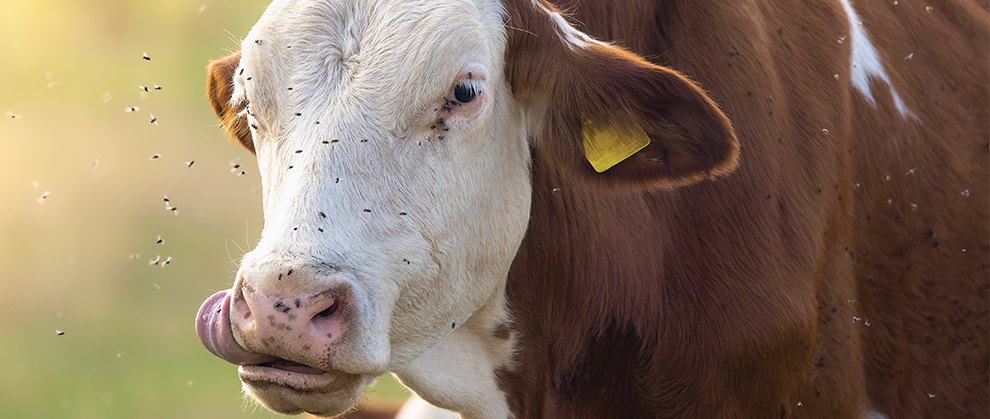
New World screwworm (NWS) infestation leads to myiasis, which can be severe enough to be fatal. It can affect domestic and wild animals and humans but is especially devastating to the livestock industry. It has largely been eradicated from the United States, Mexico, and parts of Central America and is currently endemic to the Caribbean and South America; however, the recent detection in animals in Texas and New Mexico has raised concerns to North American producers. When veterinarians in the United States suspect a case, they should remove the larvae and clean the wound(s) and must submit a sample of larvae to the USDA National Veterinary Services Laboratories for identification.
Take-Home Points
- A recent NWS outbreak and northward expansion from Panama through Central America into Mexico raises concern about the imminent reintroduction and establishment into the United States.
- The detection of NWS in U.S. animals has been confirmed as of the first week of June 2026.
- In addition to the negative economic effect of NWS on livestock, companion animals, wild animals, and humans are also at risk for infestation.
- Early detection of myiasis caused by NWS is essential for effective treatment and clinical recovery of animals.
- To avoid NWS infestation and reinfestation, daily physical examination of at-risk pets for wounds and proper care of existing wounds/lesions are necessary.
The New World screwworm (NWS), Cochliomyia hominivorax, is a highly destructive parasite with larvae that feed on living tissues of animals, resulting in obligatory myiasis. Myiasis caused by NWS larvae has been reported for various domestic and wild animals and humans. Therefore, NWS infestation is of veterinary and public health importance; the greatest economic effect is on the livestock industry. Decades ago, the mass release of sterile male NWS flies led to NWS eradication from the United States, Mexico, and parts of Central America. Despite the success of the eradication program, however, over the past few years a resurgence of cases across Central America and parts of Mexico has generated concern among U.S. government agencies, the livestock industry, and veterinary practitioners; in fact, NWS has recently been detected in Texas and New Mexico. NWS infestation can be fatal depending on the anatomic location of parasitism, severity of lesions, and time from diagnosis to intervention. Generating awareness among stakeholders and monitoring for potential NWS cases through surveillance are crucial, especially in states sharing a border with Mexico.
Q: Is the New World screwworm endemic to the United States?
NWSs have only recently been seen in the United States; the risk for reintroduction was imminent given the ongoing outbreaks in Mexico and Central America. NWS infestation is known to be endemic to the Caribbean and South America, posing a significant risk to the livestock industry and public health in those countries.1 Since the 1960s, the United States has launched a program to eradicate NWS by mass releasing sterile male flies (i.e., sterile insect technique).2 A collaborative effort with Mexico and Central American countries leveraged the success of that program, which as a biological barrier relied on a buffer zone on the Panama isthmus to impede the northward spread of the NWS.3 Despite the success of the eradication program, an outbreak in Florida in 2016 affected the Key deer, a subspecies of white-tailed deer, resulting in the first NWS cases in the country in over 3 decades.4 Even with constant surveillance at U.S. borders, the recent NWS resurgence of cases across Central America,5 Mexico,6 and the current detections in the United States has raised serious concerns about the possible establishment of this pest in the country.
Q: How do animals get infested with New World screwworm?
Animals get infested after an NWS female fly is attracted to an existing fresh wound and lays eggs on the edge of the wound. Larvae hatch from the eggs and start feeding on live tissue. Over time, the lesion becomes larger and deeper as the larvae continuously feed until they fully develop into third instar larvae, a process that takes from 4 to 12 days (FIGURE 1). When completely developed, larvae drop off the host and burrow in the soil to complete their metamorphosis to the pupal stage. After approximately 1 week, adult flies emerge, continuing the life cycle. Lesions associated with the NWS are characterized by serous and bloody exudate and foul odor, which may attract flies of other species, associated with facultative myiasis.7
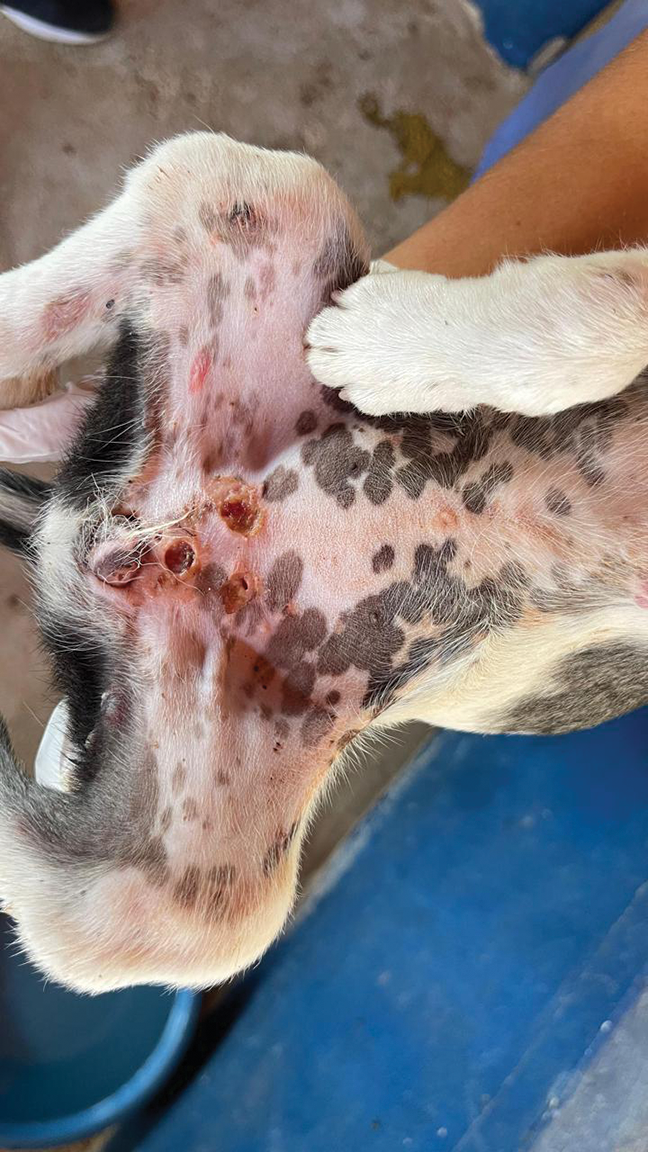
FIGURE 1. Lesions caused by the on-host development of Cochliomyia hominivorax larvae in the abdominal region of a dog. Courtesy Prof. Victor Lima; Federal University of Sergipe, Brazil.
Q: Which animal species are more prone to New World screwworm infestation?
The NWS has a wide host range and potentially infests any warm-blooded animal, including domestic and wild mammals and occasionally birds. Nevertheless, most reported cases in the current outbreaks in Mexico and Central America are among cattle, followed by dogs, swine, equids, and small ruminants.6 Among companion animals, NWS infestation is more commonly reported for dogs than cats.7 NWS infestation is zoonotic; in endemic regions, human cases have been associated with neglected risk groups (e.g., elderly, disabled, unhoused), often associated with poor hygiene.8,9 In addition, cases among travelers visiting NWS-endemic areas have been reported worldwide, including in the United States.5,10
Q: How do veterinarians diagnose New World screwworm infestation in animals?
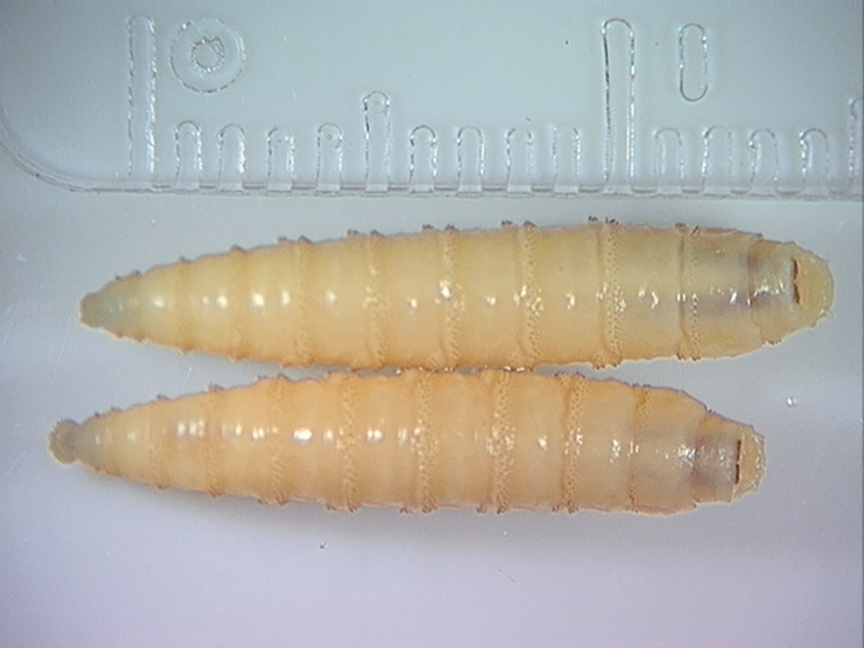
Any myiasis is initially diagnosed through physical examination of animals and visual detection of larvae within a wound. Larvae should be removed manually or with tweezers and stored in 70% ethanol for morphologic identification. Depending on the severity of the lesions, sedation of the animals may be required to reduce discomfort. Collected larvae must be identified to confirm species-level diagnosis. The identification of NWS is based on morphologic features, including the shape and size of the larvae (6.5 to 17 mm long) and presence and pattern of body spines (FIGURE 2). Two other extremely informative morphologic characteristics are the incomplete peritreme of the spiracular plate and the darkly pigmented tracheal trunks.11
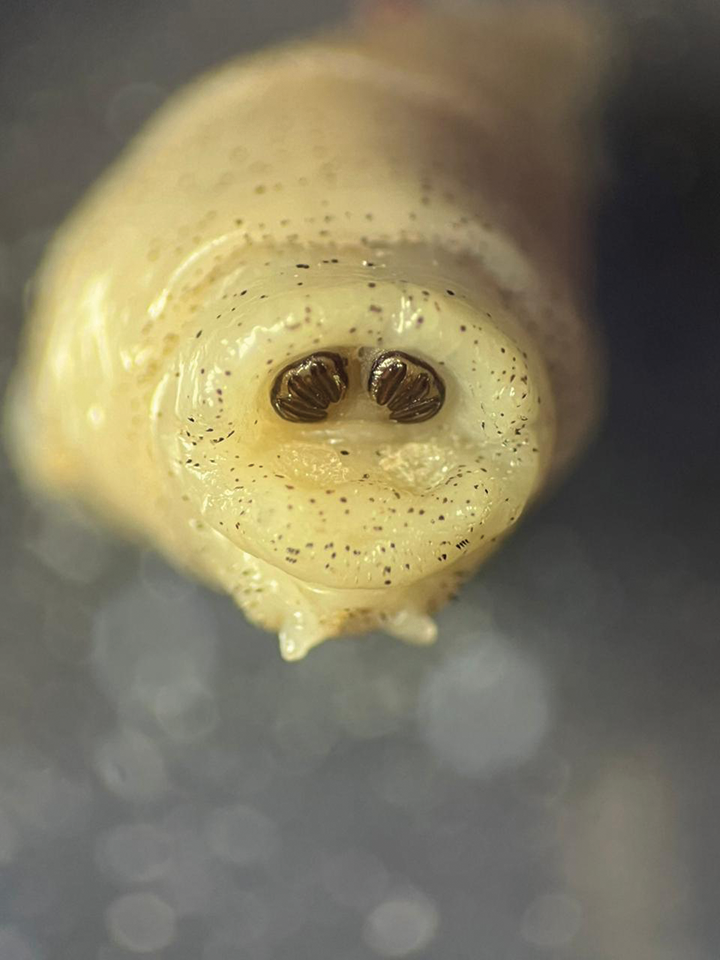
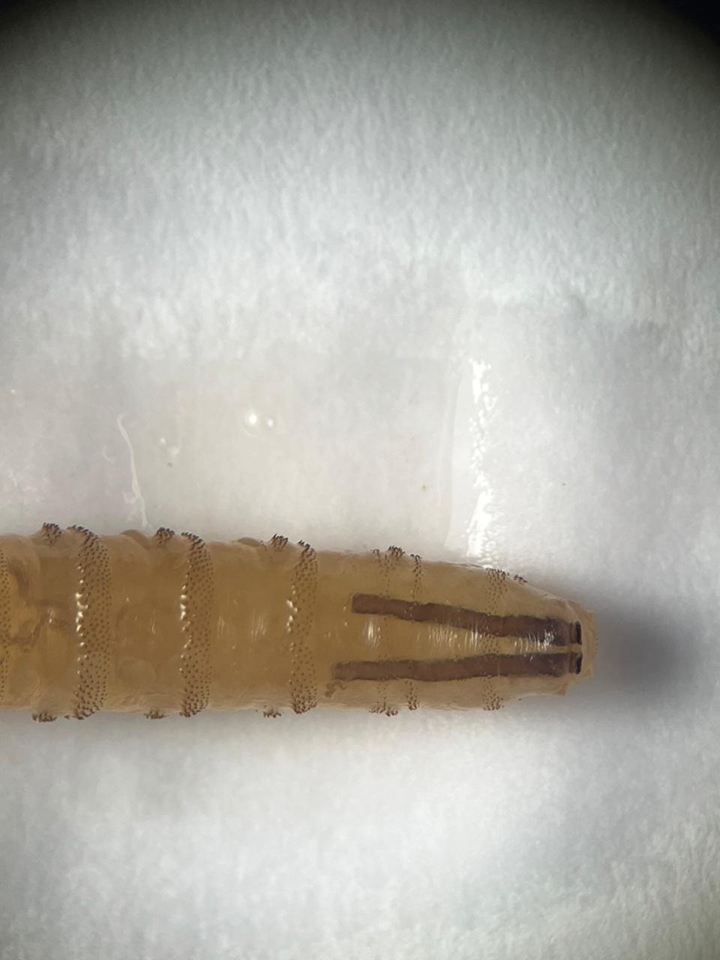
NWS larvae must be distinguished from larvae of other flies that cause facultative myiasis, such as the black blow fly (Phormia regina) or other Cochliomyia species (e.g., Cochliomyia macellaria), which typically feed on necrotic rather than living tissue. The distinction underscores the value of laboratory diagnostic confirmation. Because NWS is a reportable pathogen, suspected cases must be submitted to the USDA National Veterinary Diagnostic Laboratory.
Q: How do veterinarians clinically manage New World screwworm–infested animals?
Clinical management of NWS-infested animals includes larvae removal; wound cleansing with an antiseptic solution (e.g., 0.5% chlorhexidine); and, when necessary, necrotic tissue debridement.12-14 Anti-inflammatory drugs and antibiotic therapy may be recommended to prevent secondary bacterial infection. Given the painful nature of tissue destruction, appropriate analgesia (e.g., NSAIDs, opioids as needed) is a critical component of case management.15 Proper care and dressing of any wounds and surgical incisions are pivotal to preventing reinfestation. Use of insect repellent sprays or ointment might be encouraged, especially for animals for which follow-up after the initial intervention may be difficult.
Q: Are any antiparasitic products approved for New World screwworm–infestation treatment of companion animals in the United States?
As of early March 2026, one lotilaner-based product (Credelio Quattro-CA1, Elanco) is conditionally approved by the U.S. FDA for treatment of NWS larvae infestation in dogs. Additional lotilaner-based products received emergency use authorization by the FDA: Credelio chewable tablets for dogs and Credelio CAT chewable tablets for cats. More recently, oral afoxolaner for dogs (NexGard, Boehringer Ingelheim) and a combination product containing esafoxolaner, eprinomectin, and praziquantel topical solution (NexGard COMBO, Boehringer Ingelheim) for cats received emergency use authorization. Up-to-date information can be found here.
In addition, other commercially available antiparasitic products (e.g., nitenpyram, sarolaner, afoxolaner, spinosad) for use in dogs and cats in the United States have shown efficacy for treating NWS infestation by having larvicidal effects and promoting rapid larvae expulsion.12-14,16-18 These products may be considered for extralabel use in accordance with existing FDA regulations.
Q: What should be done if I have a suspected New World screwworm case?
When suspecting an NWS case, the veterinary professional must mechanically remove all visible larvae found in the wound, store larvae in a tight-closing vial or test tube in 70% ethanol at room temperature, and submit the sample to the USDA National Veterinary Services Laboratories for diagnostic testing identification. Veterinarians may submit up to 10 larvae and must ensure that the remaining larvae are killed (e.g., storing in 70% ethanol, freezing).
Animal quarantine is also recommended until larvae identification. Cases of suspected NWS infestation in domestic animals must be reported to the State Animal Health Official and the USDA Area Veterinarian in Charge.
Q: How can New World screwworm infestation and reinfestation be prevented?
NWS will infest an animal when flies are attracted by a fresh wound on the animal’s body. Therefore, preventive measures may include, but are not restricted to, the following:
- Examine animals daily for potential wounds, including fresh tick bites, ear cropping, tail docking, mucus membranes (newborn navel, nose, and mouth), and fresh cuts/abrasions.
- Monitor existing wounds for the presence of larvae and a characteristic foul odor.
- Assess the animals’ environment for potential fomites that might cause trauma (e.g., metal collars, chains, wire fencing).
- Protect companion animals from risky behavior (e.g., interanimal aggression, fighting, accidents).
- Provide adequate care and wound dressing for recent surgical incisions.
- After wound treatment, use repellent products to avoid fly egg deposition.
- Notify any state or federal animal health agencies of diagnosis or suspicion; preventing the spread of NWS in the United States is the responsibility of all stakeholders.
- Consider using FDA-approved products that may have preventive efficacy for dogs and cats based on products with the same active ingredient intended for use in cattle (i.e., isoxazolines); however, these products have not been assessed by the FDA for NWS prevention when used on companion animals.
Summary
The myiasis-causing fly C hominivorax is currently an imminent threat to companion animals in the United States. Because of the severity of the lesions that may be caused, the time from diagnosis to clinical management is pivotal to ensuring the animal’s health and wellbeing. Although few cases have been confirmed in the United States thus far, all veterinarians must be aware of the risk of spreading and prepare for a prompt response in case of emergence among dogs and cats.
References
- Valdez-Espinoza UM, Fadda LA, Marques R, Osorio-Olvera L, Jiménez-García D, Lira-Noriega A. The reemergence of the New World screwworm and its potential distribution in North America. Sci Rep. 2025;15(1):23819. doi:10.1038/s41598-025-04804-9
- Mastrangelo T, Welch JB. An overview of the components of AW-IPM campaigns against the New World screwworm. Insects. 2012;3(4):930-955. doi:10.3390/insects3040930
- Wyss JH. Screwworm eradication in the Americas. Ann N Y Acad Sci. 2000;916:186-193. doi:10.1111/j.1749-6632.2000.tb05289.x
- Skoda SR, Phillips PL, Welch JB. Screwworm (Diptera: Calliphoridae) in the United States: response to and elimination of the 2016–2017 outbreak in Florida. J Med Entomol. 2018;55(4):777-786. doi:10.1093/jme/tjy049
- Venegas-Montero DP, Alfaro-Vellanero MJ, Rojas-Araya D, et al. Case report: re-emergence of Cochliomyia hominivorax in Costa Rica: report of a human myiasis case 23 years after elimination. Am J Trop Med Hyg. 2024;111(5):1020-1023. doi:10.4269/ajtmh.24-0342
- Importing live cattle and bison from Mexico to the United States. Animal and Plant Health Inspection Service. Modified January 13, 2026. Accessed January 20, 2026. https://www.aphis.usda.gov/live-animal-import/cattle-bison-germplasm/mexico
- Bowman DD. Successful and currently ongoing parasite eradication programs. Vet Parasitol. 2006;139(4):293-307. doi:10.1016/j.vetpar.2006.04.020
- Batista-da-Silva JA, Moya-Borja GE, Queiroz MMC. Factors of susceptibility of human myiasis caused by the New World screw-worm, Cochliomyia hominivorax in São Gonçalo, Rio de Janeiro, Brazil. J Insect Sci. 2011;11:14. doi:10.1673/031.011.0114
- Long B, Finley A, Liang SY, Heaton HA. New World screwworm: a focused review for the emergency medicine clinician. Am J Emerg Med. 2026;102:8-12. doi:10.1016/j.ajem.2026.01.007
- LaCourse SM, Martinez RM, Spach DH, Fang FC. Pain and bloody ear discharge in a returning traveler. Am J Trop Med Hyg. 2015;92(3):599-600. doi:10.4269/ajtmh.14-0617
- A manual for the identification of screw-worm fly. Animal Health Australia. 2025. Accessed January 7, 2026. https://animalhealthaustralia.com.au/wp-content/uploads/dlm_uploads/2025/12/ScrewWormFlyIDManual_2025.pdf
- Souza CP, Verocai GG, Ramadinha RH. Myiasis caused by the New World screwworm fly Cochliomyia hominivorax (Diptera: Calliphoridae) in cats from Brazil: report of five cases. J Feline Med Surg. 2010;12(2):166-168. doi:10.1016/j.jfms.2009.08.003
- Cardim de Oliveira P, Salça de Almeida GP, Cardoso JD, et al. Efficacy of sarolaner on the treatment of myiasis caused by Cochliomyia hominivorax (Diptera: Calliphoridae) in dogs. Vet Parasitol. 2019;276:108966. doi:10.1016/j.vetpar.2019.108966
- Cutolo AA, Perier N, Menz I, Thyssen P, Silva FO, Beugnet F. Efficacy of afoxolaner (NexGard®) on the treatment of myiasis caused by the New World screwworm fly Cochliomyia hominivorax (Diptera: Calliphoridae) in naturally infested dogs. Vet Parasitol Reg Stud Reports. 2021;24:100569. doi:10.1016/j.vprsr.2021.100569
- Saari S, Näreaho A, Nikander S. Insecta. In: Saari S, Näreaho A, Nikander S, eds. Canine Parasites and Parasitic Diseases. Academic Press; 2019:159-185.
- Vale TL, Costa AR, Miranda LM, et al. Efficacy of lotilaner against myiasis caused by Cochliomyia hominivorax (Diptera: Calliphoridae) in naturally infested dogs. Parasit Vectors. 2023;16(1):86. doi:10.1186/s13071-023-05661-z
- Oliveira PC, Moraes PA, Scott FB, Verocai GG, Correia TR, Fernandes JI. Efficacy of spinosad on the treatment of myiasis caused by Cochliomyia hominivorax (Diptera: Calliphoridae) in dogs. Vet Parasitol. 2018;258:53-56. doi:10.1016/j.vetpar.2018.06.006
- Correia TR, Scott FB, Verocai GG, et al. Larvicidal efficacy of nitenpyram on the treatment of myiasis caused by Cochliomyia hominivorax (Diptera: Calliphoridae) in dogs. Vet Parasitol. 2010;173(1-2):169-172. doi:10.1016/j.vetpar.2010.06.019