

Chocolate contains the methylxanthines theobromine and caffeine, which at high doses can cause stimulatory signs (e.g., tachycardia, hyperactivity, tremors, seizures). In addition, chocolate often contains high levels of fat and sugar and can cause gastrointestinal upset, food bloat, and pancreatitis. Keys to successful outcomes after chocolate ingestion by dogs and cats include prompt risk assessment by calculating methylxanthine dose ingested and appropriate decontamination, monitoring, and treatment, as indicated by the risk assessment.
Take-Home Points
- Chocolate exposure is common among dogs and cats; however, development of significant clinical signs after chocolate exposure is more common among dogs than cats.
- Chocolate contains the methylxanthines theobromine and caffeine, which are responsible for the stimulatory signs, and rich chocolate can also lead to gastrointestinal upset and pancreatitis.
- Prompt risk assessment requires calculating a methylxanthine dose and is key to determining next steps and ensuring a successful outcome without unnecessary treatments.
- Underlying patient conditions, especially diabetes mellitus and cardiac disease, can increase the risk for adverse effects.
In 2025, chocolate toxicosis was the most common food exposure reported to the ASPCA Poison Control, chocolate was the fourth most common exposure overall, and 13.6% of all calls involved chocolate ingestion.1 Chocolate contains the methylxanthines theobromine and caffeine and can cause significant toxicosis in dogs and, less commonly, in cats.
Clinical signs shown from exposure to chocolate are dose dependent and can include gastrointestinal upset at any dose and stimulatory signs (e.g., hyperactivity, tachycardia, tremors, seizures) at higher doses.2 Food bloat and pancreatitis can also occur secondary to dietary indiscretion.
Prognosis for chocolate toxicosis is generally good after prompt decontamination and appropriate treatment and monitoring based on the methylxanthine dose and the clinical signs exhibited.
Q: Which species is more sensitive to chocolate toxicosis: cats or dogs?
Cats are more sensitive to methylxanthines than dogs. The median lethal dose of theobromine for cats is 200 mg/kg and for dogs is higher at 250 to 500 mg/kg.3 The median lethal caffeine doses for cats and dogs are similar at 140 to 150 mg/kg for dogs and 100 to 150 mg/kg for cats.3
However, significant clinical signs of toxicosis secondary to methylxanthine ingestion are uncommon among cats, most likely due to the species differences between cats and dogs in their willingness to eat sweet human foods. Cats lack sweet taste receptors and are less likely to ingest sweet foods4; thus, it is uncommon for cats to eat enough chocolate to cause clinical signs associated with toxicosis.1 Although large chocolate ingestions are uncommon in cats, risk assessment is advised as toxicosis can occur at high doses.
Q: What clinical signs are associated with chocolate toxicosis, and at what methylxanthine doses are they exhibited?
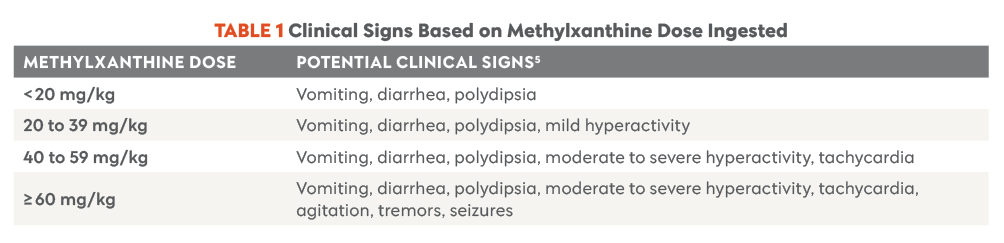
Clinical signs of methylxanthine toxicosis are dose dependent (TABLE 1).
Q: What are some common sequelae associated with chocolate ingestion?
Chocolate often contains high levels of fat and sugar; thus, in addition to stimulatory signs from the methylxanthines, chocolate ingestion can lead to pancreatitis. Large volumes of chocolate can cause food bloat, especially if the pet is significantly polydipsic and large amounts of water were also ingested. In addition, chocolate is hygroscopic and can draw water into the gastrointestinal tract, which can lead to osmotic diarrhea and dehydration.6
Q: How do I calculate the methylxanthine dose ingested by my patient?
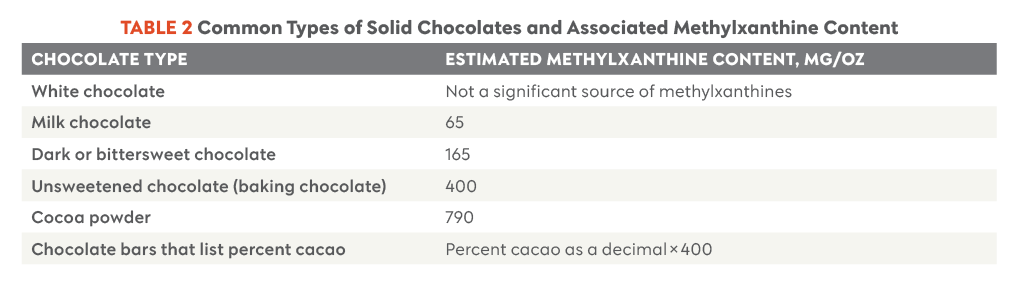
Calculating the methylxanthine dose ingested is both the most important and the most difficult and nuanced part of dealing with any chocolate exposures in dogs and cats (BOX 1). In most cases, the exact methylxanthine content of the product will not be known; however, consistent estimates based on average methylxanthine content provide the best risk-assessment estimates and can accurately guide clinical decision making (TABLE 2).
Step 2: Multiply the methylxanthine concentration by the weight of the portion of the product ingested (in ounces) to get the total methylxanthine amount in milligrams.
Step 3: Take that total and divide by the pet’s weight in kilograms.
Example 1: A 20-kg dog ingested an entire 1.55-oz milk chocolate bar.
Step 1: Milk chocolate has approximately 65 mg methylxanthines/oz.
Step 2: 65 mg/oz × 1.55 oz = 100.75 mg methylxanthines ingested.
Step 3: 100.75 mg methylxanthines ÷ 20 kg body weight = 5 mg/kg methylxanthine dose.
Example 2: A 5-kg dog ingested 3 oz of a 72% cacao dark chocolate bar.
Step 1: The methylxanthine content of a 72% dark chocolate bar is 0.72 × 400 mg/oz = 288 mg/oz.
Step 2: 288 mg/oz × 3 oz = 864 mg methylxanthines ingested.
Step 3: 864 mg methylxanthines ÷ 5 kg body weight = 172.8 mg/kg methylxanthine dose.
Example 3: A 10-kg dog ingested half a pan of brownies. The brownies contained 0.5 cup (2.1 oz) of cocoa powder.
Step 1: Cocoa powder has approximately 790 mg methylxanthines/oz.
Step 2: 790 mg/oz × 2.1 oz = 1659 mg methylxanthines for the entire pan of brownies. Half of a pan was ingested; therefore, 1659 ÷ 2 = 829.5 mg methylxanthines ingested.
Step 3: 829.5 mg methylxanthines ÷ 10 kg body weight = 83 mg/kg methylxanthine dose.
Detailed history taking is often needed to determine the amount and type of chocolate ingested and whether there are any additional toxicity concerns (e.g., xylitol, raisins, THC [tetrahydrocannabinol], psychoactive mushrooms).
Solid Chocolate
Calculating the estimated methylxanthine dose ingested from a solid chocolate bar is the easiest. Because there are no strict regulations for the labeling of chocolate, an estimate is often needed. The exception is if the bar lists a percent cacao (or cocoa). For those cases, the exact methylxanthine dose can be calculated as % cacao × 400 = mg/oz methylxanthine.
Chocolate-Containing Candies
Methylxanthine content of candies that are solid chocolate should be calculated the same as for chocolate bars. For chocolate candies with a nonchocolate filling, a commonly used estimate is that they contain about one-third chocolate. However, the amount of chocolate varies considerably, and the type of candy should always be considered.
Baked Goods With a Recipe
If the pet ingests a homemade treat, the recipe should be obtained and all sources of chocolate should be considered when calculating the methylxanthine dose ingested. The percentage of the recipe ingested should also be identified to determine the total milligrams of methylxanthines ingested.
Q: Is decontamination necessary, and when should it be performed?
Patients that ingest chocolate may need decontamination (i.e., induction of emesis or administration of activated charcoal) either because they have ingested a dose of methylxanthines that can cause substantial stimulatory signs (40 mg/kg or higher) or because they have ingested a large enough volume of chocolate expected to lead to significant signs (e.g., food bloat, significant gastrointestinal upset). Because decontamination is never without risk, it should not be an automatic decision and should be considered only for patients for which it is necessary.
Induction of Emesis
Emesis can recover approximately 40% to 60% of stomach contents7 and can be very useful for recovering chocolate up to 8 hours after ingestion of large amounts. Emesis should be considered for patients that have ingested a methylxanthine dose greater than 40 mg/kg, have not been spontaneously vomiting, and are not showing stimulatory signs (FIGURE 1).
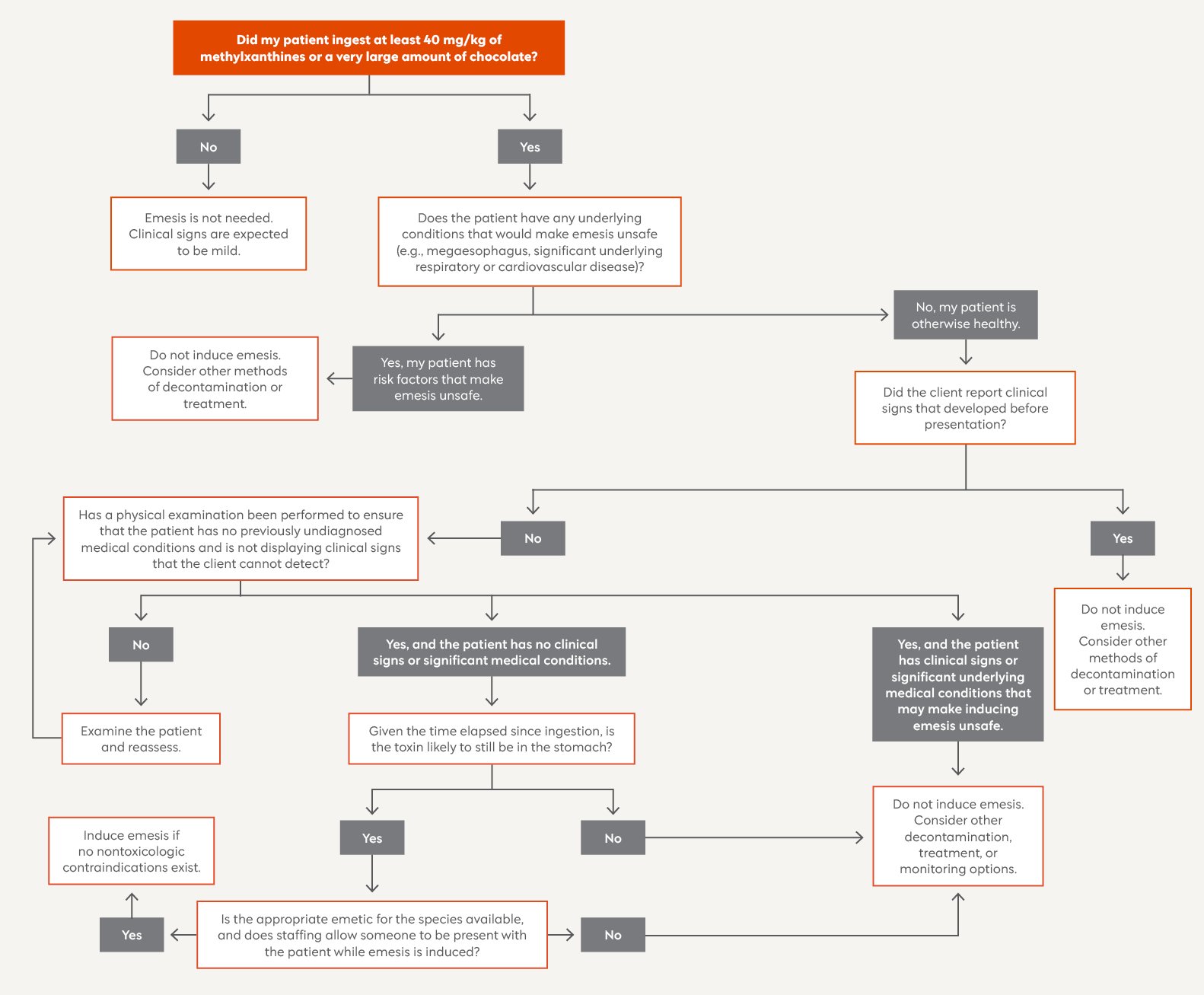
Figure 1. Is my patient a good candidate for induction of emesis after chocolate ingestion?
Administration of Activated Charcoal
Administration of activated charcoal should be considered very carefully. Chocolate is osmotically active and can cause gastrointestinal upset, which can lead to dehydration.6 Activated charcoal carries risks for patients that have ingested chocolate because activated charcoal is hygroscopic and often formulated in combination with an osmotic cathartic, which can increase the risk for significant diarrhea as well as fluid shift into the gastrointestinal tract, potentially causing hypernatremia.6 Risk and benefit should be considered before administering activated charcoal. Candidates for activated charcoal administration should be asymptomatic and well hydrated and will have ingested at or above the median lethal dose of methylxanthines.8
Q: What treatment is needed for patients that have ingested chocolate?
Hospitalization with monitoring should be recommended for any patient that ingested a methylxanthine dose above a level of concern after emesis results are taken into account. Treatment should be based on the clinical signs. Fluids should be administered to maintain hydration. Antiemetics should be given to limit vomiting. Hyperactivity can typically be controlled with benzodiazepines or acepromazine. After the stimulatory signs have been controlled, any continued tachycardia can be managed with β-blockers. Tremors can be treated with benzodiazepines or methocarbamol. Seizures can be treated with antiseizure medications. Any patient receiving activated charcoal should be monitored for hemoconcentration and hypernatremia, as the signs of hypernatremia can be easily mistaken for those of methylxanthine toxicosis.
Q: Are patients with underlying disease conditions at risk for additional clinical signs or at higher risk for development of chocolate toxicosis?
Patients with a history of severe underlying conditions may be at increased risk for clinical signs, be more likely to compensate for those clinical signs, or have sequelae unrelated to the methylxanthines.
Patients with a history of pancreatitis after dietary indiscretion or patients with a history of abnormal lipid metabolism will be at increased risk for development of acute pancreatitis resulting from dietary indiscretion. To decrease the risk for pancreatitis, induction of emesis at the hospital should be considered, and these patients should be monitored closely at home for clinical signs associated with pancreatitis.
Patients with significant cardiac disease would not be at increased risk for clinical signs; however, they may be more sensitive to the stimulatory signs. Tachycardia is a common clinical sign, and these patients may be less able to deal with the changes to cardiac output. Patients with congestive heart failure should be monitored closely when the level of concern for clinical signs is elevated.
Summary
Chocolate exposure is common among dogs and cats, although cats are less likely to show signs of severe toxicosis because they typically do not ingest as much as dogs. Theobromine and caffeine in chocolate can cause dose-dependent clinical signs, including gastrointestinal upset, tachycardia, hyperactivity, tremors, and seizures. Dose calculations can be complex but are part of the risk assessment. A tailored plan for decontamination, treatment, and monitoring should be formulated for each patient based on dose ingested, underlying medical concern for that patient, and clinical signs exhibited. After appropriate monitoring and treatment, the prognosis after chocolate ingestion for dogs and cats is generally good.
References
- The top 10 toxins of 2025. ASPCA. March 15, 2026. Accessed May 10, 2026. https://www.aspca.org/news/top-10-toxins-2025
- Weingart C, Hartmann A, Kohn B. Chocolate ingestion in dogs: 156 events (2015–2019). J Small Anim Pract. 2021;62(11):979-983. doi:10.1111/jsap.13329
- Albretsen JC. Methylxanthines. In: Plumlee K, ed. Clinical Veterinary Toxicology. Mosby; 2004:322-326.
- Li X, Li W, Wang H, et al. Cats lack a sweet taste receptor. J Nutr. 2006;136(7 Suppl):1932S-1934S. doi:10.1093/jn/136.7.1932S
- Gwaltney-Brant S. Chocolate intoxication. Vet Med. 2001;96(2):108-111.
- Genareo C, Durkan S. Severe hypernatremia in a dog following activated charcoal treatment for chocolate ingestion. Can Vet J. 2025;66(10):1071-1076.
- Beasley VR, Dorman DC. Management of toxicoses. Vet Clin North Am Small Anim Pract. 1990;20(2):307-337. doi:10.1016/s0195-5616(90)50027-3
- Hayes C. Chocolate toxicosis in animals. Merck Veterinary Manual. Updated February 2026. Accessed July 3, 2026. https://www.merckvetmanual.com/toxicology/food-hazards/chocolate-toxicosis-in-animals