
To take the CE quiz, click here.
This quiz is open until June 2028.
Intravenous lipid emulsions (ILEs) have become increasingly popular in the past 15 years as rescue therapies in human and veterinary medicine for the treatment of lipophilic drug toxicoses. The efficacy of ILEs is primarily attributed to the lipid sink/lipid shuttle theories, which involve the scavenging of toxins from plasma and transporting them to storage and/or detoxification organs. Clinical evidence supports the use of ILEs for intoxications such as macrocyclic lactones, pyrethroids, psychoactive drugs, rodenticides, and NSAIDs. Current dosing guidelines emphasize early intervention for severe toxicoses, with standardized bolus and constant-rate infusion protocols. While ILE is generally well tolerated, reported complications in veterinary patients range from transient to severe systemic reactions. Despite these risks, the favorable benefit-to-risk ratio supports the continued use of ILEs for life-threatening lipophilic intoxications when standard therapies fail.
Take-Home Points
- Intravenous lipid emulsions (ILEs) are sterile emulsions of oil in water, commonly using soybean oil. Intralipid 20% is the most commonly used product in veterinary medicine.
- ILEs can be used as a component of parental nutrition,
to deliver drugs (e.g., propofol), and as a rescue therapy for acute intoxications with lipophilic drugs. - Protocols for the administration of ILE include a 1.5-mL/kg intravenous bolus followed by a 15-mL/kg constant-rate infusion for 1 hour.
- Adverse effects are rare and mainly transient and include corneal lipidosis, pancreatitis, facial swelling and pruritus; changes in the level of consciousness; and gastrointestinal signs.
Intravenous lipid emulsions (ILEs), also known as intravenous fat emulsions, are sterile emulsions of oil in water, dispersed with the help of an emulsifying agent. One of the most common emulsifiers is egg yolk phospholipids, which have both hydrophobic and hydrophilic properties, as a single-molecule layer.1 Triglycerides are the main component of ILEs, providing essential fatty acids. When ILEs are used as a rescue treatment for lipophilic drug intoxications, they are used offlabel, as their recognized indication is for parental nutrition.
Many ILE formulations contain 100% soybean oil, yielding an emulsion of long-chain triglycerides high in omega-6 fatty acids that include linoleic (omega-6), linolenic (omega-3), oleic (omega-9), palmitic, and stearic acids. Both omega-3 and omega-6 fatty acids are inflammatory mediators, as they are used as substrates for eicosanoid synthesis. When there is an appropriate stimulus, omega-6 fatty acids are converted into arachidonic acid, leading to the production of proinflammatory eicosanoids, whereas omega-3 fatty acids are involved in the production of anti-inflammatory eicosanoids.1 To try to balance the content of omega-6 and omega-3 fatty acids, ILE formulations have been created using other oils, such as fish, olive, and coconut oils. The main product used in veterinary medicine is Intralipid 20%, which contains soybean oil.
Indications
ILEs have been used for parenteral nutrition in human medicine since the 1960s. They were first used in veterinary medicine in 2009, when Crandell et al reported a moxidectin intoxication in a puppy that was successfully treated with ILE therapy.2 Lipid emulsions are also used as vehicles for drug (e.g., propofol, etomidate) delivery.1
In human medicine, the American Society of Regional Anesthesia and Pain Medicine (ASRA) currently recommends the use of ILE therapy as an early intervention for the treatment of local anesthetic systemic toxicity (LAST).3 In 2023, the Association of Anaesthetists of Great Britain and Ireland updated its guidelines on the management of severe LAST to be in line with ASRA’s, recommending the administration of ILE as soon as LAST is recognized.4 See ASRA’s checklist for treatment of LAST here.
Mechanism of Action
The exact mechanism by which ILEs work has not been fully elucidated. The main proposed mechanisms are a combination of scavenging properties and improved myocardial performance.5-7
Scavenging Properties
The original proposed mechanism was the creation of a lipid compartment inside the blood, separated from the plasma phase, where the toxin would dissolve.8 As the toxin was held in this lipid compartment, its plasma concentrations would be reduced; therefore, it would not be available to the tissues, decreasing its toxicity. This is known as the lipid sink theory.8,9 This theory has since evolved into the lipid shuttle theory, in which the lipid compartment is seen as a way of transporting the toxin from target organs (e.g., heart, brain) to organs that are able to store and/or help detoxify it (e.g., muscle, fat, liver, kidneys), rather than as a storage compartment.3,6
Myocardial Performance
ILEs can improve myocardial performance through several mechanisms. The first is due to the volume of ILE administered, following the Frank–Starling law: An increase in preload will lead to an increase in stroke volume, therefore increasing cardiac output. Other proposed mechanisms postulate that ILEs may have a direct effect on the myocardial cells by being a source of fatty acids for energy production, potentially increasing intracellular calcium concentration and increasing vascular resistance. ILEs can also improve cardiac output by removing the toxic effect of the drug on the heart.3,5,6
Reported Uses in Veterinary Medicine
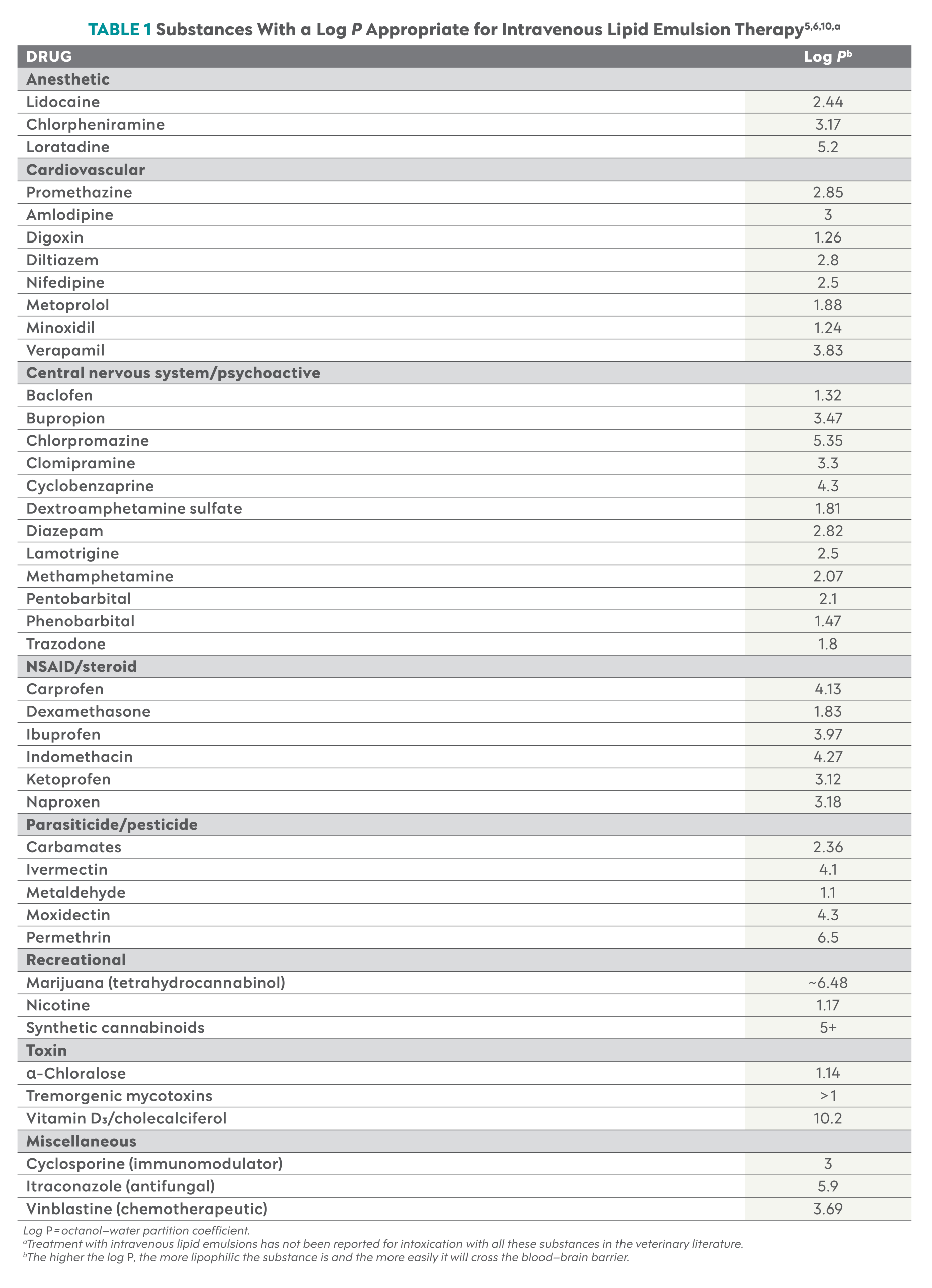
The lipophilicity of the substance causing the intoxication is the primary factor that determines whether ILE treatment is appropriate. The lipophilicity of a drug or other toxin can be estimated using the octanol–water partition coefficient, also known as the log P.5,8,9 A substance with a log P > 1 is considered lipophilic; the higher the number, the more lipophilic the substance is and the more easily it will cross the blood–brain barrier, causing neurologic signs (Table 1). Due to the lack of other antidotes, as well as their low cost and low incidence of adverse effects, ILEs are used as a first-line treatment for intoxications with many different types of lipophilic substances.
.
Parasiticides
In the first reported use of ILE therapy in veterinary medicine, a 16-week-old Jack Russell terrier puppy started vomiting and developed ataxia and tremors that progressed to full seizures after being in contact with horses that had been dewormed with 2% moxidectin.2 The puppy received 2 ILE boluses followed by constant-rate infusions over the first 48 hours. Recovery was almost immediate once the second dose of ILE was finished.
In 2011, ILEs were reported to be used for ivermectin intoxications in a border collie11 and in 3 dogs that were homozygous for the ABCB1-1∆ (previously known as MDR1) gene mutation.12 The border collie, which had no genetic mutation, responded well to the administration of ILE. However, the 3 dogs that were homozygous for the gene mutation did not have the expected recovery after ILE administration, despite decreases in their ivermectin blood concentrations. It was postulated that the lack of ability to eliminate ivermectin from the brain due to the genetic mutation had a major role in the lack of response to ILE therapy.12 ILEs have been reported to be successful in the treatment of blindness secondary to ivermectin intoxication in a dog.13 Ivermectin overdose in cats has also been treated successfully with ILE therapy.14
Permethrin intoxication treated with ILEs has been reported in 3 cats that showed a subjectively rapid clinical improvement after ILE administration.15 Several other studies have further solidified the use of ILEs as a standard rescue therapy for permethrin toxicosis,16-18 one of the most common intoxications reported in cats.
Moxidectin and ivermectin belong to the macrocyclic lactones class of parasiticides, while permethrin belongs to the synthetic pyrethroid class. Intoxications with these drugs are common in veterinary medicine as the products are routinely used in both large and small animals as preventives; therefore, exposure across species at inappropriately high doses is easy. Since these first reports, several others have described the benefits of ILE therapy for similar intoxications.19-21 The ability to use ILEs to quickly reverse these toxicoses has been a major advance in the veterinary field (VIDEO 1, courtesy Dr. Andrea Rincon).
Psychoactive Drugs
Several intoxications with psychoactive drugs have been reported in veterinary literature.22-25 Two case reports of lamotrigine (an antiepileptic drug used in human medicine) toxicosis, one involving severe cardiotoxic effects in an English bulldog22 and the other involving neurologic dysfunction and cardiac arrhythmias in a mixed-breed dog,23 reported great improvement in clinical signs after the administration of ILE in both patients.
Rodenticides and Molluscicides
Rodenticides and molluscicides are common household products, which leads to them being common reasons for companion animals to present to the emergency department after ingestion.
Metaldehyde is used to control snails and slugs when gardening (molluscicide). It is normally combined with molasses or other sweet products, making it very palatable for companion animals. It is mainly a neurotoxin that can lead to ataxia, seizures, and death, and treatment has been focused on supportive care, as there is no antidote. Lelescu et al reported the successful management with ILE therapy of a Labrador retriever puppy that ingested metaldehyde and was not responding to antiepileptic drugs and supportive care.26
Different types of rat poison with different mechanisms of action are commercially available. Cholecalciferol (vitamin D3) leads to hypercalcemia, hyperphosphatemia, and acute kidney injury when ingested. Voss and Chow reported reductions in ionized calcium levels in 2 dogs and 2 cats immediately after the administration of ILE, while other supportive therapies were maintained unchanged.27 However, they did not notice a paired reduction in the levels of 25-hydroxyvitamin D [25(OH)D], a metabolite of cholecalciferol, even though cholecalciferol has a high log P of 10.2. The lipid shuttle theory could be the explanation: Despite its high plasma concentration after ILE administration, as 25(OH)D is compartmentalized in the “lipid shuttle,” its toxicity is blunted and ionized calcium decreases/normalizes. It is important to note that, while ILEs might be helpful in reducing ionized calcium levels, it should be added to the standard long-term treatment for hypercalcemic patients and not used as a replacement.
α-Chloralose is used both as a rodenticide and to safely immobilize and capture wild birds, and it is authorized in both the United States and Europe. It is mainly a central nervous system drug leading to coma and death. It has a lipophilic but relatively low log P at 1.14, and Lundgren et al did not see any effects of ILE therapy on clinical signs or serum concentrations of α-chloralose in 25 cats.28
NSAIDs
ILEs have also been used to successfully treat NSAID overdoses in small animals. Herring et al reported the treatment of naproxen ingestion in 3 dogs that had great reductions in serum naproxen concentrations post-ILE treatment.29 Chumbler et al reported the use of ILE therapy to treat carprofen overdose in a cat.30 In this case, carprofen serum concentrations peaked after the administration of ILE, supporting the lipid shuttle theory.30 The use of ILEs to treat overdoses with other NSAIDs such as ibuprofen, robenacoxib, or diclofenac has also been reported.21
Other Drugs
Other drugs, including tremorgenic mycotoxins (Figure 1), anticonvulsants (e.g., phenobarbital, potassium bromide, imepitoin), amlodipine, lidocaine, baclofen, synthetic cannabinoids, tadalafil, and carbamate, have also been reported to be successfully treated with ILE therapy in small animals.20,21,31,32
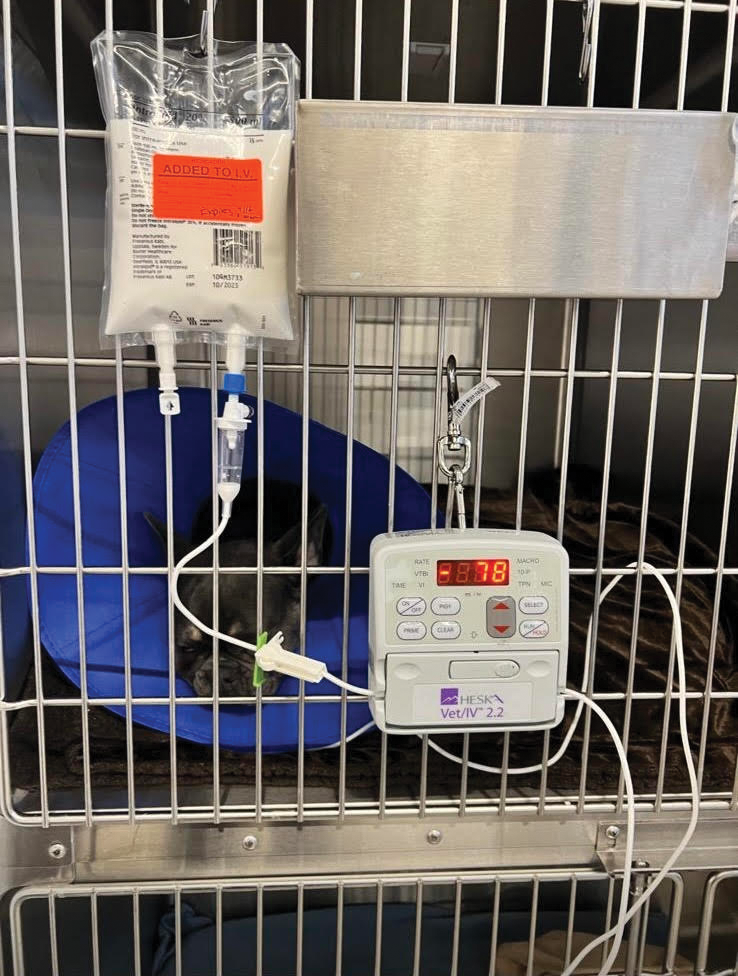
Figure 1. Intralipid 20% being administered to a 3-year-old male neutered French bulldog that presented with a 1-hour history of worsening tremors. Tremorgenic mycotoxin ingestion was suspected, as the patient had got into a trash can containing moldy food a few hours prior. A 1.5-mL/kg bolus of intravenous lipid emulsion was administered, followed by a 15-mL/kg constant-rate infusion for 1 hour. The patient recovered without further interventions and was discharged the next day. Courtesy Dr. Mariana Pardo.
Dosing
In veterinary medicine, recommendations for ILE therapy in cases of intoxication with lipophilic neurotoxins are very similar to those of ASRA when a LAST is recognized (Box 1).6 It is recommended to use a 1.2-µm filter for ILE infusion.33
- If a patient responds to standard therapy, then ILE therapy is not indicated.
- Run a biochemistry profile to assess organ function and electrolytes before initiating ILE therapy. Correct any electrolyte disorders, focusing on potassium, phosphorus, and sodium.
- Administer an initial intravenous ILE bolus of 1.5 mL/kg over 1 to 2 minutes.
- Follow with a constant-rate infusion at 15 mL/kg over 1 hour.
- If the patient is at risk of volume overload, discontinue all other infusions while administering the ILE and consider a reduced rate (4 mL/kg) and prolonged administration time (4 hours).
- Evaluate the patient 4 to 6 hours after stopping ILE therapy.
- If there is no clinical improvement, perform a microhematocrit. If the plasma is not lipemic or hemolyzed, repeat the ILE bolus followed by a constant-rate infusion, both at the same doses described above.
- Initial intravenous bolus at 1.5 mL/kg administered over 2 to 3 minutes.
- Follow immediately with a 15-mL/kg constant-rate infusion for 1 hour.
- If the patient remains unstable:
- Repeat bolus
- Double the infusion (30 mL/kg) and continue once hemodynamically stable
- The maximum recommended dose is 12 mL/kg, based on FDA recommendations to not exceed 12.5 mL/kg of Intralipid 20% in the first 24 hours of parental nutrition in adults or 15 mL/kg in pediatric patients.33
ASRA = American Society of Regional Anesthesia and Pain Medicine
In severe, life-threatening intoxications, higher doses could be considered. The 50% lethal dose of a 20% ILE in a rat model has been shown to be approximately 67.7 mL/kg, with most fatalities due to volume overload rather than the chemical properties of the emulsion.34 However, the exact dosing of ILE is not well established.
ILEs with a 30% concentration are available and have been seen to provide a faster recovery compared with a 20% concentration in a rat model.35 The author has only used ILE 20%, with great success in most cases when ILE therapy has been used for lipophilic drugs. More studies are needed to determine the benefits versus risks of using a 20% versus a 30% ILE.
When considering higher doses and repeating protocols due to slow or lack of improvement, the author always checks for serum lipemia. If serum lipemia is present, no more ILE is administered; serum can be rechecked in 4 to 6 hours. The author has never needed to give more than 3 ILE doses in a given case.
Considerations
ILE products can be administered via a peripheral catheter after sterile placement. If extravasation occurs, supportive care with warm compresses and bandage should be sufficient treatment.19 Due to the lipophilic nature of ILE, attention must be paid when administering other lipophilic drugs that are part of the supportive treatment and could be removed by ILE therapy.6
It is important to follow the manufacturer’s recommendations on handling and storage to avoid potential contamination of the product that can lead to sepsis. It is recommended to store ILEs above 25 °C (77 °F). Open bags that are not used immediately can be stored between 2 °C and 8 °C (36 °F to 46 °F) but should be discarded after 24 hours.33
Adverse Effects
One of the characteristics of ILEs that determines their safety profile is the mean droplet size (MDS). To create the ILE, the mixture of water, oil, and emulsifier must be forced through small apertures several times. Depending on the droplet size obtained, these emulsions are then classified as macro- (MDS > 1 µm), mini- (MDS < 1 µm), and micro- (MDS < 0.1 µm) emulsions.5 The final MDS in Intralipid 20% is approximately 0.5 µm.33 The risk of developing an inflammatory response and microvascular embolization increases when the MDS is greater than 1 µm.5 The composition of the ILE can also cause hypersensitivity reactions in animals with an allergy to any of its components (e.g., egg, soy).33
Although rare, several different adverse effects have been reported in human medicine following the administration of ILE for parental nutrition, including respiratory distress,36-39 pancreatitis,37 hyperlipidemia,38 fat overload syndrome,39 acute kidney injury,40 and cardiac embolism.40 Fat overload syndrome is known to be associated with a rapid infusion of soybean oil–based ILE, leading to myriad symptoms, including pancytopenia, coagulopathy, hepatomegaly, splenomegaly, icterus, headaches, and fever.39
Adverse effects associated with the administration of ILE in veterinary medicine have also been reported. Serum lipemia is among the most common, potentially leading to pancreatitis.16,20,29,30 Seitz et al described the development of persistent lipemia and suspected corneal lipidosis in a cat that presented for permethrin intoxication and was treated with ILE therapy.41 The dose administered in this case followed the protocols described above, with an initial bolus of 1.5 mL/kg followed by a 0.25-mL/kg/min constant-rate infusion. After a week, the suspected corneal lipidosis resolved with no need for further intervention. Facial pruritus in a cat after the administration of ILE has also been described,17 and swelling and pain after peripheral extravasation of ILE in a dog was reported.19
A retrospective study of 300 dogs and 100 cats compiled the list of adverse effects noted, with an incidence of 6.4% in dogs and 4% in cats.21 The most common adverse effects in dogs were loss of consciousness (25%), followed by hyperthermia (12.5%), reduced general behavior (12.5%), vomiting (12.5%), and diarrhea (12.5%). Other adverse effects were reduced level of consciousness, bradycardia, apnea/dyspnea, and ataxia. In cats, no single adverse effect predominated; tachypnea, thrombophlebitis, semicomatose state, somnolence, and bradycardia were all reported. More recently, Torrente et al reported the incidence of a type 4 renal tubular acidosis in a cat that was suspected to be associated with the administration of ILE.42
Epstein et al reported the use of manual plasma exchange to treat an overdose of ILE.43 The dog had accidentally received a total 142 mL/kg of ILE for the treatment of baclofen intoxication, developing hypertension, hemolysis, thrombocytopenia, severe hypertriglyceridemia, hypoglycemia, acute kidney injury, and ocular lipid infiltrates.43
Despite the potential for adverse effects, the administration of ILE should not be discouraged when the benefits are greater than the potential damage, as seen in many life-threatening intoxications.
Summary
ILE therapy has evolved from being a parenteral nutrition tool to a first-line rescue therapy in veterinary medicine. ILEs provide a cost-effective and rapid intervention for common intoxications, ranging from macrocyclic lactones to certain NSAIDs and psychoactive drugs.
While the therapy is generally safe and well-tolerated, clinicians must remain vigilant regarding potential adverse effects such as persistent lipemia, volume overload, and pancreatitis. Adhering to standardized dosing protocols and monitoring serum lipemia levels ensures that the benefits of rapid detoxification are maximized while minimizing risks. As research continues to refine optimal concentrations, ILE is emerging as an advancement in the management of many life-threatening toxicoses in companion animals.
References
- Waitzberg DL, Torrinhas RS, Jacintho TM. New parenteral lipid emulsions for clinical use. JPEN J Parenter Enteral Nutr. 2006;30(4):351-367. doi:10.1177/0148607106030004351
- Crandell DE, Weinberg GL. Moxidectin toxicosis in a puppy successfully treated with intravenous lipids. J Vet Emerg Crit Care (San Antonio). 2009;19(2):181-186. doi:10.1111/j.1476-4431.2009.00402.x
- Neal JM, Barrington MJ, Fettiplace MR, et al. The third American Society of Regional Anesthesia and Pain Medicine practice advisory on local anesthetic systemic toxicity. Reg Anesth Pain Med. 2018;43(2):113-123. doi:10.1097/aap.0000000000000720
- Quick Reference Handbook: Local anaesthetic toxicity. Association of Anaesthetists. June 2023. Accessed March 6, 2026. https://anaesthetists.org/Portals/0/PDFs/QRH/QRH_complete_June_2023.pdf?ver=2023-06-23-141011-603
- Fernandez AL, Lee JA, Rahilly L, Hovda L, Brutlag AG, Engebretsen K. The use of intravenous lipid emulsion as an antidote in veterinary toxicology. J Vet Emerg Crit Care (San Antonio). 2011;21(5):570-570. doi:10.1111/j.1476-4431.2011.00686.x
- Robben JH, Dijkman MA. Lipid therapy for intoxications. Vet Clin North Am Small Anim Pract. 2017;47(2):435-450. doi:10.1016/j.cvsm.2016.10.018
- Fettiplace MR, Weinberg G. The mechanisms underlying lipid resuscitation therapy. Reg Anesth Pain Med. 2018;43(2):138-149. doi:10.1097/aap.0000000000000719
- Weinberg GL, VadeBoncouer T, Ramaraju GA, Garcia-Amaro MF, Cwik MJ. Pretreatment or resuscitation with a lipid infusion shifts the dose-response to bupivacaine-induced asystole in rats. Anesthesiology. 1998;88(4):1071-1075. doi:10.1097/00000542-199804000-00028
- Fettiplace MR, Weinberg G. Past, present, and future of lipid resuscitation therapy. JPEN J Parenter Enteral Nutr. 2015;39(suppl 1):S72-S83. doi:10.1177/0148607115595979
- Gwaltney-Brant S, Meadows I. Intravenous lipid emulsions in veterinary clinical toxicology. Vet Clin North Am Small Anim Pract. 2018;48(6):933-942. doi:10.1016/j.cvsm.2018.07.006
- Clarke DL, Lee JA, Murphy LA, Reineke EL. Use of intravenous lipid emulsion to treat ivermectin toxicosis in a border collie. JAVMA. 2011;239(10):1328-1333. doi:10.2460/javma.239.10.1328
- Wright HM, Chen AV, Talcott PA, Poppenga RH, Mealey KL. Intravenous fat emulsion as treatment for ivermectin toxicosis in three dogs homozygous for theabcb1–1δ gene mutation. J Vet Emerg Crit Care (San Antonio). 2011;21(6):666-672. doi:10.1111/j.1476-4431.2011.00687.x
- Epstein SE, Hollingsworth SR. Ivermectin-induced blindness treated with intravenous lipid therapy in a dog. J Vet Emerg Crit Care (San Antonio). 2013;23(1):58-62. doi:10.1111/vec.12016
- Jourdan G, Boyer G, Raymond-Letron I, Bouhsira E, Bedel B, Verwaerde P. Intravenous lipid emulsion therapy in 20 cats accidentally overdosed with ivermectin. J Vet Emerg Crit Care (San Antonio). 2015;25(5):667-671. doi:10.1111/vec.12371
- Haworth MD, Smart L. Use of intravenous lipid therapy in three cases of feline permethrin toxicosis. J Vet Emerg Crit Care (San Antonio). 2012;22(6):697-702. doi:10.1111/j.1476-4431.2012.00804.x
- Ceccherini G, Perondi F, Lippi I, Grazia G, Marchetti V. Intravenous lipid emulsion and dexmedetomidine for treatment of feline permethrin intoxication: a report from 4 cases. Open Vet J. 2015;5(2):113. doi:10.5455/ovj.2015.v5.i2.p113
- Peacock RE, Hosgood G, Swindells KL, Smart L. A randomized, controlled clinical trial of intravenous lipid emulsion as an adjunctive treatment for permethrin toxicosis in cats. J Vet Emerg Crit Care (San Antonio). 2015;25(5):597-605. doi:10.1111/vec.12322
- Kuo K, Odunayo A. Adjunctive therapy with intravenous lipid emulsion and methocarbamol for permethrin toxicity in 2 cats. J Vet Emerg Crit Care (San Antonio). 2013;23(4):436-441. doi:10.1111/vec.12070
- Bates N, Chatterton J, Robbins C, et al. Lipid infusion in the management of poisoning: a report of 6 canine cases. Vet Rec. 2013;172(13):339-339. doi:10.1136/vr.101036
- Becker M, Young B. Treatment of severe lipophilic intoxications with intravenous lipid emulsion: a case series (2011-2014). Vet Med (Auckl). 2017;8:77-85. doi:10.2147/vmrr.s129576
- Markert C, Heilmann RM, Kiwitz D, Doerfelt R. Intravenous lipid emulsion for the treatment of poisonings in 313 dogs and 100 cats (2016–2020). Front Vet Sci. 2023;10:1272705. doi:10.3389/fvets.2023.1272705
- Bellis TJ, Gibeon L. The use of intralipid emulsion therapy to treat severe cardiotoxicity secondary to lamotrigine ingestion in a dog. Clin Case Rep. 2018;6(10):1982-1988. doi:10.1002/ccr3.1733
- Hagley SP, Epstein SE, Stern JA, Poppenga R. Lamotrigine toxicosis treated with intravenous lipid emulsion therapy in a dog. JAAHA. 2020;56(4):226-230. doi:10.5326/jaaha-ms-6815
- Harris S, McMichael MA, Harmon R, Boothe D. Case report: successful intravenous lipid emulsion therapy for canine amphetamine toxicosis. Front Vet Sci. 2022;9:938021. doi:10.3389/fvets.2022.938021
- Dreese K, Odunayo A, Bucknoff MC. Case report: treatment of cyclobenzaprine ingestion in two dogs with intravenous intralipid therapy. Front Vet Sci. 2024;11:1354028. doi:10.3389/fvets.2024.1354028
- Lelescu CA, Mureșan C, Muste A, Taulescu MA, Neagu AM, Nagy AL. Successful treatment of metaldehyde toxicosis with intravenous lipid emulsion in a dog. Acta Vet Brno. 2017;86(4):379-383. https://doi.org/10.2754/avb201786040379
- Voss A, Chow R. Intravenous lipid emulsion therapy in 2 dogs and 2 cats with vitamin D toxicosis. Can Vet J. 2023;64(12):1119-1124.
- Lundgren S, Dreimanis K, Engdahl K, Windahl U, Tegner C. Alpha-chloralose poisoning in 25 cats: clinical picture and evaluation of treatment with intravenous lipid emulsion. J Feline Med Surg. 2024;26(4):1098612X241235776. doi:10.1177/1098612×241235776
- Herring JM, McMichael MA, Corsi R, Wurlod V. Intravenous lipid emulsion therapy in three cases of canine naproxen overdose. J Vet Emerg Crit Care (San Antonio). 2015;25(5):672-678. doi:10.1111/vec.12307
- Chumbler NS, Schildt JC, Mawby DI, Papich MG. Use of intravenous lipid therapy in a cat with carprofen overdose. Clin Case Rep. 2020;8(4):653-657. doi:10.1002/ccr3.2772
- O’Brien TQ, Clark-Price SC, Evans EE, Di Fazio R, McMichael MA. Infusion of a lipid emulsion to treat lidocaine intoxication in a cat. JAVMA. 2010;237(12):1455-1458. doi:10.2460/javma.237.12.1455
- Williams K, Wells RJ, McLean MK. Suspected synthetic cannabinoid toxicosis in a dog. J Vet Emerg Crit Care (San Antonio). 2015;25(6):739-744. doi:10.1111/vec.12378
- Intralipid 20% (a 20% I.V. fat emulsion) — prescribing information. U.S. Food and Drug Administration. Accessed March 6, 2026. https://www.accessdata.fda.gov/drugsatfda_docs/label/2022/018449s049lbl.pdf
- Hiller DB, Di Gregorio G, Kelly K, et al. Safety of high-volume lipid emulsion infusion: a first approximation of LD50 in rats. Reg Anesth Pain Med. 2010;35(2):140-144. doi:10.1097/aap.0b013e3181c6f5aa
- Fettiplace MR, Akpa BS, Ripper R, et al. Resuscitation with lipid emulsion: dose-dependent recovery from cardiac pharmacotoxicity requires a cardiotonic effect. Anesthesiology. 2014;120(4):915-925. doi:10.1097/aln.0000000000000142
- Suchner U, Katz DP, Fürst P, et al. Effects of intravenous fat emulsions on lung function in patients with acute respiratory distress syndrome or sepsis. Crit Care Med. 2001;29(8):1569-1574. doi:10.1097/00003246-200108000-00012
- Levine M, Skolnik AB, Ruha AM, Bosak A, Menke N, Pizon AF. Complications following antidotal use of intravenous lipid emulsion therapy. J Med Toxicol. 2013;10(1):10-14. doi:10.1007/s13181-013-0356-1
- Cave G, Harvey M, Willers J, et al. Lipaemic report: results of clinical use of intravenous lipid emulsion in drug toxicity reported to an online lipid registry. J Med Toxicol. 2014;10(2):133-142. doi:10.1007/s13181-013-0375-y
- Hojsak I, Kolaček S. Fat overload syndrome after the rapid infusion of SMOFlipid emulsion. JPEN J Parenter Enteral Nutr. 2013;38(1):119-121. doi:10.1177/0148607113482001
- Hayes BD, Gosselin S, Calello DP, et al. Systematic review of clinical adverse events reported after acute intravenous lipid emulsion administration. Clin Toxicol. 2016;54(5):365-404. doi:10.3109/15563650.2016.1151528
- Seitz MA, Burkitt-Creedon JM. Persistent gross lipemia and suspected corneal lipidosis following intravenous lipid therapy in a cat with permethrin toxicosis. J Vet Emerg Crit Care (San Antonio). 2016;26(6):804-808. doi:10.1111/vec.12440
- Torrente C, Bou P, Riba M, Fernández D, Bosch L. Refractory hyperkalemia with type 4 renal tubular acidosis associated with tubulointerstitial nephritis and renal papillary necrosis following intravenous lipid emulsion therapy in a cat. J Vet Emerg Crit Care (San Antonio). 2025;35(3):286-294. doi:10.1111/vec.13462
- Epstein SE, Hopper K, Farrell KS. Manual plasma exchange to treat an accidental overdose of intravenous lipid emulsion in a dog with baclofen toxicosis. JAVMA. 2022;260(6):650-656. doi:10.2460/javma.21.03.0152
CE Quiz
This article has been submitted for RACE approval for 1 hour of continuing education credit and will be opened for enrollment upon approval. To receive credit, take the test at vetfolio.com. Free registration is required. Questions and answers online may differ from those below. Tests are valid for 2 years from the date of approval.
1. What is the main lipid component in Intralipid 20%, the most common intravenous lipid emulsion (ILE) product used in veterinary medicine?
a. Avocado oil
b. Olive oil
c. Soybean oil
d. Fish oil
2. According to the lipid sink/lipid shuttle theory, how do ILEs help treat intoxications?
a. They neutralize the toxin within the liver.
b. They transport toxins from target organs to storage/detoxification organs.
c. They help the kidneys increase the ability to filter water-soluble toxins.
d. They bind and metabolize toxins within the blood compartment, increasing elimination.
3. Which log P value indicates that a substance is fat soluble?
a. Log P > 1
b. Log P < 1
c. Log P > 3
d. Log P < 3
4. What are the recommended intravenous bolus and constant-rate infusion (CRI) doses for ILE in veterinary patients?
a. 1.5-mL/kg bolus followed by a 15-mL/kg CRI for 1 hour
b. 1.5-mL/kg bolus followed by a 20-mL/kg CRI for 1 hour
c. 3-mL/kg blous followed by a 10-mL/kg CRI for 2 hours
d. 10-mL/kg bolus followed by a 15-mL/kg CRI for 3 hours
5. What is one of the most common adverse effects seen with the administration of ILE that can lead to the development of pancreatitis?
a. Serum lipemia
b. Vomiting and diarrhea
c. Peripheral edema
d. Facial pruritus