

Continuous glucose monitors (CGMs) have become increasingly popular tools for monitoring diabetes mellitus in dogs and cats. CGM systems provide clients the benefits of constant monitoring and fewer trips for in-hospital blood glucose curves, and they provide veterinarians the benefit of observing trends rather than single values. However, because CGMs in current use were designed for humans, they are also associated with possible physical problems and/or sensor detachment or errors when used on veterinary patients. Veterinarians should stay informed about changes and recalls associated with CGMs while appreciating the value of basing diabetes mellitus management on trends.
Take-Home Points
- Diabetes mellitus treatment decisions should be guided by overall glucose trends rather than a single measurement.
- Among the multiple products for interstitial glucose monitoring in human patients, those most commonly adapted for use in veterinary patients are the FreeStyle Libre systems.
- In discussions of CGMs with clients, expectations should be realistic with regard to CGM performance, lifespan, limitations, and overall role in managing diabetes mellitus.
- Because CGM systems advance and transform over time, veterinarians should stay abreast of potential recalls and system changes.
Diabetes mellitus is a common endocrinopathy of cats and dogs, although etiology and pathophysiology differ by species. Caring for pets with diabetes can place significant strain on clients, emotionally and financially. Until recently, insulin effectiveness and duration were assessed by using in-hospital blood glucose curves. However, the advent of continuous glucose monitors (CGMs) has led to significant shifts in the at-home and in-clinic management of patients with diabetes mellitus, based on interstitial glucose concentration trends over time rather than a single in-hospital blood glucose curve.
CGMs used in veterinary medicine are adapted from those used with human patients, most commonly the FreeStyle Libre systems. A CGM developed specifically for animals, the GluCurve Pet CGM (ALR Technologies), is now available in Canada but not yet in the United States. Thus, this article focuses on the currently used Freestyle Libre system CGMs.
Products
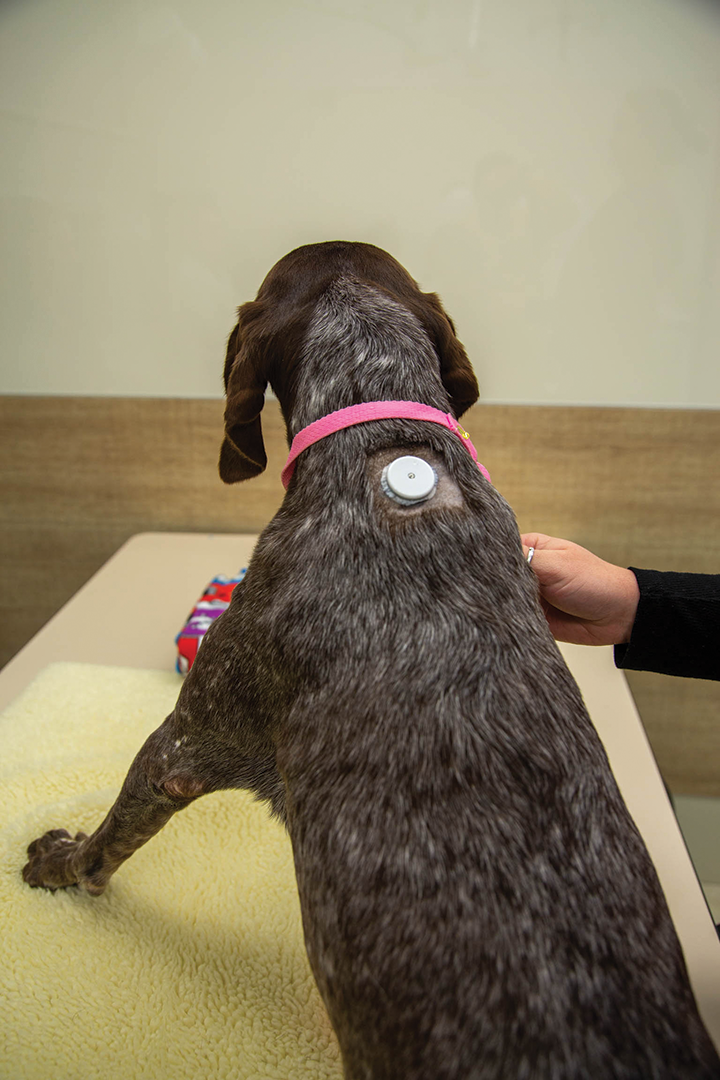
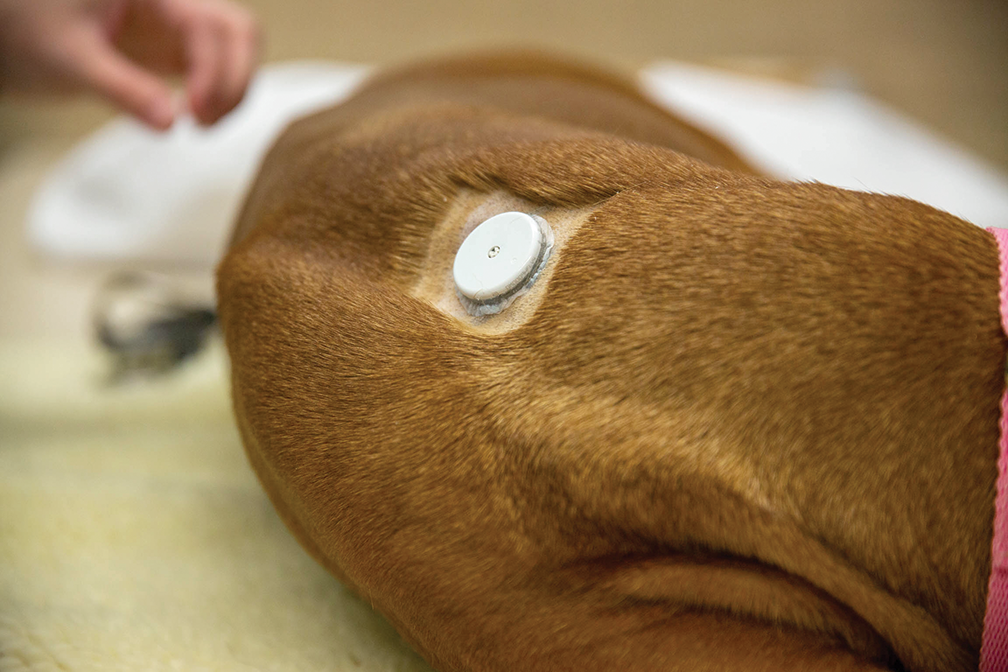
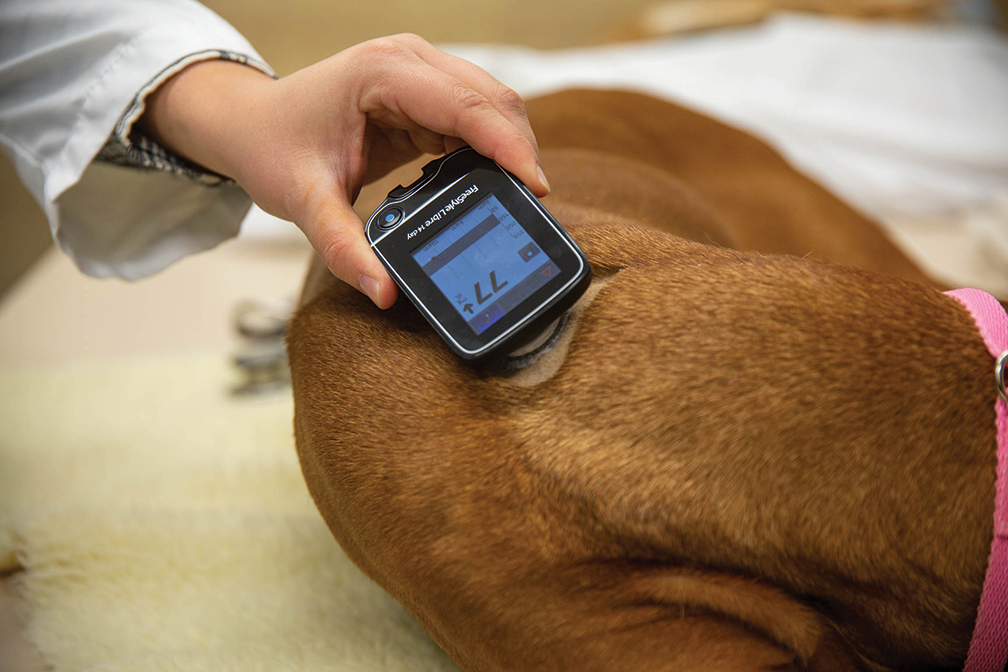
CGMs are small sensors inserted into the skin via a small applicator and secured with a tissue-safe adhesive with a thin filament that measures interstitial glucose concentrations (FIGURE 1). The sensor transmits readings via a paired reader device or phone application (app) (FIGURE 2).
In human medicine, myriad CGM devices are on the market, and the terminology can be confusing and used interchangeably by various sources.
- Flash glucose monitors refer to those in which the user must periodically scan or “flash” the sensor with the reader to obtain an interstitial glucose concentration. The FreeStyle Libre 14-day system (original system) would be considered a flash glucose monitor.
- CGMs continuously transmit data back to the reader or phone app without flashes. The FreeStyle Libre 2 and 3 systems would be considered CGMs.
The products most commonly used for dogs and cats are the FreeStyle Libre systems, although they are not designed for or approved by the FDA for veterinary use.1 The rules and regulations for manufacturers that produce devices exclusively for animal use differ from those for manufacturers that produce devices for use on humans.2
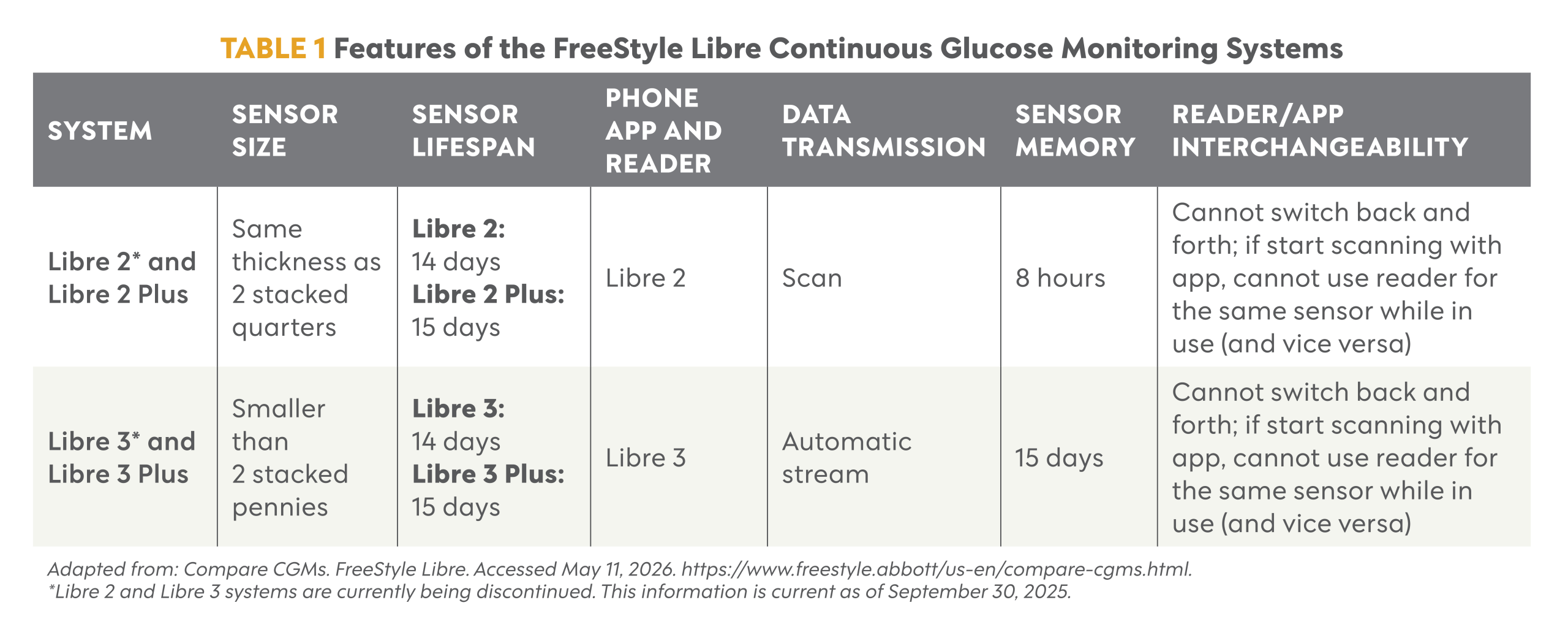
Product nomenclature evolves quickly, making it difficult to keep up with new sensors appearing on the market (TABLE 1).
- The first-generation FreeStyle Libre 14-day system (sensor and reader) has been discontinued.
- The next-generation sensors (Libre 2 and Libre 3) are also being discontinued in favor of the latest technology in the Libre 2 Plus and the Libre 3 Plus sensors. The Libre 3 sensor is smaller than that of the Libre 2.
- The Plus versions of both sensors last for 15 days rather than the 14 days in the non-Plus versions, and the Libre 2 and Libre 3 readers are equipped with a glucometer.
Supporting Research
Despite a plethora of studies assessing the accuracy and utility of the first-generation FreeStyle Libre 14-day systems for use with dogs and cats, the findings cannot be rendered identical to the subsequent-generation sensors due to the changes in technology. Initial studies found that for dogs with diabetes mellitus and diabetic ketoacidosis, the clinical accuracy of the FreeStyle Libre 14-day system was acceptable.3,4 The FreeStyle Libre 14-day system measures interstitial glucose concentration, not blood glucose concentration, and its accuracy for measuring hypoglycemic range is lower.3,5 When a sensor records a low interstitial glucose concentration, it is prudent to double-check the blood glucose concentration by using a validated portable blood glucose glucometer (e.g., Zoetis AlphaTrak glucometers). Sensor accuracy for dogs can also be affected by other factors, such as dehydration and skin thickness.6,7 Analytical accuracy of the FreeStyle Libre 2 was more limited than that of the clinical chemistry analyzer but was still useful for clinical decision making for dogs with rapidly induced hypoglycemia.8
In a prospective study, the clinical accuracy of the FreeStyle Libre 14-day system for glucose monitoring in cats was acceptable; however, system accuracy decreased during periods of rapid blood glucose concentration changes, which mirrored findings in dogs.9 A recent study of the FreeStyle Libre 2 system that used glycemic clamps on healthy cats found that FreeStyle Libre 2 system measurements of interstitial glucose concentrations overestimate blood glucose concentrations during periods of hypoglycemia, which makes it imperative for clinicians to obtain a blood glucose concentration before making sudden changes to the clinical plan.10 In another study of glycemic clamp use in healthy cats, the FreeStyle Libre 3 system overestimated the blood glucose concentration during marked hypoglycemia; thus, clinicians should continue to confirm CGM readings by using an alternative method (e.g., a validated glucometer) before changing treatment.11
Complications and Troubleshooting
Although CGM systems provide clients with the allure of constant monitoring and effectively eliminate the need for in-hospital blood glucose curves, the advanced technologies inevitably present glitches.
Patient Complications
A retrospective study assessing the complications associated with the FreeStyle Libre 14-day system in dogs found that the most common categories of complications were mild dermatologic changes (e.g., erythema, crusting), followed by sensor issues (e.g., early detachment, dysfunction). Ultimately, however, the authors concluded that according to their retrospective review, the FreeStyle Libre 14-day system was safe and well-tolerated in dogs.12 A more alarming complication, published in a case report, detailed development of pneumothorax, presumably secondary to FreeStyle Libre 2 placement on the thorax of a 15-year-old dog with diabetes mellitus. However, the dog in the report was emaciated and had experienced approximately 27 FreeStyle Libre 2 applications over the year before the pneumothorax developed.13 Another case report described development of unilateral pneumothorax in a cat after CGM (unknown type) placement; the cat in the report was also emaciated and had a previously diagnosed pulmonary mass.14
Mechanical Complications
Troubleshooting any errors associated with the various FreeStyle Libre systems can create another set of frustrations for clients and veterinarians. The sensor is not designed for use in animals, and error messages can be associated with the dedicated reader and the designated smartphone app. After application, the sensor requires a 60-minute warm-up period to acclimate to the interstitial fluid before it begins to transmit data.
Sensor Errors
The author has encountered error messages on readers as well as phone apps consisting of “sensor error” with a time duration, such as “Check again after” (e.g., 10 minutes, 1 hour, 8 hours), that did not reliably correspond with any changes to sensor placement. There is little recourse when the sensor “times out” of supplying readings.
Sensor Dislodgement
Another issue, which necessitates application of a new sensor, is premature sensor dislodgement. In terms of sensor placement, the conventional site for dogs is adjacent to/between the scapulae. However, when the location of the sensor placement for the FreeStyle Libre 14-day system was assessed, variation in glucose concentration measurements between the scapulae site and the hip site was seemingly random, and thus the hip could be a feasible alternative site for dogs for which conventional sensor placement is limited.15 In cats, the conventional sensor site location is the dorsal neck with a light wrap to help secure it in place.16
Supplementing Interstitial Glucose Readings With Blood Glucose Readings
Given the increase in updated and technologically sophisticated CGM systems and the relative lack of data for dogs and cats as each system evolves, it makes sense for veterinarians and clients to double-check blood glucose concentration if they are concerned about an interstitial glucose reading. The FreeStyle Libre systems are valuable for assessing glucose concentration trends over time, rather than providing point-of-care analysis. Of note, at a teaching hospital, the AlphaTrak 2 veterinary glucometers and the human glucometers housed within the reader of the FreeStyle Libre 14-day system and the FreeStyle Libre 2 system correlated well with the reference analyzer, which supports potential client use of built-in reader glucometers to check blood glucose concentrations in their dogs.17
Expectations
Setting appropriate expectations for the FreeStyle Libre system is critical for clients and veterinarians. Because of the potential for sensor errors and sensor dislodgement (intentional and unintentional) as well as the overall role of CGMs in clinical decision making, veterinarians can establish a goal of obtaining several days’ worth of readings (as opposed to the full 14 or 15 days). For example, rather than lamenting that the sensor fell off on day 6, veterinarians can frame the narrative to emphasize how helpful it is to have those 6 days’ worth of data. Veterinarians should also advise clients to not check the readings obsessively or initiate treatment decisions on their own. The overall trends are more useful than a single reading at a single moment in time.
Recalls
As CGM systems advance and transform over time, it is also imperative that veterinarians stay abreast of potential recalls and system changes designed to optimize human conditions. In December 2025, Abbott alerted the public that some lots of the FreeStyle Libre 3 and 3 Plus sensors provided incorrectly low glucose readings, which could lead to serious complications. The FDA provided an Early Alert with additional instructions for consumers.18 In addition, the AVMA provides recalls and safety alerts on its website and social media outlets.
Summary
Monitoring glucose levels in patients with diabetes mellitus has pivoted from conventional in-hospital blood glucose curves to at-home CGM monitors with increasingly sophisticated capabilities. CGM systems offer another tool in the ever-expanding arsenal of diabetes management. In the veterinary literature, additional information on the new systems and their clinical utility is increasing; unfortunately, it is difficult to keep pace with the ever-changing terminology, and not all study results should be extrapolated to different technology versions. Ultimately, the product names change quite frequently, and veterinarians should be aware of product limitations, set appropriate client expectations, and focus on the trends rather than a single measurement. In addition, consumer recall notices could affect veterinary patients and subsequent clinical decisions.
References
- Del Baldo F, Fracassi F. Continuous glucose monitoring in dogs and cats: application of new technology to an old problem. Vet Clin North Am Small Anim Pract, 2023;53(3):591-613. doi:10.1016/j.cvsm.2023.01.008
- How FDA regulates animal devices. U.S. Food and Drug Administration. Updated April 6, 2026. Accessed February 4, 2026. https://www.fda.gov/animal-veterinary/animal-health-literacy/how-fda-regulates-animal-devices
- Corradini S, Pilosio B, Dondi F, et al. Accuracy of a flash glucose monitoring system in diabetic dogs. J Vet Intern Med. 2016;30(4):983-988. doi:10.1111/jvim.14355
- Malerba E, Cattani C, Del Baldo F, et al. Accuracy of a flash glucose monitoring system in dogs with diabetic ketoacidosis. J Vet Intern Med. 2020;34(1):83-91. doi:10.1111/jvim.15657
- Howard LA, Lidbury JA, Jeffery N, Washburn SE, Patterson CA. Evaluation of a flash glucose monitoring system in nondiabetic dogs with rapidly changing blood glucose concentrations. J Vet Intern Med. 2021;35(6):2628-2635. doi:10.1111/jvim.16273
- Silva DD, Cecci GRM, Biz G, Chiaro FN, Zanutto MS. Evaluation of a flash glucose monitoring system in dogs with diabetic ketoacidosis. Domest Anim Endocrinol. 2021;74:106525. doi:10.1016/j.domaniend.2020.106525
- Del Baldo F, Diana A, Canton C, Linta N, Chiocchetti R, Fracassi F. The influence of skin thickness on flash glucose monitoring system accuracy in dogs with diabetes mellitus. Animals (Basel). 2021;11(2):408. doi:10.3390/ani11020408
- Herman JL, Lidbury JA, Atiee GF, Washburn SE, Patterson CA. The FreeStyle Libre 2 system demonstrates limited analytical accuracy without resulting in detrimental clinical decisions. Am J Vet Res. 2025;86(8):ajvr.25.02.0055. doi:10.2460/ajvr.25.02.0055
- Del Baldo F, Fracassi F, Pires J, et al. Accuracy of a flash glucose monitoring system in cats and determination of the time lag between blood glucose and interstitial glucose concentrations. J Vet Intern Med. 2021;35(3):1279-1287. doi:10.1111/jvim.16122
- Berg AS, Crews CD, Adin C, et al. Assessment of the FreeStyle Libre 2 interstitial glucose monitor in hypo- and euglycemic cats. J Vet Intern Med. 2023;37(5):1703-1709. doi:10.1111/jvim.16820
- Tardo AM, Crews C, Mott J, Porter LT, Adin C, Gilor C. Accuracy of the Freestyle Libre 3 continuous glucose monitoring system in hypo- and euglycemic cats. J Vet Intern Med. 2025;39(2):e70048. doi:10.1111/jvim.70048
- Campbell C, Shoelson A, Mahony O. Complications associated with a flash glucose monitoring system in diabetic dogs. Can J Vet Res. 2023;87(4):260-264.
- Sia WK, Sun JA. Pneumothorax suspected secondary to continuous glucose monitor placement in a dog. Can Vet J. 2025;66(1):58-63.
- Farmer EA, Flores RS, Manzi TJ. Iatrogenic pneumothorax in a cat following placement of a continuous–glucose sensor. J Vet Emerg Crit Care (San Antonio). 2025;35(6):784-788. doi:10.1111/vec.70065
- Evans JB, Lidbury JA, Jeffery N, Washburn SE, Patterson CA. Hip sensor location for flash interstitial glucose monitoring system provides adequate clinical accuracy in non-diabetic hypoglycemic dogs. Am J Vet Res. 2023;84(6):ajvr.23.02.0024. doi:10.2460/ajvr.23.02.0024
- Taylor S, Cannon M, Church D, et al. iCatCare 2025 consensus guidelines on the diagnosis and management of diabetes mellitus in cats. J Feline Med Surg. 2025;27(11):1098612×251399103. doi:10.1177/1098612X251399103
- Ioannou AF, Conrado FO, Chen Y, Mahoney O. Two human portable glucometers and a veterinary point-of-care glucometer correlate well with a reference laboratory chemistry analyzer for measurement of blood glucose concentrations in dogs. American Journal of Veterinary Research 2025;86(6):ajvr.24.10.0317. doi:10.2460/ajvr.24.10.0317
- Glucose monitor sensor recall: Abbott Diabetes Care removes certain FreeStyle Libre 3 and FreeStyle Libre 3 Plus sensors. U.S. Food and Drug Administration. Updated February 5, 2026. Accessed January 15, 2026. https://www.fda.gov/medical-devices/medical-device-recalls-and-early-alerts/early-alert-glucose-monitor-sensor-issue-abbott-diabetes-care