

Uremic toxins, in addition to blood urea nitrogen and creatinine, contribute to the clinical signs of illness observed in cats with chronic kidney disease (CKD). Toxin accumulation contributes to CKD progression by leading to systemic inflammation and ongoing renal damage. Production and absorption of the toxins are affected by changes in the gut microbiota associated with CKD, along with dietary nutrient breakdown. Understanding the formation of uremic toxins and how the gut microbiota interact with dietary components helps clinicians develop nutritional strategies aimed at improving outcomes for cats with CKD.
Take-Home Points
- The 3 fundamental nutritional strategies for decreasing circulating gut-derived toxin accumulation contributing to uremia in cats with CKD are 1) decreasing dietary substrates for toxin formation, 2) modulating gut microbiota to decrease toxic metabolite production and maintain the mucosal barrier, and 3) decreasing gastrointestinal absorption of formed toxic metabolites.
- A major therapeutic target for reducing gut-derived toxin production in cats with CKD is lowering dietary protein intake while providing high-quality protein sources; the optimal degree of restriction is unknown and should be individualized according to the cat’s current intake and clinical response.
- Providing soluble, fermentable prebiotic fiber promotes growth of beneficial gut bacteria and preserves integrity of the gut mucosal barrier, thereby decreasing formation and absorption of toxins.
- A recently available charcoal-based absorbent is a promising therapeutic for decreasing uremic toxin absorption, although further exploration is needed.
Gut-derived toxins are a collection of circulating compounds derived from by-products of nutrient fermentation by gut bacteria that contribute to the clinical picture of uremia in cats with chronic kidney disease (CKD). The most well-known uremic toxins in veterinary medicine are blood urea nitrogen (BUN) and creatinine; however, approximately 100 other uremic metabolites have been described. Several of the other gut-derived toxins have demonstrated clinical relevance in humans and cats with CKD, including indole-3-acetic acid, indoxyl sulfate, p-cresol, phenylacetic acid, and trimethylamine N-oxide.1-4
In individuals with normal renal function, gut-derived toxins are effectively cleared from circulation and have little clinical effect. Because renal excretion is the sole elimination mechanism, the toxins accumulate in individuals with CKD, including cats, in direct proportion to the degree of decreased glomerular filtration rate.2 In addition to decreased glomerular filtration rate, gastrointestinal (GI) and dietary factors increase microbiota-derived toxin production and absorption in cats with CKD (FIGURE 1).5,6
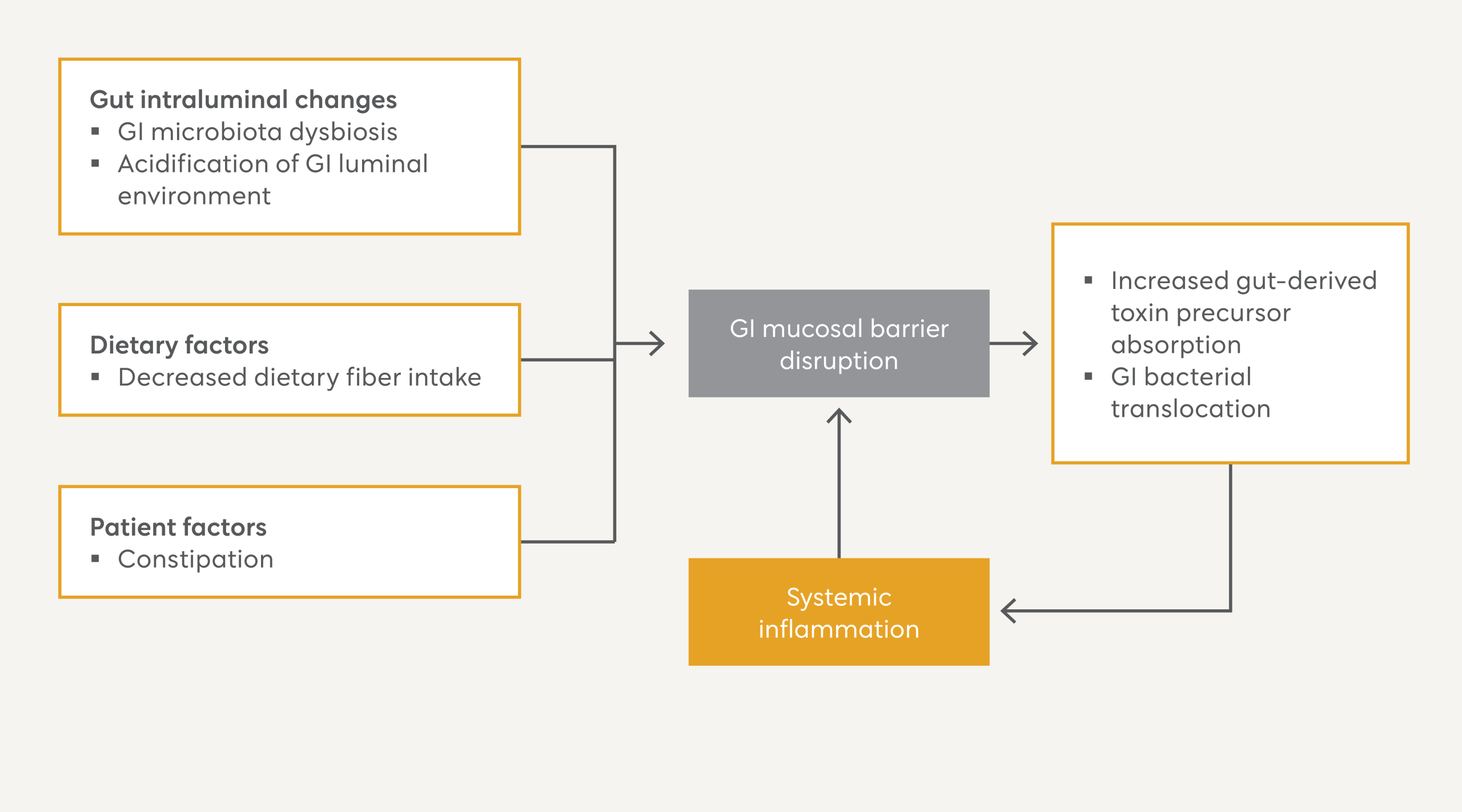
Figure 1. Gastrointestinal (GI) and patient-specific factors contributing to increased production and absorption of gut-derived toxin precursors in cats with chronic kidney disease.
Uremic Toxins and Feline CKD
Relatively recent studies have explored the association between gut-derived toxins and the diagnosis and progression of CKD in cats.1-3,7,8 Not only have increased serum concentrations of several toxins been identified in cats with CKD but higher concentrations have been associated with International Renal Interest Society (IRIS) disease severity.2,7 Increased circulating toxins may not only serve as markers of CKD progression but they may also predict CKD development in cats.9 In addition, several gut-derived toxins (e.g., indoxyl sulfate, trimethylamine N-oxide) can directly contribute to CKD progression by further decreasing renal antioxidant capacity and subsequently worsening inflammatory-induced renal tubular damage.1,3,10,11 In addition to the direct renal and GI effects of gut-derived toxins, their accumulation could contribute to metabolic changes observed in cats with CKD, including vascular mineralization, decreased erythropoietin production and anemia, protein/energy malnutrition, and sarcopenia.12
Nutritional Considerations for Decreasing Gut-Derived Toxin Accumulation in Cats With CKD
Because gut-derived toxins are formed from dietary substrates, nutritional modification is a key strategy for reducing circulating toxin concentrations. Nutritional management of gut-derived toxins involves 3 broad approaches.
- Decreasing dietary substrates that are converted to uremic toxin precursors
- Modifying the GI microbiota to alter the metabolome and intraluminal environment
- Decreasing absorption of precursor metabolites after they are formed
The following are dietary ingredients and supplements that can be modified to accomplish the above approaches.
Protein
A component of nutritional management for cats with CKD has long been reducing dietary protein, with emphasis placed on controlling phosphorus. However, because many gut-derived toxins are derived from protein, decreased protein intake could also be beneficial by decreasing formation of toxin precursors (TABLE 1).4
Although selectively restricting the specific amino acids listed in TABLE 1 is impractical in a clinical setting, studies of healthy cats and cats across IRIS stages of CKD support the independent relationship between dietary protein intake and circulating toxin concentrations.13,14

The optimal level of protein restriction for cats with CKD is unknown. Dietary protein reduction should be balanced with meeting protein and essential amino acid requirements, especially because cats, as obligate carnivores, have decreased capacity to downregulate protein metabolism if minimal protein needs are not met.15,16 The greatest reduction in circulating gut-derived toxins seems to be more closely associated with avoiding moderate-to-high protein diets (e.g., 8 to 11 g protein/100 kcal diet) than with differences among lower-protein diets (e.g., 7 g versus 5.3 to 5.7 g protein/100 kcal diet).13,14 Therefore, when selecting a diet for initial protein reduction, the first recommendation is to review a cat’s current dietary protein intake.
Further reductions can be guided by clinical signs of uremia (e.g., vomiting, nausea, decreased appetite) and biochemical evidence of increased uremic compounds (e.g., substantially increased BUN). In addition, in considering key nutrients for cats with CKD, reducing protein is a major strategy for decreasing phosphorus intake, which independently contributes to CKD progression. However, lower dietary protein content does not consistently equate to lower phosphorus content across all commercial diets. Therefore, in selecting a diet, protein and phosphorus should be evaluated independently and each should be appropriately restricted for an individual cat. This highlights the value of considering the entire diet profile and disease process for an individual patient rather than focusing on a single diet characteristic.
In addition to lowering protein quantity, diet selection should prioritize high-quality, highly digestible proteins. Poorly digested proteins reaching the colon increase abundance of proteolytic bacteria, which increase gut-derived toxin precursors.4 Determining the comparative protein digestibility among different diets can be challenging because these data are not routinely provided on product labels. For some veterinary therapeutic diets, digestibility information is provided in product guides or can be obtained by directly contacting the manufacturer; the target digestibility for protein typically reaches at least 87%. Given the limitations of available data, veterinary therapeutic diets are often formulated with high-quality protein sources and tighter nutrient specifications for the targeted disease state (i.e., less variability in protein content for therapeutic renal diets than for over-the-counter diets). In addition, larger manufacturers may have greater resources to consistently incorporate higher-quality ingredients and implement advanced quality control measures, resulting in improved standardization and reliability of nutrient content within a given diet.
Prebiotics
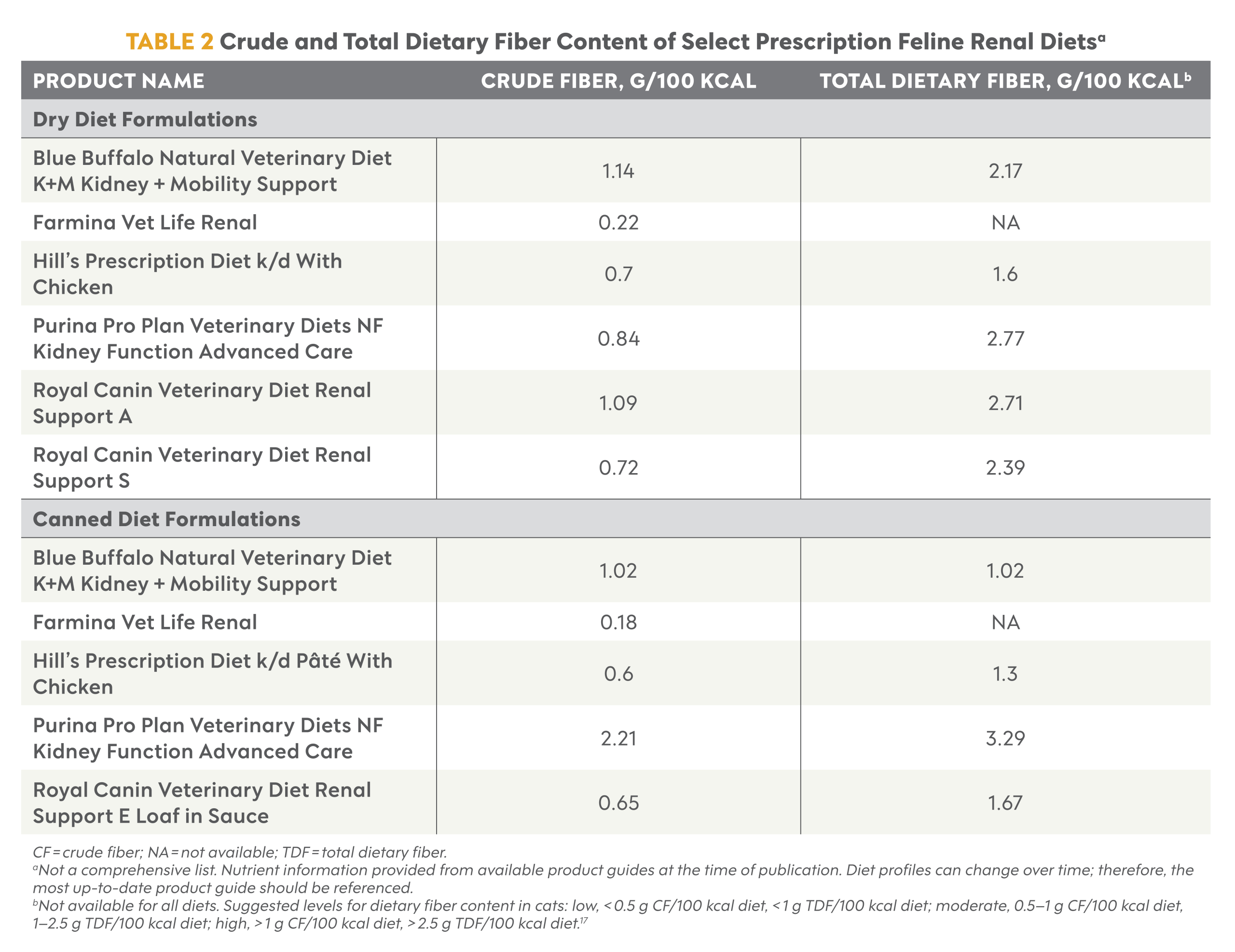
Some veterinary therapeutic diets for cats with CKD are low in dietary fiber (TABLE 2). However, fiber content varies; some diets have higher fiber content, often due to the inclusion of prebiotic fiber sources. Therefore, products should be compared rather than assuming that fiber is low in all diets. One should especially look beyond the crude fiber listed on the guaranteed analysis as this number can be misleading and does not reflect total dietary fiber content.
Although information for cats with CKD is limited, studies of rodents and humans support the inclusion of dietary prebiotic fiber to manage gut-derived toxin accumulation.18-20 Prebiotic fibers decrease abundance of proteolytic bacteria and help maintain the GI mucosal barrier, thereby decreasing uremic toxin absorption.19 However, although prebiotics are a type of fiber that can be fermented by gut bacteria, not all fiber sources are prebiotics; therefore, ingredient lists for prebiotic fiber sources (e.g., fructooligosaccharides, chicory root [inulin]) in addition to fiber content should also be reviewed.
Studies of humans demonstrate that supplementation of fermentable, water-soluble fiber (e.g., fructooligosaccharides, inulin) is more effective at decreasing circulating toxin concentrations than supplementation of insoluble fiber (e.g., resistant starches).18,19 The specific benefit of fermentable, water-soluble fiber types for decreasing gut-derived toxin likely translates to cats as well (BOX 1).21,22
- Apple pomace
- Long-chain oat β-glucan
- Short-chain fructooligosaccharides
In addition to providing substrates for microbial fermentation, increased dietary fiber may provide indirect benefit through treating constipation. Although not directly evaluated in cats, constipation increases circulating gut-derived toxin concentrations in humans with CKD, most likely by increasing time for absorption.23 Constipation is a well-recognized comorbidity in cats with CKD, and fiber supplementation helps normalize GI motility.19,23-27
In selecting diets for cats with CKD, available evidence supports consideration of fiber quantity and fermentability, with particular attention to prebiotic sources. Although the optimal amount is unknown, increasing prebiotic fiber intake is a practical consideration for cats with CKD that demonstrate clinical signs of uremia while being fed low-fiber renal diets.
Gastrointestinal Absorbents
In veterinary medicine, using GI absorbents to bind and decrease absorption of gut-derived toxins is a relatively new approach. A commercially available carbon-based absorbent (Renaltec; Porus One, Dechra) has demonstrated short-term decreases in circulating toxin concentrations in healthy older cats, as well as cats with naturally occurring and experimentally induced CKD.28-30 Whether those effects persist is unclear, but initial data are promising and other beneficial effects (e.g., improved GI bacterial dysbiosis, weight maintenance) have been preliminarily observed.28
Probiotics
Evidence for gut-derived toxin management with probiotics in cats with CKD is low, although some evidence supports probiotic effectiveness in humans.31 Possible mechanistic benefits of probiotic supplementation are:
- Selective supplementation of bacteria with beneficial (i.e., saccharolytic versus proteolytic) gene expression, decreasing gut-derived toxin production
- Improved GI mucosal barrier function, decreasing gut-derived toxin absorption
One commercial veterinary synbiotic (i.e., prebiotic and probiotic) product (Azodyl, Vetoquinol) is marketed for decreasing gut-derived toxin production in cats with CKD. The 2 studies published about this product demonstrated conflicting results; no benefit was observed in a double-blinded, controlled clinical trial.32,33 Supplementation of other products containing either Enterococcus faecium SF68 (FortiFlora, Purina Pro Plan) or 2 strains of Lactobacillus species have not been shown to significantly decrease circulating gut-derived toxin concentrations.34,35 However, the latter study did identify some responders in which decreased toxin concentrations were associated with higher fecal abundance of the supplemented probiotic species34; regardless, this finding represents only limited evidence of benefit in a small number of cats.
In considering probiotic use in cats with CKD, the lack of oversight on supplement quality should be recognized.36 Effects observed with 1 probiotic product cannot be extrapolated to other formulations or bacterial species. Therefore, clinicians should select commercial products for which published evidence supports quality control and disease-specific efficacy.
Summary
Production and absorption of gut-derived toxins contribute to morbidity and disease progression in cats with CKD. Preliminary studies in healthy cats and cats with CKD demonstrate that dietary management of gut-derived toxin production and absorption is beneficial. First-line interventions include individualized modification of dietary protein intake and prebiotic fiber supplementation, and oral carbon-based absorbents offer an effective adjunctive treatment option. Future studies that evaluate the long-term effects of nutritional management on circulating gut-derived toxin concentrations in larger populations of cats with CKD and that define dietary nutrient levels that optimize clinical benefit without negative effects (e.g., level of protein restriction) would be helpful.
References
- Chen CN, Chou CC, Tsai PSJ, Lee YJ. Plasma indoxyl sulfate concentration predicts progression of chronic kidney disease in dogs and cats. Vet J. 2018;232:33-39. doi:10.1016/j.tvjl.2017.12.011
- Cheng FP, Hsieh MJ, Chou CC, Hsu WL, Lee YJ. Detection of indoxyl sulfate levels in dogs and cats suffering from naturally occurring kidney diseases. Vet J. 2015;205(3):399-403. doi:10.1016/j.tvjl.2015.04.017
- Liao YL, Chou CC, Lee YJ. The association of indoxyl sulfate with fibroblast growth factor-23 in cats with chronic kidney disease. J Vet Intern Med. 2019;33(2):686-693. doi:10.1111/jvim.15457
- Summers S, Quimby J. Insights into the gut-kidney axis and implications for chronic kidney disease management in cats and dogs. Vet J. 2024;306:106181. doi:10.1016/j.tvjl.2024.106181
- Stavropoulou E, Kantartzi K, Tsigalou C, et al. Focus on the gut-kidney axis in health and disease. Front Med (Lausanne). 2021;7:620102. doi:10.3389/fmed.2020.620102
- Vaziri ND, Wong J, Pahl M, et al. Chronic kidney disease alters intestinal microbial flora. Kidney Int. 2013;83(2):308-315. doi:10.1038/ki.2012.345
- Nealon NJ, Summers S, Quimby J, Winston JA. Untargeted metabolomic profiling of serum from client-owned cats with early and late-stage chronic kidney disease. Sci Rep. 2024;14(1):4755. doi:10.1038/s41598-024-55249-5
- Summers SC, Quimby JM, Isaiah A, Suchodolski JS, Lunghofer PJ, Gustafson DL. The fecal microbiome and serum concentrations of indoxyl sulfate and p-cresol sulfate in cats with chronic kidney disease. J Vet Intern Med. 2019;33(2):662-669. doi:10.1111/jvim.15389
- Van Mulders L, Vanden Broecke E, De Paepe E, Mortier F, Vanhaecke L, Daminet S. Metabolomics reveals alterations in gut-derived uremic toxins and tryptophan metabolism in feline chronic kidney disease. Vet Q. 2025;45(1):1-15. doi:10.1080/01652176.2024.244760
- Owada S, Goto S, Bannai K, Hayashi H, Nishijima F, Niwa T. Indoxyl sulfate reduces superoxide scavenging activity in the kidneys of normal and uremic rats. Am J Nephrol. 2008;28(3):446-454. doi:10.1159/000112823
- Sun CY, Hsu HH, Wu MS. p-Cresol sulfate and indoxyl sulfate induce similar cellular inflammatory gene expressions in cultured proximal renal tubular cells. Nephrol Dial Transplant. 2013;28(1):70-78. doi:10.1093/ndt/gfs133
- Lin CJ, Pan CF, Chuang CK, et al. Effects of sevelamer hydrochloride on uremic toxins serum indoxyl sulfate and p-cresyl sulfate in hemodialysis patients. J Clin Med Res. 2017;9(9):765-770. doi:10.14740/jocmr1803e
- Ephraim E, Jewell DE. High protein consumption with controlled phosphorus level increases plasma concentrations of uremic toxins in cats with early chronic kidney disease. J Food Sci Nutr. 2021;7(2):96. http://dx.doi.org/10.24966/FSN-1076/100096
- Summers S, Quimby J, Gagné J, Lappin M. The effect of dietary protein concentration on the fecal microbiome and serum concentrations of gut-derived uremic toxins in healthy adult cats. Vet Sci. 2023;10(8):497. doi:10.3390/vetsci10080497
- Green AS, Ramsey JJ, Villaverde C, Asami DK, Wei A, Fascetti AJ. Cats are able to adapt protein oxidation to protein intake provided their requirement for dietary protein is met. J Nutr. 2008;138(6):1053-1060. doi:10.1093/jn/138.6.1053
- Rogers QR, Morris JG, Freedland RA. Lack of hepatic enzymatic adaptation to low and high levels of dietary protein in the adult cat. Enzyme. 1977;22(5):348-356. doi:10.1159/000458816
- Moreno AA, Parker VJ, Winston JA, Rudinsky AJ. Dietary fiber aids in the management of canine and feline gastrointestinal disease. JAVMA. 2022;260(S3):S33-S45. doi:10.2460/javma.22.08.0351
- Ramos CI, Armani RG, Canziani MEF, et al. Effect of prebiotic (fructooligosaccharide) on uremic toxins of chronic kidney disease patients: a randomized controlled trial. Nephrol Dial Transplant. 2019;34(11):1876-1884. doi:10.1093/ndt/gfy171
- Wathanavasin W, Cheungpasitporn W, Thongprayoon C, Fülöp T. Effects of dietary fiber supplementation on modulating uremic toxins and inflammation in chronic kidney disease patients: a systematic review and meta-analysis of randomized controlled trials. Toxins (Basel). 2025;17(2):57. doi:10.3390/toxins17020057
- Younes H, Garleb K, Behr S, Rémésy C, Demigné C. Fermentable fibers or oligosaccharides reduce urinary nitrogen excretion by increasing urea disposal in the rat cecum. J Nutr. 1995;125(4):1010-1016. doi:10.1093/jn/125.4.1010
- Hall JA, Jackson MI, Jewell DE, Ephraim E. Chronic kidney disease in cats alters response of the plasma metabolome and fecal microbiome to dietary fiber. PLoS One. 2020;15(7):e0235480. doi:10.1371/journal.pone.0235480
- Hall JA, Jewell DE, Ephraim E. Feeding cats with chronic kidney disease food supplemented with betaine and prebiotics increases total body mass and reduces uremic toxins. PLoS One. 2022;17(5):e0268624. doi:10.1371/journal.pone.0268624
- Pereira NBF, Ramos CI, de Andrade LS, et al. Influence of bowel habits on gut-derived toxins in peritoneal dialysis patients. J Nephrol. 2020;33(5):1049-1057. doi:10.1007/s40620-020-00819-9
- George ZM, Quimby JM, Jones S, Brusach KB, Rudinsky AJ. Quantification of defecation frequency in cats with and without chronic kidney disease. J Feline Med Surg. 2025;27(7):1098612X251348011. doi:10.1177/1098612X251348011
- Jones SE, Quimby JM, Summers SC, Adams SM, Caney SM, Rudinsky AJ. Survey of defecation habits in apparently healthy and chronic kidney disease cats. J Feline Med Surg. 2022;24(2):131-141. doi:10.1177/1098612X211012684
- Freiche V, Houston D, Weese H, et al. Uncontrolled study assessing the impact of a psyllium-enriched extruded dry diet on faecal consistency in cats with constipation. J Feline Med Surg. 2011;13(12):903-911. doi:10.1016/j.jfms.2011.07.008
- Wernimont SM Fritsch D, Schiefelbein HM, Brejda JJ, Gross KL. Food with specialized dietary fiber sources improves clinical outcomes in adult cats with constipation or diarrhea. FASEB J. 2020;34(S1):1. https://doi.org/10.1096/fasebj.2020.34.s1.09918
- Elzenbeck I, Teichmann S, Koelle P, et al. EXPRESS: Evaluation of the effect of renaltec in cats with chronic kidney disease IRIS stage 2 and 3. J Feline Med Surg. 2026;28(3):1098612X251409548. doi:10.1177/1098612X251409548
- Mottet J, Kowollik N. Renaltec attenuates serum levels of indoxyl sulfate in geriatric cats. Presented at: BSAVA Congress 2019: April 4-7, 2019; Birmingham, UK. Accessed April 28, 2026. doi:10.22233/9781910443699.58.2
- Paschall RE, Quimby JM, Lourenço BN, Summers SC, Schmiedt CW. The effect of renaltec on serum uremic toxins in cats with experimentally induced chronic kidney disease. Vet Sci. 2024;11(8):379. doi:10.3390/vetsci11080379
- Thongprayoon C, Hatch ST, Kaewput W, et al. The effects of probiotics on renal function and uremic toxins in patients with chronic kidney disease; a meta-analysis of randomized controlled trials. J Nephropathol. 2018;7(3):106-114. https://doi.org/10.15171/jnp.2018.25
- Palmquist R. A preliminary clinical evaluation of Kibow Biotics, a probiotic agent, on feline azotemia. J Am Holist Vet Med Assoc. 2006;24:23-27.
- Rishniw M, Wynn SG. Azodyl, a synbiotic, fails to alter azotemia in cats with chronic kidney disease when sprinkled onto food. J Feline Med Surg. 2011;13(6):405-409. doi:10.1016/j.jfms.2010.12.015
- Huang HW, Kuo TC, Lee YJ, Chen MJ. Multi-omics analysis reveals the efficacy of two probiotic strains in managing feline chronic kidney disease through gut microbiome and host metabolome. Front Vet Sci. 2025;12:1590388. doi:10.3389/fvets.2025.1590388
- Summers S. Assessment of Novel Causes and Investigation Into the Gut Microbiome in Cats With Chronic Kidney Disease. Dissertation. Colorado State University; 2020. Accessed January 8, 2026. https://www.proquest.com/docview/2421325576?sourcetype=Dissertations%20&%20Theses
- Weese JS, Martin H. Assessment of commercial probiotic bacterial contents and label accuracy. Can Vet J. 2011;52(1):43-46.