
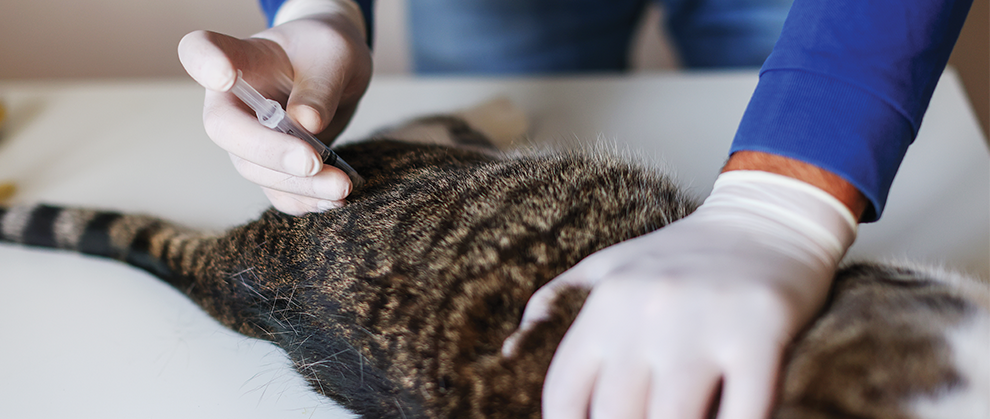
Dexmedetomidine is a versatile, highly selective α2-adrenoceptor agonist with a well-established evidence base in small animal practice. Yet, despite the strong evidence supporting its use in small animal practice, dexmedetomidine is a drug that polarizes clinicians; it is routinely incorporated into some protocols and largely absent from others.
Take-Home Points
- Dexmedetomidine provides reliable, dose-dependent, reversible sedation.
- Dexmedetomidine can be administered as a sole agent, but its sedative and analgesic effects are potentiated and more reliable with coadministration of opioids.
- Dexmedetomidine causes dose-dependent biphasic cardiovascular effects that lead to reduced cardiac output; use in patients with cardiac disease or hemodynamic instability is generally discouraged.
- Unless accompanied by hypotension, bradycardia caused by dexmedetomidine does not routinely warrant reversal.
- Dexmedetomidine may be administered via multiple routes as part of a balanced sedation or multimodal analgesic plan.
Dexmedetomidine is a highly selective α2-adrenoceptor agonist with a well-established role in small animal veterinary practice; it provides reliable sedation, analgesia, and the practical advantage of reversibility.
Regardless, its use remains inconsistent; some clinicians avoid it due to unfamiliarity or concern about cardiovascular side effects. However, for clinicians who understand its pharmacology, appropriate patient selection, and physiologic monitoring, dexmedetomidine is a genuinely versatile and valuable addition to the small animal formulary.
This article describes the risks and benefits of using dexmedetomidine with the aim of supporting confident, evidence-based decisions.
Mode of Action
Dexmedetomidine is the dextro-enantiomer of medetomidine and represents the biologically active component of the racemic mixture. It is a highly selective α2-adrenoceptor agonist with an α2:α1 selectivity ratio of approximately 1620:1, although α2-associated cardiovascular effects remain apparent.1
Within the central nervous system (CNS), dexmedetomidine acts at presynaptic and postsynaptic α2-adrenoceptors; peripherally, it binds to extrasynaptic receptors.1 Sedation is primarily mediated through presynaptic α2-receptor activation in the locus coeruleus of the pons, resulting in reduced norepinephrine release and decreased arousal.2
Dexmedetomidine also exhibits analgesic properties, although the precise mechanisms are not fully known. Analgesia is thought to arise predominantly from receptor binding within the dorsal horn of the spinal cord.1
Pharmacokinetics
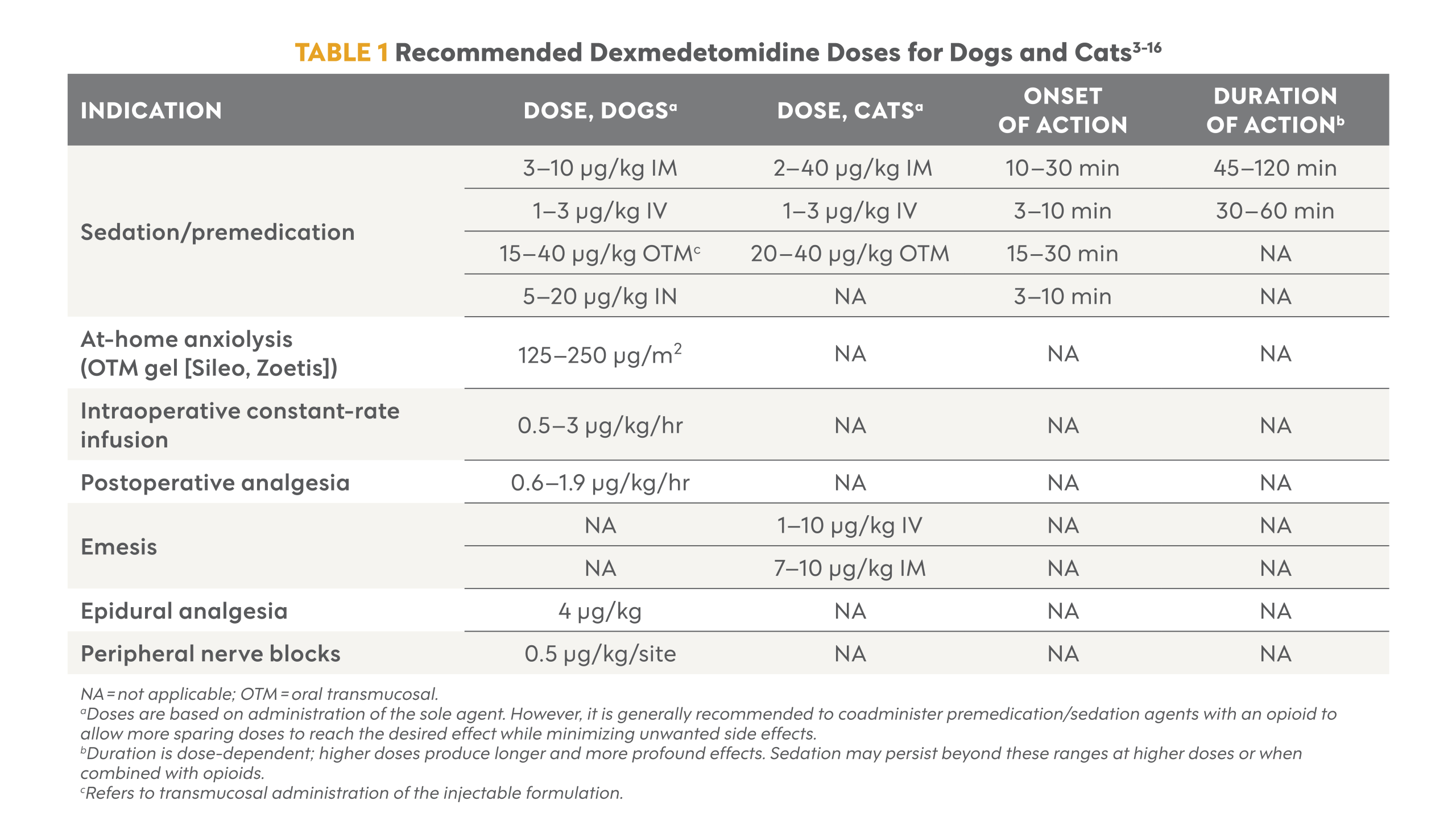
The pharmacokinetic profile of dexmedetomidine varies by route of administration, affecting onset, bioavailability, and duration of effect. Intravenous and intramuscular administration provide rapid, predictable absorption; transmucosal administration in dogs is associated with lower bioavailability and requires higher doses to achieve clinically relevant sedation (TABLE 1).3,4
Dexmedetomidine undergoes extensive hepatic metabolism; it is eliminated primarily via renal excretion of metabolites. The elimination half-life ranges from 11.5 to 41.5 minutes in dogs and a reported 30.3 to 39.7 minutes in cats.17-19 Patients with significant hepatic impairment may experience prolonged sedation and recovery and warrant close monitoring.
Pharmacodynamics
Through activation of central and peripheral
α2-adrenoceptors, dexmedetomidine produces dose-dependent effects across multiple physiologic systems.
- CNS: Dexmedetomidine reduces arousal and cortical activity, producing dose-dependent sedation and anxiolysis; analgesic effects arise primarily from modulation of nociceptive transmission at the dorsal horn of the spinal cord.1,2
- Cardiovascular: Response is biphasic. An initial increase in systemic vascular resistance causes reflex bradycardia, followed by persistent bradycardia, reduced cardiac output, and normotension or hypotension as sympatholytic effects predominate. Blood flow to vital organs seems to be preserved, and coronary perfusion may be improved during ischemia.20,21 Bradyarrhythmias, including first- and second-degree atrioventricular block, may occur.22
- Respiratory: Respiratory rate and minute ventilation are mildly reduced; clinically significant respiratory depression at recommended doses is uncommon.1,23
- Endocrine/metabolic: Dexmedetomidine inhibits insulin secretion, resulting in hyperglycemia; diuresis may occur secondary to inhibition of antidiuretic hormone release.1
- Thermoregulation: Dexmedetomidine impairs thermoregulatory responses, increasing the risk for hypothermia, particularly during prolonged sedation or anesthesia.1,23
- Gastrointestinal: Nausea and vomiting may occur, particularly after intramuscular administration.23
Due to its cardiovascular effects, use of dexmedetomidine is generally discouraged in patients for which reduced cardiac output or increased systemic vascular resistance would be detrimental—including those with mitral valve disease, dilated cardiomyopathy, or preexisting arrhythmias—as well as those with compromised hemodynamic status.22
Formulations and Routes of Administration
Dexmedetomidine is available in several formulations and can be administered via multiple routes: intravenous, intramuscular, transmucosal, subcutaneous, and intranasal (TABLE 1).
Formulations include:
- Multidose injectable solutions
- 0.1 mg/mL
- 0.5 mg/mL
- Preservative-free single-use vials
- 0.1 mg/mL
- Oral transmucosal gel
- Sileo (Zoetis), 0.1 mg/mL, indicated for at-home anxiolysis in dogs
Clinical Considerations
- Transmucosal administration in dogs results in low bioavailability, requiring higher doses (approximately 15 to 40 µg/kg) to achieve moderate to profound sedation.3,4
- Transmucosal administration in cats (20 to 40 µg/kg) combined with buprenorphine (20 µg/kg) provides effective sedation.5,6
- Transmucosal administration is particularly advantageous in fractious or aggressive dogs due to its minimally invasive nature and ease of administration.
- Sileo is licensed for use in healthy dogs to reduce noise-associated anxiety and has demonstrated efficacy for reducing fear-related behaviors during events (e.g., fireworks).7
Clinical Applications
Procedural Sedation
Dexmedetomidine produces dose-dependent sedation that can be tailored to the requirements of the procedure and individual patient, ranging from mild sedation for low-stress handling and minor diagnostics to deep sedation for more invasive procedures.
A ceiling effect exists whereby sedation depth plateaus beyond a certain dose threshold while cardiovascular effects continue to increase, reinforcing the importance of using the lowest effective dose. Combining dexmedetomidine with an opioid enhances sedation and analgesia in a synergistic manner, enabling lower doses and more predictable clinical effects without increased cardiovascular risk.24
Premedication and Anesthesia-Sparing Effects
Due to its reliable sedative effects, dexmedetomidine is a valuable premedicant for use before general anesthesia, facilitating handling, intravenous catheterization, blood sampling, and preoxygenation—particularly in anxious or excitable patients. It also produces dose-dependent reduction of isoflurane minimum alveolar concentration and decreases induction agent requirements, contributing to a smoother, more controlled anesthesia event.25,26
Constant-Rate Infusion
Dexmedetomidine has multiple applications when administered as a constant-rate infusion (CRI). Intraoperatively, it may be used to reduce inhalant requirements and provide analgesia in anesthetized dogs, typically at 0.5 to 3 µg/kg/hr after an initial loading dose.9,10 However, coadministration of a dexmedetomidine CRI with inhalant anesthesia in cats should be approached with caution, as it has been shown to worsen their hemodynamic status compared with equipotent doses of isoflurane alone.26,27
Postoperatively, a dexmedetomidine CRI may be used for analgesia and sedation in select hospitalized patients, particularly when stress may exacerbate underlying disease. One study demonstrated that a dexmedetomidine CRI at 25 µg/m²/hr (approximately 0.6 to 1.9 µg/kg/hr) after a loading dose of 25 µg/m² was safe and equally as effective as a morphine CRI for postoperative pain management in dogs.11
Peripheral Nerve Blocks
When administered as an adjunct to local anesthetics, dexmedetomidine can prolong the duration of peripheral nerve blocks. Adding dexmedetomidine (0.5 µg/kg/site) to bupivacaine (0.5 mg/kg/site) has been shown to extend the duration of analgesia.12 In 1 study, this combination reduced the requirement for postoperative opioid rescue analgesia in dogs undergoing tibial plateau leveling osteotomy procedures.12
Epidural Analgesia
Dexmedetomidine may also be administered epidurally to provide analgesia. For this route, the use of a preservative-free, single-use formulation is essential. Lumbosacral epidural administration of dexmedetomidine (4 µg/kg) combined with bupivacaine (1 mg/kg) has been shown to provide effective analgesia in dogs undergoing pelvic limb orthopedic surgery.13 Compared with bupivacaine alone or in combination with morphine, this protocol was associated with earlier postoperative urination but a delayed return of motor function.13
Emesis
Dexmedetomidine has also been used off-label to induce emesis in cats. One study reported that dexmedetomidine administered intravenously (0.96 to 10 µg/kg) or intramuscularly (7 to 10 µg/kg) induced emesis in approximately 81% of unfasted cats.14 However, clinicians should exercise caution when using dexmedetomidine for emesis induction in cats, as the sedative and cardiovascular effects of the drug (e.g., bradycardia, reduced cardiac output, profound sedation) may complicate patient monitoring and management, particularly in patients that are already compromised by toxin ingestion.
Clinical Monitoring and Intervention
Appropriate monitoring and management of dexmedetomidine-associated physiologic effects are essential for confident clinical decision-making and provision of safe anesthesia.
The 2025 American College of Veterinary Anesthesia and Analgesia Small Animal Anesthesia and Sedation Monitoring Guidelines recommend that patients under deep or profound sedation receive monitoring equivalent to that used during general anesthesia.28 Such monitoring includes a dedicated anesthetist, intravenous catheter placement, supplemental oxygen, and continuous monitoring of cardiovascular parameters (heart rate, blood pressure, electrocardiography) and respiratory parameters (respiratory rate, pulse oximetry, capnography).28 Emergency medications and reversal agents should be calculated in advance and immediately available.28
In general, bradycardia accompanied by normotension does not require intervention. Conversely, bradycardia associated with hypotension warrants treatment, although each patient should be assessed individually. If anticholinergic agents, such as atropine or glycopyrrolate, are considered, careful patient assessment before administration is essential. During the initial phase of dexmedetomidine action, when systemic vascular resistance is elevated, anticholinergics may precipitate hypertension, increased myocardial oxygen demand, and arrhythmias.21,22,29 Accordingly, anticholinergics should only be used to treat bradycardia if the patient is concurrently hypotensive. In some cases, it may be prudent to reverse dexmedetomidine before administering an anticholinergic.21 Other pharmacologic interventions for dexmedetomidine-induced bradycardia have been explored (e.g., intravenous lidocaine in dogs), although they are not in routine clinical use.30
Reversal
Atipamezole (5 mg/mL) is a highly selective competitive α2 antagonist developed specifically to reverse the effects of dexmedetomidine and medetomidine. Reversibility of sedation is a notable advantage of dexmedetomidine use, although it is not without risk.
Intramuscular administration of atipamezole is preferred; intravenous administration is generally discouraged due to the risk for rapid vasodilation and significant hypotension.22 Administration of atipamezole in cats is off-label. Recommended doses and sample calculations are provided in BOX 1.
Clinicians should be aware that although sedation is reliably reversed, cardiovascular recovery may not always be complete or immediate, and analgesia will be lost with reversal.22,32 Continued cardiovascular monitoring and appropriate analgesic support after administration are therefore recommended.33 Potential adverse effects of reversal include tachycardia and patient excitation.22
- Dexmedetomidine formulation: 0.5 mg/mL (500 µg/mL)
- Atipamezole formulation: 5 mg/mL (5000 µg/mL)
Dog: Atipamezole should be 10× the dexmedetomine dose, same volume as dexmedetomidine
- A 10-kg (22-lb) dog receives dexmedetomidine at 5 µg/kg IM. Total dose is 50 µg (10 × 5 = 50).
- The volume of dexmedetomidine administered is 0.1 mL (50 / 500 = 0.1).
- The calculated atipamezole dose is 10× the dexmedetomidine dose, which equals 500 µg (50 × 10 = 500).
- The volume of atipamezole needed is 0.1 mL (500 / 5000 = 0.1).
Cat31,*: Atipamezole should be 5× the dexmedetomine dose, half the volume of dexmedetomidine
- A 4-kg (9-lb) cat receives dexmedetomidine at 10 µg/kg IM. Total dose is 40 µg (10 × 4 = 40).
- The volume of dexmedetomidine administered is 0.08 mL (40 / 500 = 0.08).
- The calculated atipamezole dose is 5× the dexmedetomidine dose, which equals 200 µg (40 × 5 = 200).
- The volume of atipamezole needed is 0.04 mL (200 / 5000 = 0.04).
*Administration of atipamezole to cats is off-label.
Summary
Dexmedetomidine is a versatile, highly selective α2-adrenoceptor agonist with a well-established evidence base in small animal practice. Its reliable, dose-dependent, and reversible sedation makes it a valuable premedicant and a useful sedative for short, minimally invasive procedures. Coadministration with an opioid is generally recommended, producing synergistic sedative and analgesic effects that allow lower doses of each agent and reduce the likelihood of adverse effects.
Beyond premedication and sedation, dexmedetomidine has a broad range of clinical applications, including postoperative analgesia, peripheral nerve block augmentation, at-home anxiolysis, and induction of emesis in cats.
The cardiovascular profile of dexmedetomidine warrants careful patient selection. Dexmedetomidine is best reserved for patients that are hemodynamically stable and free of significant cardiac disease. With appropriate monitoring, however, many of the physiologic effects are predictable and manageable, and the availability of atipamezole for reversal provides a safety net. Used thoughtfully, dexmedetomidine is a genuinely useful addition to the small animal formulary.
Disclosure: Dr. Goodwin has received research support from Zoetis.
References
- Posner LP. Sedatives and tranquilizers. In: Riviere JE, Papich MG, eds. Veterinary Pharmacology and Therapeutics. 10th ed. Wiley-Blackwell; 2018:324-368.
- Scheinin M, Schwinn DA. The locus-ceruleus. Site of hypnotic actions of alpha-2-adrenoceptor agonists? Anesthesiology. 1992;76(6):873-875. doi:10.1097/00000542-199206000-00001
- Dent BT, Aarnes TK, Wavreille VA, et al. Pharmacokinetics and pharmacodynamic effects of oral transmucosal and intravenous administration of dexmedetomidine in dogs. Am J Vet Res. 2019;80(10):969-975. doi:10.2460/ajvr.80.10.969
- Cohen AE, Bennett SL. Oral transmucosal administration of dexmedetomidine for sedation in 4 dogs. Can Vet J.
2015;56(11):1144-1148. - Santos LCP, Ludders JW, Erb HN, Basher KL, Kirch P, Gleed RD. Sedative and cardiorespiratory effects of dexmedetomidine and buprenorphine administered to cats via oral transmucosal or intramuscular routes. Vet Anaesth Analg. 2010;37(5):417-424. doi:10.1111/j.1467-2995.2010.00555.x
- Porters N, Bosmans T, Debille M, de Rooster H, Duchateau L, Polis I. Sedative and antinociceptive effects of dexmedetomidine and buprenorphine after oral transmucosal or intramuscular administration in cats. Vet Anaesth Analg. 2014;41(1):90-96. doi:10.1111/vaa.12076
- Korpivaara M, Laapas K, Huhtinen M, Schöning B, Overall K. Dexmedetomidine oromucosal gel for noise-associated acute anxiety and fear in dogs—a randomised, double-blind, placebo-controlled clinical study. Vet Rec. 2017;180(14):356. doi:10.1136/vr.104045
- Leriquier C, Freire M, Llido M, et al. Comparison of sedation with dexmedetomidine/atipamezole administered subcutaneously at GV20 acupuncture point with usual routes of administration in dogs presented for orthopaedic radiographs. J Small Anim Pract. 2023;64(12):759-768. doi:10.1111/jsap.13668
- Pascoe PJ, Raekallio M, Kuusela E, McKusick B, Granholm M. Changes in the minimum alveolar concentration of isoflurane and some cardiopulmonary measurements during three continuous infusion rates of dexmedetomidine in dogs. Vet Anaesth Analg. 2006;33(2):97-103. doi:10.1111/j.1467-2995.2005.00236.x
- Clarke KW, Hall LW, Trim CM. Anaesthesia of the dog. In: Clarke KW, Hall LW, Trim CM, eds. Veterinary Anaesthesia. 11th ed. Saunders Elsevier; 2014:405-498.
- Valtolina C, Robben JH, Uilenreef J, et al. Clinical evaluation of the efficacy and safety of a constant rate infusion of dexmedetomidine for postoperative pain management in dogs. Vet Anaesth Analg. 2009;36(4):369-383. doi:10.1111/j.1467-2995.2009.00461.x
- Di Bella C, Pennasilico L, Botto R, et al. Efficacy of dexmedetomidine as adjuvant to bupivacaine in femoral-sciatic nerve blocks in dogs undergoing tibial plateau levelling osteotomy (TPLO). Res Vet Sci. 2023;154:124-131. doi:10.1016/j.rvsc.2022.12.015
- O O, Smith LJ. A comparison of epidural analgesia provided by bupivacaine alone, bupivacaine + morphine, or bupivacaine + dexmedetomidine for pelvic orthopedic surgery in dogs. Vet Anaesth Analg. 2013;40(5):527-536. doi:10.1111/vaa.12050
- Thawley VJ, Drobatz KJ. Assessment of dexmedetomidine and other agents for emesis induction in cats: 43 cases (2009–2014). JAVMA. 2015;247(12):1415-1418. doi:10.2460/javma.247.12.1415
- López-Ramis V, Canfrán S, Gómez de Segura IA. Comparison of the sedative effects of intranasal or intramuscular dexmedetomidine at low doses in healthy dogs: a randomized clinical trial. Vet Anaesth Analg. 2022;49(6):572-579. doi:10.1016/j.vaa.2022.08.003
- Micieli F, Santangelo B, Reynaud F, et al. Sedative and cardiovascular effects of intranasal or intramuscular dexmedetomidine in healthy dogs. Vet Anaesth Analg. 2017;44(4):703-709. doi:10.1016/j.vaa.2016.08.009
- Pypendop BH, Ilkiw JE. Pharmacokinetics of dexmedetomidine after intravenous administration of a bolus to cats. Am J Vet Res. 2014;75(5):441-445. doi:10.2460/ajvr.75.5.441
- Aarnes TK, Dent BT, Lakritz J, et al. Pharmacokinetics and pharmacodynamics of intramuscular dexmedetomidine in dogs. Am J Vet Res. 2023;84(4):1-5. doi:10.2460/ajvr.22.10.0184
- de Sant’Ana Alves L, Arcoverde KN, de Oliveira CVA, Cavalcante JM, Araújo-Silva G, de Paula VV. Pharmacokinetics and pharmacodynamics of intravenous dexmedetomidine (2 μg.kg−1) in dogs. Res Vet Sci. 2024;171:105229. doi: 10.1016/j.rvsc.2024.105229
- Snapir A, Posti J, Kentala E, et al. Effects of low and high plasma concentrations of dexmedetomidine on myocardial perfusion and cardiac function in healthy male subjects. Anesthesiology 2006;105(5):902-910. doi:10.1097/00000542-200611000-00010
- Lawrence CJ, Prinzen FW, de Lange S. The effect of dexmedetomidine on nutrient organ blood flow. Anesth Analg. 1996;83(6):1160-1165. doi:10.1097/00000539-199612000-00005
- Rankin DC. Sedatives and tranquilizers. In: Greene SA, Grimm KA, Lamont LA, Tranquilli WJ, Robertson SA, eds. Veterinary Anesthesia and Analgesia. 5th ed. Wiley-Blackwell; 2015:196-206. doi:10.1002/9781119421375.ch10
- Sinclair MD. A review of the physiological effects of alpha2-agonists related to the clinical use of medetomidine in small animal practice. Can Vet J. 2003;44(11):885-897.
- Cardoso CG, Marques DRC, da Silva THM, de Mattos-Junior E. Cardiorespiratory, sedative and antinociceptive effects of dexmedetomidine alone or in combination with methadone, morphine or tramadol in dogs. Vet Anaesth Analg. 2014;41(6):636-643. doi:10.1111/vaa.12172
- Kuusela E, Raekallio M, Väisänen M, Mykkänen K, Ropponen H, Vainio O. Comparison of medetomidine and dexmedetomidine as premedicants in dogs undergoing propofol-isoflurane anesthesia. Am J Vet Res. 2001;62(7):1073-1080. doi:10.2460/ajvr.2001.62.1073
- Akashi N, Murahata Y, Kishida H, Hikasa Y, Azuma K, Imagawa T. Effects of constant rate infusions of dexmedetomidine, remifentanil and their combination on minimum alveolar concentration of sevoflurane in dogs. Vet Anaesth Analg. 2020;47(4):490-498. doi:10.1016/j.vaa.2020.04.002
- Pypendop BH, Barter LS, Stanley SD, Ilkiw JE. Hemodynamic effects of dexmedetomidine in isoflurane-anesthetized cats. Vet Anaesth Analg. 2011;38(6):555-567. doi:10.1111/j.1467-2995.2011.00663.x
- Bailey K, Briley J, Duffee L, et al. The American College of Veterinary Anesthesia and Analgesia small animal anesthesia and sedation monitoring guidelines 2025. Vet Anaesth Analg. 2025;52(4):377-385. doi:10.1016/j.vaa.2025.03.015
- Short CE. Effects of anticholinergic treatment on the cardiac and respiratory systems in dogs sedated with medetomidine. Vet Rec. 1991;129(14):310-313. doi:10.1136/vr.129.14.310
- Tisotti T, Valverde A, Hopkins A, O’Sullivan ML, Hanna B, Arroyo L. Use of intravenous lidocaine to treat dexmedetomidine-induced bradycardia in sedated and anesthetized dogs. Vet Anaesth Analg. 2021;48(2):174-186. doi:10.1016/j.vaa.2020.11.005
- Granholm M, McKusick BC, Westerholm FC, Aspegrén JC. Evaluation of the clinical efficacy and safety of dexmedetomidine or medetomidine in cats and their reversal with atipamezole. Vet Anaesth Analg. 2006;33(4):214-223. doi:10.1111/j.1467-2995.2005.00259.x
- Pertovaara A, Haapalinna A, Sirviö J, Virtanen R. Pharmacological properties, central nervous system effects, and potential therapeutic applications of atipamezole, a selective alpha2-adrenoceptor antagonist. CNS Drug Rev. 2005;11(3):273-288. doi:10.1111/j.1527-3458.2005.tb00047.x
- Grubb T, Sager J, Gaynor JS, et al. 2020 AAHA anesthesia and monitoring guidelines for dogs and cats. JAAHA. 2020;56(2):59-82. doi:10.5326/JAAHA-MS-7055