
Like it or not, the popularity of brachycephalic dogs and cats has risen exponentially in the United States and worldwide.1-3 Full disclosure: I am a rabid aficionado of all things brachycephalic, despite being an educated, informed medical care provider for the various pathologies that plague many of our beloved schmooshies.
I am not alone in my love for flat-faced dogs. Celebrities including Lady Gaga, Snoop Dogg and his bestie Martha, and even Ozzy Osbourne (rest in peace) own or have owned French bulldogs.4 Can the media and influencers possibly validate others to want to purchase a brachycephalic pet? Perhaps.
When discussing brachycephalic animals, there seems to be 2 camps: those that love them and others that are strongly opposed, citing welfare concerns. A veterinary professional’s passion for brachycephalic breeds should not exclude concerns for welfare. The key then, when discussing the potential welfare concerns to owners of brachycephalic pets, is to deliver the information with both knowledge and compassion. This can demonstrate veterinarians’ role as advocates to help pets remain healthy with a good quality of life. Advocacy includes the responsibility to provide the best information regarding the inherent medical issues of brachycephalic breeds, ideally prior to a client acquiring a brachycephalic pet. Providing literature to the client and offering a prepurchase or preadoption consultation can allow time in the veterinary team’s busy schedule to discuss issues pertinent to the brachycephalic dog or cat, as well as provide the client with direction to responsible persons that breed for both function and aesthetics.
As many clients have already acquired their pet before making an appointment,5 the veterinary team must work with what they have and educate the pet owner in the moment. The easiest place to have this discussion is during the pet’s nose-to-tail physical examination. The delivery of the information should be as sensitive and nonjudgmental as possible in order to maintain a respectful veterinarian–client–patient relationship and to emphasize that the veterinary team’s role is to help keep the pet as healthy and comfortable as possible throughout its lifetime.6
This article outlines the top 10 areas of concern to prioritize during general practice appointments with brachycephalic patients.
1. Eyes
Brachycephalic dogs and cats have lagophthalmos (the inability to close their eyes fully) and decreased corneal sensation that cause them to have an increased risk of corneal ulceration and impaired healing (FIGURE 1).7-9 English bulldogs have an increased incidence of prolapsed nictitans (i.e., “cherry eye”). Pugs also have increased risk of exposure keratopathy that can be mitigated with early recognition and use of topical therapies such as tacrolimus. The shallow orbits make these patients at risk of proptosis, even with mild trauma. Discussion of how to monitor for signs of blepharospasm, corneal cloudiness, and ocular discharge, with emphasis of when to seek veterinary care, can potentially save an animal’s vision during their lifetime.
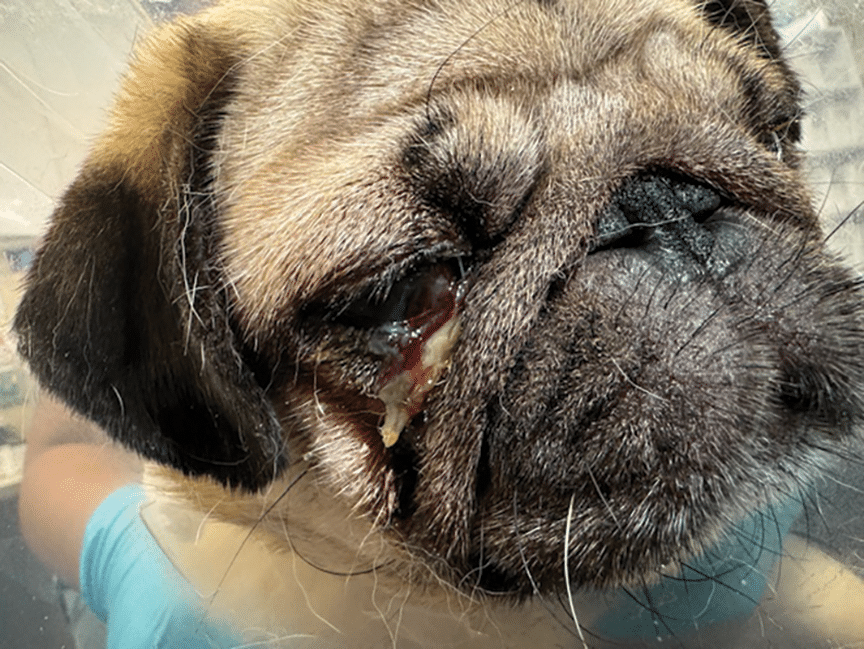
FIGURE 1. Pug with corneal ulceration and excessive skin folds.
2. Skin and Ears
There are often exuberant skin folds in close proximity to the nose and tail. The veterinarian should discuss the need for frequent cleaning of skin folds, as well as any concerns for atopy, interdigital dermatitis or cysts, and screw tail that can lead to significant infection and decreased quality of life.10 When examining the patient’s ears, clinical signs of otitis externa can be mentioned.
3. Respiratory System
The big schnorking elephant (or bulldog) in the room is brachycephalic obstructive airway syndrome (BOAS).11,12 Discussion of BOAS should include questioning of the patient’s breathing, including nasal stertor, stridor, and coughing. This can be done while assessing the patient for stenotic nares, macroglossia, elongated soft palate, and abnormal respiratory noise. Many owners of brachycephalic companion animals think that snoring and noisy breathing are normal as the signs are so common to the breed. Having a poster that shows normal and abnormal nares with skull anatomy compared with dolichocephalic and mesocephalic breeds can be helpful when describing where surgical intervention is indicated to alleviate respiratory pathology. If a veterinarian is not comfortable performing BOAS surgery when indicated, referral to a specialist who has 24-hour postoperative monitoring should be encouraged.
4. Cardiac System
Auscultation of the patient’s thorax allows the veterinarian to evaluate the extent of referred upper airway noise and detect any underlying heart murmurs that may indicate congenital cardiac anomalies such as pulmonic stenosis, which is common in French and English bulldogs.13,14 In older dogs, a tricuspid murmur can indicate the presence of pulmonary arterial hypertension. Any murmur warrants thoracic radiography and a cardiology consultation with echocardiography to determine whether cardiac therapy is needed. Although not specific to brachycephalic dogs, the danger of heartworm disease and recommendations for prevention should also be mentioned.
5. Aerodigestive Disorders
Aerodigestive disorders in brachycephalic patients result from increased intrathoracic pressure required to breathe through points of airway resistance. Any appointment with a brachycephalic animal should include discussion of whether the patient has any vomiting or regurgitation. In many cases, particularly in English and French bulldogs, regurgitation happens so frequently12 that the client dismisses it as being normal. This type of aerodigestive disorder results from a shift of the gastric axis cranially, opening the lower esophageal sphincter, resulting in regurgitation.12 Regurgitation can lead to aspiration events, including the development of potentially life-threatening pneumonia.15 English and French bulldogs are also prone to sliding hiatal hernias.16,17 In severe cases, BOAS surgery can help alleviate clinical signs of regurgitation in affected animals, particularly French bulldogs.18
6. Obesity and Heat Intolerance
As the physical examination proceeds caudally past the diaphragm, discussion of the patient’s body condition score is important, as obesity can further predispose brachycephalic companion animals to increased exercise intolerance and respiratory compromise.19 This can lead to a discussion of when to allow the BOAS-affected animal to exercise or walk (e.g., during the coolest portions of the day) and to allow periods of rest if any signs of hyperthermia or heat intolerance occur. Literature that educates the client on clinical signs of heat stroke and how to avoid or treat the condition can be provided for future reference at home. The veterinarian can also make diet recommendations to help keep the patient in ideal body condition.
7. Orthopedic and Neurologic Issues
Palpation of the dog’s spine and joints can initiate a discussion of neurologic abnormalities, including neck pain and Chiari-like malformation in Cavalier King Charles spaniels and intervertebral disk disease in French bulldogs and Shih Tzus. As the veterinarian briefly tests rear limb conscious proprioception, clinical signs attributable to disk herniation and/or patellar luxation such as pain, ataxia, difficulty walking, proprioceptive deficits, and paralysis can be mentioned, including when to seek emergent veterinary care.
8. Spaying and Neutering
Puppy wellness visits and appointments with older intact dogs should involve a discussion of spaying and neutering the patient. The advantages of and risks associated with not performing the procedures early in life can be emphasized. Brachycephalic animals, due to disproportionately large heads compared with the dam’s pelvic width, frequently encounter dystocia, requiring cesarean births to deliver the puppies.20,21 Unspayed females can develop pyometra or vaginal hyperplasia and prolapse (common in pugs22), both of which can be avoided by spaying. Urethral prolapse, almost exclusively observed in English bulldogs, can cause penile bleeding.23
9. Anesthesia
One of the most important aspects when planning any surgery should include a sensitive but frank discussion of the inherent risks of anesthesia, particularly in the brachycephalic animal. Brachycephalic animals are at 1.5- to 4.5-fold increased risk of having anesthesia-related complications compared with dolichocephalic and mesocephalic pets.24 An anesthesia consent form specific to brachycephalic animals can be used that discusses the increased risks of aspiration pneumonia, airway edema, failure to extubate, need for temporary tracheostomy, oxygen supplementation, additional hospitalization, and death (CLINIC RESOURCE 1). It should be emphasized that the proposed surgical procedures outweigh the inherent anesthesia risks and are meant to improve the patient’s quality of life and avert future, preventable medical problems.
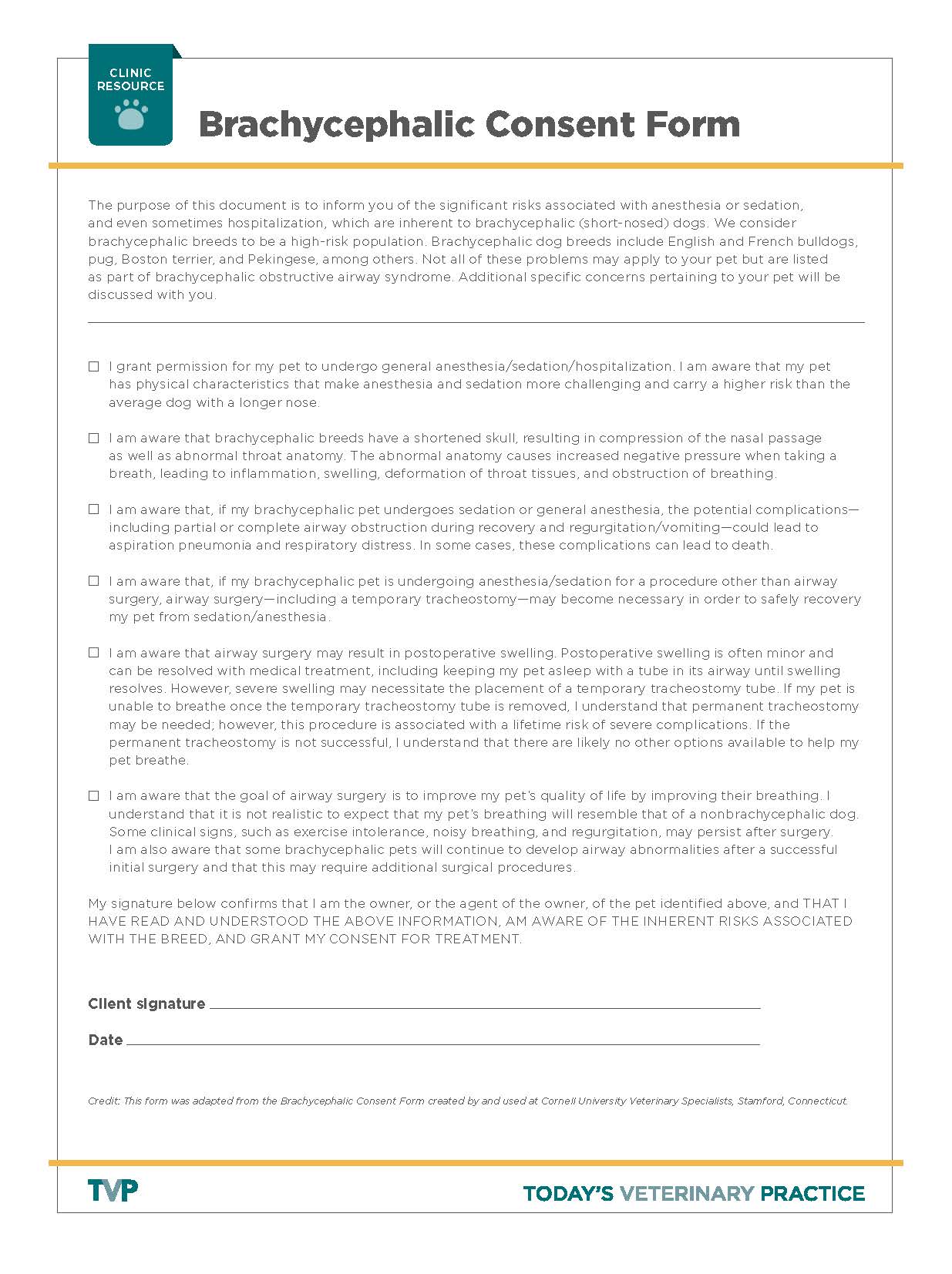
Download this consent form for clinic use!
10. Breeding
Inevitably, some clients may want to discuss breeding their brachycephalic animals. Reputable breeding involves selection of animals that meet standards, ideally standards that foremost select for function over aesthetics. The 2 are not necessarily mutually exclusive, and that is where veterinarians can help. Functional respiratory grading systems have been developed in response to breeders that want to be responsible and want to improve function and quality of life for their brachycephalic animals.25 The BOAS Respiratory Function Grading Scheme evaluates the brachycephalic dog’s respiratory noise; inspiratory effort; and dyspnea, cyanosis, and/or syncope before and after an exercise tolerance test. Brachycephalic scoring and knowledge of reputable breeders—that are implementing breeding programs that are purposely breeding only animals that do not exhibit signs of respiratory compromise at rest and during activity—is ideal. Depending on the individual animal’s score based on the veterinarian’s assessment, recommendation can be made whether breeding that pet is acceptable or should be strongly discouraged (FIGURE 2).
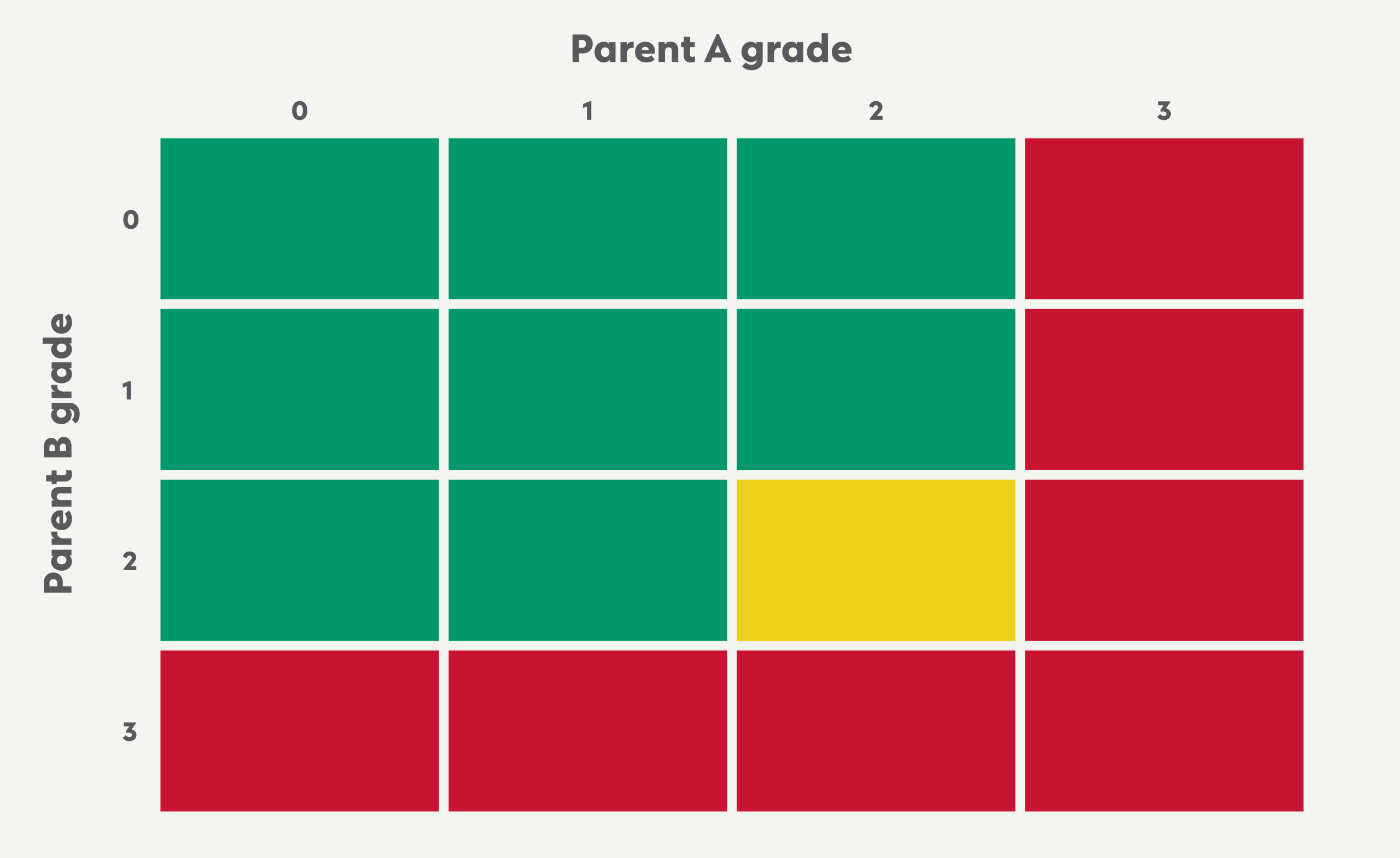
Figure 2. Breeding recommendation based on respiratory function testing, such as the Respiratory Function Grading Scheme.25 Breeding strategies for brachycephalic sires and dams whose grade is 0 or 1 will result in low risk of producing offspring with brachycephalic obstructive airway syndrome (BOAS). Breeding animals with grade 2 increases the risk of offspring with BOAS, especially if both parents are grade 2. No animals with grade 3 should be bred.
Summary
As veterinarians, we have taken an oath that includes a promise to use scientific knowledge and skill to protect animal health and welfare to prevent and relieve animal pain and discomfort.26 This oath also gives veterinarians the credentials to be the best source of information to clients regarding the health and wellbeing of their companion animals.
The British Veterinary Association has established the “#BreedtoBreathe” campaign, which includes a 10-point plan for veterinarians to help educate the general public and work with breed groups to improve the health and welfare of brachycephalic pets (BOX 1).27 Other organizations have also adopted similar stances (ADDITIONAL RESOURCES).28 There is even a textbook exclusively devoted to the health and welfare of brachycephalic animals.29
- Offer prepurchase examinations.
- Strongly advise against breeding if the pet is diagnosed with brachycephalic obstructive airway syndrome or requires conformation-altering surgery.
- Promote the puppy contract.
- Promote and actively participate in available health schemes.
- Carry out exercise tolerance tests and functional grading during each annual physical examination.
- Enroll the practice in clinical surveillance programs, where applicable.
- Develop a practice communication strategy that actively discusses brachycephalic breed–specific health issues with clients.
- Maintain discipline in your practice communication strategy (e.g., don’t advertise with brachycephalic animals).
- Ensure practice policy supports staff. Everyone in the practice needs to be consistent and on board.
- Participate with local breed organizations.
I believe that, inevitably, there will be an ongoing struggle with current breed standards and aesthetics versus breeding for function. I am optimistic that by working together, collectively as a profession, we can make a difference. Together, we can #savetheschmooshies.
- Breed to Breathe
- Love is Blind
- OFA Respiratory Function Grading Scheme
- U.K. Brachycephalic Working Group
- University of Cambridge BOAS Research Group
BOAS = brachycephalic obstructive airway syndrome;
OFA = Orthopedic Foundation for Animals
References
- Haid M. The most popular dog breeds of 2022. American Kennel Club. Updated May 23, 2023. Accessed February 12, 2026. https://www.akc.org/expert-advice/dog-breeds/most-popular-dog-breeds-2022
- Teng KT, McGreevy PD, Toribio JALML, Dhand NK. Trends in popularity of some morphological traits of purebred dogs in Australia. Canine Genet Epidemiol. 2016;3(1):2. doi:10.1186/s40575-016-0032-2
- Breed registration statistics. Royal Kennel Club. Accessed February 12, 2026. https://www.royalkennelclub.com/about-us/resources/breed-registration-statistics
- Celebrities who love French bulldogs: Lady Gaga, Reese Witherspoon, Megan Thee Stallion and More. Us Weekly. January 13, 2022. Accessed February 12, 2026. https://www.usmagazine.com/celebrity-news/pictures/celebrities-and-their-french-bulldogs-w201651
- Martelli G, Ostanello F, Capitello I M, Pietra M. Owner awareness, motivation and ethical considerations in the choice of brachycephalic breeds: evidence from an Italian veterinary teaching hospital survey. Animals (Basel). 2025;15(15):2288. doi:10.3390/ani15152288
- Fawcett A. Brachycephalic dogs and honesty with clients. In Practice. 2017;39(1):45-46. https://doi.org/10.1136/inp.i6329
- Kafarnik C, Fritsche J, Reese S. Corneal innervation in mesocephalic and brachycephalic dogs and cats: assessment using in vivo confocal microscopy. Vet Ophthalmol. 2008;11(6):363-367. doi:10.1111/j.1463-5224.2008.00659.x
- Packer R, Hendricks A, Burn CC. Impact of facial conformation on canine health: corneal ulceration. PLoS One. 2015;10(5):e0123827. doi:10.1371/journal.pone.0123827
- O’Neill DG, Lee MM, Brodbelt DC, Church DB, Sanchez RF. Corneal ulcerative disease in dogs under primary care in England: epidemiology and clinical management. Canine Genet Epidemiol. 2017;4:5. doi:10.1186/s40575-017-0045-5
- Webb Milum AN, Griffin CE. Blessing KS. A cross-sectional study of shoe English bulldogs in the United States: evaluating paw lesions, cytological findings, pruritic behaviours and gastrointestinal signs. Vet Dermatol. 2018;29(5):395-e130. doi:10.1111/vde.12676
- Packer RMA, Hendricks A, Burn CC. Do dog owners perceive the clinical signs related to conformational inherited disorders as ‘normal’ for the breed? A potential constraint to improving canine welfare. Anim Welf. 2012;21(S1):81-93. doi:10.7120/096272812X13345905673809
- Packer RMA, Hendricks A, Tivers MS, Burn CC. Impact of facial conformation on canine health: brachycephalic obstructive airway syndrome. PLoS One. 2015;10(10):e0137496. doi:10.1371/journal.pone.0137496
- Oliveira P, Domenech J, Silva S, Vannini S, Bussadori R, Bussadori C. Retrospective review of congenital heart disease in 976 dogs. J Vet Int Med. 2011;25(3):477-483. doi:10.1111/j.1939-1676.2011.0711.x
- Chetboul V, Damoiseaux C, Poissonnier C, et al. Specific features and survival of French bulldogs and congenital pulmonic stenosis: a prospective cohort study of 66 cases. J Vet Cardiol. 2018;20(6):405-414. doi:10.1016/j.jvc.2018.09.001
- Darcy HP, Humm K, Ter Haar G. Retrospective analysis of incidence, clinical features, potential risk factors, and prognostic indicators for aspiration pneumonia in three brachycephalic dogs breeds. JAVMA. 2018;253(7):869-876. doi:10.2460/javma.253.7.869
- Reeve EJ, Sutton D, Friend EJ, Warren-Smith CMR. Documenting the prevalence of hiatal hernia and oesophageal abnormalities in brachycephalic dogs using fluoroscopy. J Small Anim Pract. 2017;58(12):703-708. doi:10.1111/jsap.12734
- Freiche V, German AJ. Digestive diseases in brachycephalic dogs. Vet Clin North Am Small Anim Pract. 2021;51(1):61-78. doi:10.1016/j.cvsm.2020.09.006
- Poncet CM, Dupre GP, Freiche VG, Bouvy BM. Long-term results of upper respiratory syndrome surgery and gastrointestinal medical treatment in 51 brachycephalic dogs. J Small Anim Pract. 2006;47(3):137-142. doi:10.1111/j.1748-5827.2006.00057.x
- Davis MS, Cummings SL, Payton ME. Effects of brachycephaly and body condition scoring on respiratory thermoregulation of healthy dogs. JAVMA. 2017;251(10):1160-1165. doi:10.2460/javma.251.10.1160.
- O’Neill DG, O’Sullivan AM, Manson EA, et al. Canine dystocia in 50 UK first-opinion emergency care veterinary practices: prevalence and risk factors. Vet Rec. 2017;181(4):88. doi:10.1136/vr.104108
- Evans KM, Adams VJ. Proportion of litters of purebred dogs born by caesarean section. J Small Anim Pract. 2010;51(2):113-118. doi:10.1111/j.1748-5827.2009.00902.x
- Antonov A, Atanasov A, Fasulkov I, Karadaev M. Clinical retrospective study of vaginal hyperplasia in the bitch (2012-2022). Reprod Domest Anim. 2023;58(10):1352-1358. doi:10.1111/rda.14449
- Carr JG, Tobias KM, Smith L. Urethral prolapse in dogs: a retrospective study. Vet Surg. 2014;43(5):574-580. doi:10.1111/j.1532-950X.2014.12190.x
- Gruenheid M, Aarnes TK, McLoughlin MA, et al. Risk of anesthesia-related complications in brachycephalic dogs. JAVMA. 2018;253(3):301-306. doi:10.2460/javma.253.3.301
- Lederhouse C. Health screening test rolled out for brachycephalic dog breeds. AVMA News. January 30, 2023. Accessed February 12, 2026. https://www.avma.org/news/health-screening-test-rolled-out-brachycephalic-dog-breeds
- Veterinarian’s oath. American Veterinary Medical Association. Accessed February 17, 2026. https://www.avma.org/resources-tools/avma-policies/veterinarians-oath
- BVA position on brachycephalic dogs. British Veterinary Association. January 2018. Accessed February 12, 2026. https://www.bva.co.uk/media/4231/bva-position-on-brachycephalic-dogs-full.pdf
- Love is Blind resources. Australian Veterinary Association. Accessed February 12, 2026. https://www.ava.com.au/love-is-blind
- Packer R, O’Neill D. Health and Welfare of Brachycephalic (Flat-faced) Companion Animals: A Complete Guide for Veterinary and Animal Professionals. CRC Press; 2021. https://doi.org/10.1201/9780429263231