
To take the CE quiz, click here.
This quiz is open until October 2028.
Rhinosinusitis is the second most common cause of feline nasal disease (after neoplasia) and can be frustrating for cat owners and clinicians alike given the limited effective treatments and chronic disease course. It is important for practicing veterinarians to be aware of recommended diagnostics and the limitations of repeated antimicrobial treatment to help set expectations with clients regarding this challenging condition. This article presents a current overview of feline chronic rhinosinusitis, including etiology, diagnostic approach, and long-term management.
Take-Home Points
- Rhinosinusitis can occur in cats of any age. Common clinical signs include sneezing, nasal discharge, and stertor.
- Although secondary bacterial infections are common, primary bacterial rhinitis is considered rare.
- Diagnosis requires ruling out contributing infectious causes such as fungal or viral disease, performing advanced imaging to evaluate for the presence of masses or other structural disease, and ultimately performing targeted or blind biopsies to confirm the type and severity of inflammation.
- Bacterial culture of nasal samples is of limited value since it can be difficult to differentiate pathogens from normal flora.
- Antimicrobial treatment for secondary infection is only recommended for severely affected cats and often results in only temporary and sometimes limited improvement. It is important to diagnose and treat the underlying primary nasal disease.
- Rhinosinusitis treatment can be challenging and require multimodal therapy, including supportive measures like nasal flushing and hydration, as well as trials of anti-inflammatory medications and antihistamines, with antimicrobials used when indicated.
Feline chronic rhinosinusitis (CRS) is an under-researched yet prevalent condition accounting for 35% of cases of feline nasal disease.1 It causes significant morbidity and impact on the quality of life of cats and their families and remains a source of frustration among general practitioners, internists, and cat owners with its chronic clinical course and lack of effective therapeutic options.
The typical clinical picture of these cats, sometimes colloquially known as “snufflers,” is a cat of any age with chronic, intermittent nasal signs that are often transiently responsive to antimicrobial treatment.1,2 This condition is a diagnosis of exclusion requiring efforts to rule out other causes of chronic nasal signs.
Pathogenesis
The underlying etiology of CRS is uncertain, but it is suspected to result from a combination of genetics; environmental exposures; and, potentially, prior infections. The result is chronic nasal inflammation and excessive mucus production. While the response to antibiotics suggests a bacterial component, primary bacterial rhinitis is considered rare.1 It is instead thought that the underlying inflammatory condition predisposes to secondary infection with bacteria.1
Feline herpesvirus type 1 (FHV-1), a virus to which almost all cats have been exposed, has been implicated as a potential initiating factor for the development of CRS.3 Experimentally, FHV-1 has been shown to induce turbinate lysis and mucosal damage.4 However, the relationship between active FHV-1 and CRS is less clear, with no difference found between the frequency of isolating FHV-1 via PCR testing of nasal biopsy samples from healthy cats versus cats with CRS.3
The nose is not a sterile environment, and as such, normal bacterial flora are found in healthy cat noses. Previous retrospective studies have isolated a variety of bacteria from the feline nose, including Pseudomonas species, Escherichia coli, Staphylococcus species, and Pasteurella multocida.5-7 Johnson et al found cats with CRS were more likely than healthy controls to have Mycoplasma species and anaerobes identified.3 Potentially pathogenic bacteria were also identified more frequently in cats with CRS compared to control cats, although a causative role in disease could not be assessed.3
In humans, rhinitis is classified as allergic or nonallergic, with allergic rhinitis considered an immunoglobulin E (IgE)–mediated process driven by a T helper 2 (Th2) response. Allergic rhinitis is associated with comorbidities such as asthma, otitis, and nasal polyps.8 While CRS has many similarities to allergic rhinitis in humans, with otitis and polyps often found in affected cats, previous studies have shown a lack of bias toward a Th2 response,9,10 with 1 study suggesting a T helper 1 (Th1)–biased response.10 These findings may have implications when extrapolating potentially effective medications and considering disease-targeted therapy.
Clinical Signs, History, and Physical Examination
The hallmark features of feline CRS are chronic and often recurrent nasal signs, including sneezing, nasal discharge, and stertor.1 Disease onset is typically in young to middle-aged cats; however, older cats can still develop this condition.11 The nasal discharge may vary in character and be serous, mucoid to mucopurulent, or occasionally sanguineous. Bilateral discharge is more common than unilateral.
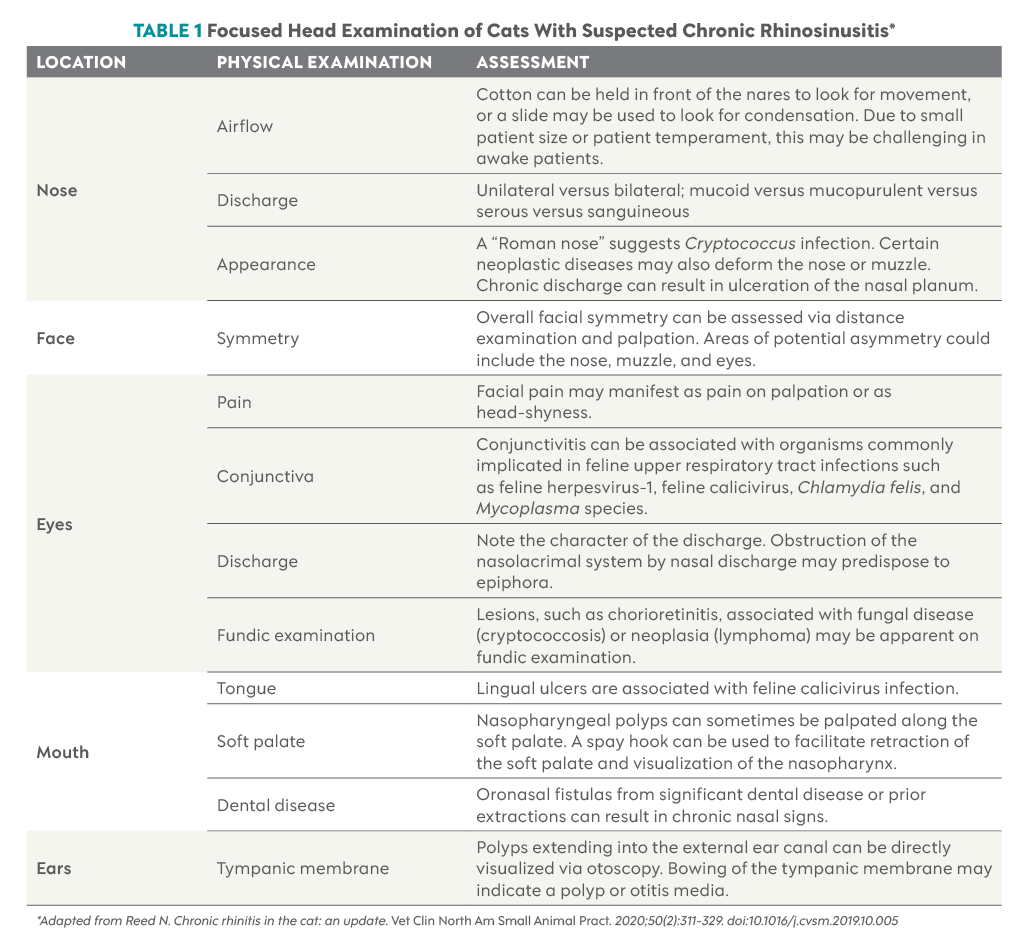
From a distance, nasal discharge, stertor, and sneezing may be readily apparent. Physical examination should be performed in a systematic manner with particular attention to the eyes, ears, face, nose, and oral cavity (Table 1). Depending on patient temperament, sedation and/or general anesthesia may be required to facilitate an in-depth examination of the oral cavity.
Diagnosis
While CRS can be suspected based on signalment, history, and physical examination, diagnosis requires elimination of other differentials that cause upper respiratory signs (Box 1).
- Neoplasia (e.g., lymphoma, adenocarcinoma, squamous cell carcinoma)
- Nasopharyngeal polyp
- Fungal infection (e.g., cryptococcosis, aspergillosis)
- Dental disease (e.g., tooth root abscess, oronasal fistula)
- Foreign body
- Nasopharyngeal stenosis
- Trauma
- Congenital anatomy (e.g., brachycephalic conformation, cleft palate)
- Swallowing disorders
Blood Analysis
As part of an overall assessment of systemic health and to guide medication choice, baseline assessment of a CBC, serum biochemistry, and retrovirus testing is recommended. The immunosuppression associated with retroviral infection may predispose to either neoplasia or upper respiratory tract infections.
PCR Testing
PCR testing is available for the detection of common viruses and bacteria that can cause nasal signs in cats, including FHV-1, feline calicivirus (FCV), Chlamydia felis, Bordetella bronchiseptica, and Mycoplasma species. Interpretation can be difficult in the setting of chronic disease given the high prevalence of some of these infections (particularly FHV-1 and FCV) in healthy cat populations.1 Mycoplasma species is considered a commensal of the upper respiratory system and has been found in both healthy asymptomatic and clinically affected cats.13
Nasal Cytology
Swabbing nasal discharge for cytology is of limited value, with the inflammatory cell type present frequently discordant with histopathology findings.14 Aspiration of visible mass lesions is recommended and can support diagnosing either fungal disease or neoplasia. Cryptococcus species can be identified from masses and occasionally from nasal discharge as a basophilic encapsulated yeast (Figure 1). However, cytology can result in false negatives; therefore, ancillary tests such as serum latex agglutination testing for cryptococcosis15 or advanced imaging for potential neoplasia should be considered when aspirates of mass lesions are nondiagnostic.
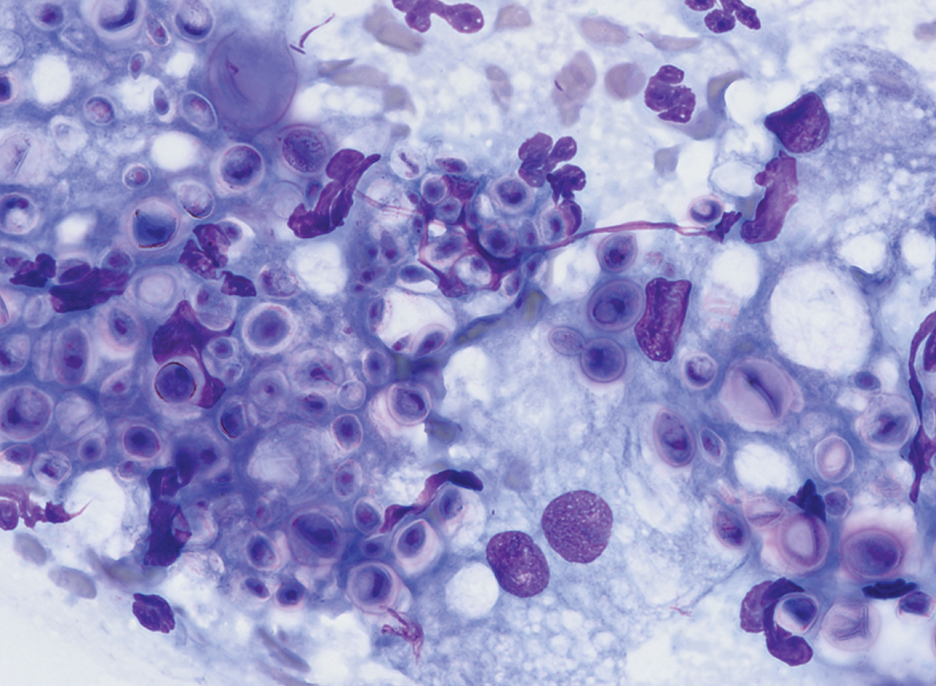
Figure 1. Cytologic appearance of Cryptococcus species, an important differential diagnosis for chronic nasal discharge in cats. 100× magnification, Wright-Giemsa stain. Courtesy Francisco Conrado.
Oral Examination
Sedated oral examination can be helpful to evaluate for evidence of lingual ulceration associated with FCV, oral masses, oropharyngeal polyps, dental disease, and laryngeal masses. This is easily accomplished just prior to intubation. Severely affected cats with significant stertor are at risk of respiratory obstruction following premedication; therefore, close monitoring after sedation and prior to intubation is warranted.
Diagnostic Imaging
Various modalities can be used to evaluate the skull and nasal passages. While soft tissue opacities consistent with CRS may be seen on radiography, computed tomography (CT) remains the preferred imaging modality.16 Head radiography requires general anesthesia due to the need for specific positioning and multiple views to limit superimposition and still provides less information than CT,1 which allows for more accurate evaluation of osseous and soft tissue structures. While there can be overlap in imaging findings between inflammatory nasal disease such as CRS and neoplasia, features suggesting neoplasia can include abnormal medial retropharyngeal lymph nodes, lysis of the paranasal bones, and the presence of a mass effect.17
Endoscopy
Both anterior and posterior rhinoscopy can be performed in cats. Anterior rhinoscopy can be limited by small patient size but is feasible with appropriate equipment, including a 2- to 3-mm flexible endoscope or a rigid endoscope with a viewing angle of 0° to 30°.1 To limit risk of aspiration, this procedure should be performed under general anesthesia using a cuffed endotracheal tube and packing of the throat using a known number of gauze squares.
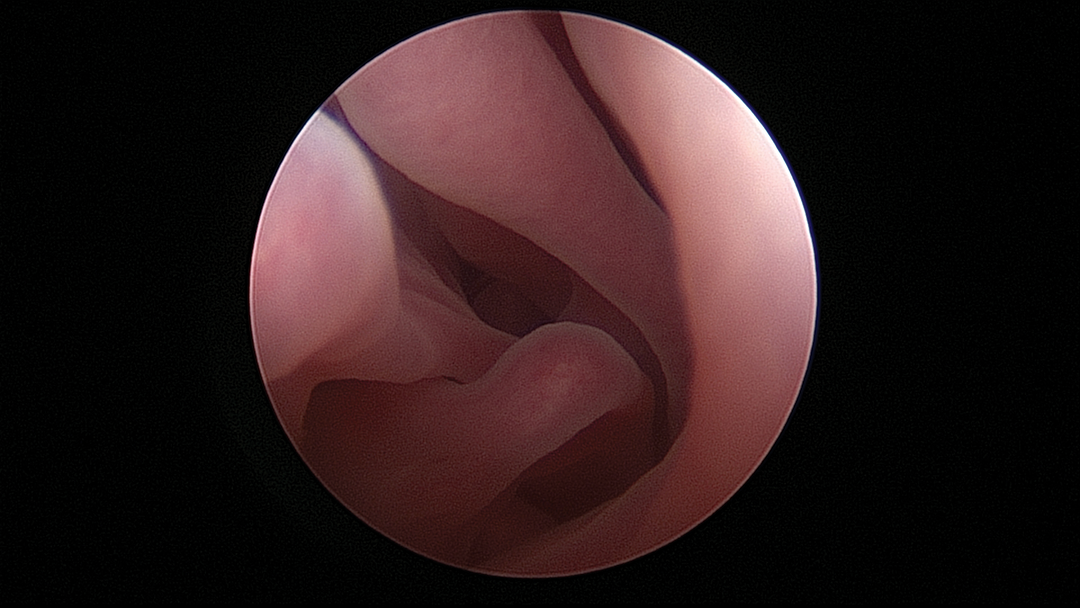
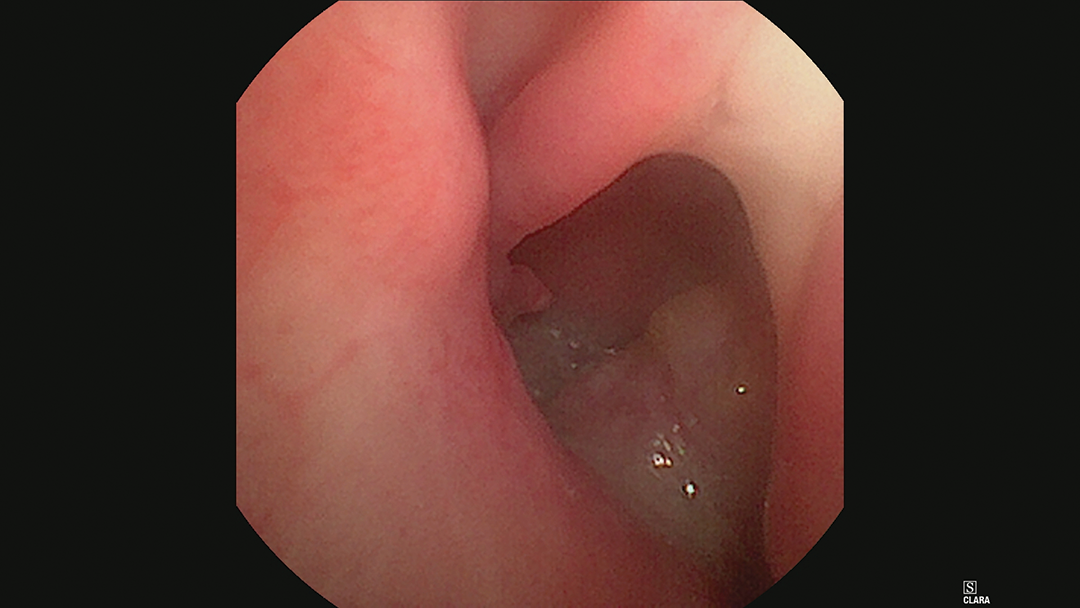
Normal nasal mucosa is pink and smooth (Figure 2A). Abnormalities associated with CRS can include increased mucus, increased friability of tissue, ulceration, congestion, and hyperemia (Figure 2B).18 Foreign objects as well as plaques associated with fungal rhinitis such as Aspergillus or masses associated with neoplasia can be directly visualized if within the most rostral tissues.1 Ultimately, visibility may be limited due to small patient size and friability of tissues resulting in hemorrhage. Retroflex endoscopy allows for visualization of the choanae for polyps, foreign material, masses, and evidence of nasopharyngeal stenosis.1
Both views allow for targeted biopsies of discrete lesions. Rhinoscopic assessment of disease severity may not correlate with biopsy findings; for this reason, it is recommended to biopsy bilaterally even if nasal tissue appears mildly affected or normal.18
Nasal Biopsy
Nasal biopsy samples can be acquired in a targeted or blind fashion. Acquisition through the biopsy channel of the endoscope allows for specific lesions to be targeted; however, this technique produces small tissue pieces due to the limited instrument size able to pass through the endoscope working channel. In contrast, blind biopsy specimens are obtained using rigid nasal biopsy forceps able to collect larger samples. Biopsy samples can be submitted in formalin for histopathology and in sterile collection tubes for bacterial and/or fungal culture if indicated.
Biopsies are important to rule out nasal lymphoma, which may or may not cause a mass lesion on CT. Inflammation is classified according to the cells present, with common types including lymphoplasmacytic, neutrophilic, eosinophilic, or mixed inflammation.18 Some argue that neutrophilic and lymphoplasmacytic rhinitis represent acute and chronic disease, respectively; however, cats with neutrophilic inflammation often have a clinical history that is more chronic in nature, so it is possible this may represent a spectrum of the same disease or indicate active secondary bacterial infection.1 Other histologic findings can include ulceration, turbinate destruction, necrosis, and hyperplasia of the glands.18
Culture
The value of bacterial culture from any nasal sample is questionable, as it is difficult to determine whether identified organisms represent normal flora and the bacteria identified can vary depending on the sampling technique.3,5,7 Additionally, treatment response may not correlate with bacterial culture results.19 Some recommend performing bacterial cultures from biopsy and/or nasal flush samples as opposed to nasal discharge. Nasal flush samples are more likely to be positive than biopsy samples.3,5,7 The organisms identified are similar using both techniques, with the exception of Mycoplasma species, which are more readily identified on culture from nasal biopsy samples.7 Fungal culture is an important tool to diagnose nasal aspergillosis and can be used to differentiate infecting Cryptococcus species.20
Treatment
There is no definitive treatment for feline CRS. The recurrent and chronic nature is frustrating for owners and veterinarians, and educating owners about the clinical course of disease is important to manage expectations regarding treatment, including that antibiotics should not be the first-line treatment. Different cats may respond to different therapies; therefore, there is no “1-size-fits-all” approach. With management, sneezing frequency and severity can be reduced.
Few studies have evaluated treatment responses in cats with CRS, limiting the evidence base from which to draw recommendations. While this condition is not life-threatening, it can limit quality of life. Due to the potential for long-term intermittent medication administration, diagnosis presents an opportunity to educate owners with cats that are perceived to be difficult to medicate and/or handle regarding the benefits of habituation and positive reinforcement.
Supportive Care
Nasal Flushing
Cats may be affected by varying degrees of mucoid or mucopurulent nasal discharge. This discharge may impair nasal airflow, block sense of smell, and result in sinusitis and otitis by impairing drainage of the sinus passages and ear canals.1 Flushing of the nasal passages under general anesthesia can relieve mucopurulent material, thereby improving clinical signs and quality of life, although the duration of clinical improvement varies between cats. In humans, routine nasal irrigation such as the use of neti pots and similar devices plays an important role in the management of both acute and chronic rhinosinusitis.21 Flushing can be accomplished at the time of diagnosis as well as during more severe flare-ups and has been advocated to be of particular benefit in cats with documented Pseudomonas species presence.22
Hydration/Nebulization
The goal of nebulization is to create aerosolized mist from liquid, including saline and/or liquid medication.23 The size of the droplets determines where they are deposited, with smaller droplets reaching the lower airway and larger droplets stopping in the upper airways (nasopharynx).1 Nebulization decreases the viscosity of secretions and encourages mucociliary clearance.23 This can be repeated 2 to 3 times a day; however, use may be hampered by patient compliance.
Other mechanisms of hydrating the nasal passages include saline nose drops (depending on patient compliance) and creating a steamy environment with either a bathroom/shower or humidifier. Due to the chronic and often lifelong nature of this condition, owners can be encouraged to habituate cats to handling for drop instillation or nebulization.
Nursing Care
Crusted nasal discharge can be soaked with a warm gauze and gently removed. The nasal planum mucosa can have erosions secondary to long-term crusting. Unlike kittens with acute upper respiratory infections, cats with CRS (even with significant crusting and nasal discharge) tend to feel well. If appetite is reduced, use of appetite stimulants can be considered along with warming up food to increase aroma once other systemic causes of illness are ruled out.
Antibiotics
The Antimicrobial Guidelines Working Group of the International Society for Companion Animal Infectious Disease (ISCAID) advocates that the use of antibiotics in treating chronic upper respiratory infections be limited to cats with severe clinical signs.22 However, there is no current standardization of what constitutes severity with respect to feline CRS. A variety of symptom-based assessment scores such as the Rhinitis Control Assessment Test exist to evaluate severity and response to treatment in humans,24 and the Severity of Nasal Inflammatory Disease questionnaire exists for dogs with idiopathic rhinitis25; however, the latter has not yet been validated for use in cats. Adaptation of a similar scale to feline rhinitis may provide some objectivity to help clinicians determine when to reach for antibiotics. In lieu of standardized definitions of what constitutes severe clinical signs, potential metrics could include difficulty breathing at rest or during sleep, clinical signs interfering with daily activity, and/or reduced appetite.
Culture-guided treatment is potentially beneficial for cats with chronic nasal signs; however, given the limitations of bacterial nasal culture described above, empiric antibiotic therapy (when indicated) is typically directed at commonly isolated pathogens, with amoxicillin and doxycycline recommended as first-line agents.22 Response to antibiotics is often transient: some cats experience prolonged improvement of clinical signs following cessation of therapy, whereas others “relapse” shortly thereafter.
Optimal antibiotic treatment duration has not been established. The ISCAID working group recommends administering the chosen antibiotic for at least 7 days if the patient is showing improvement and is tolerating the medication. It also recommends continuing the medication for at least 1 week past resolution of clinical signs or plateau in response to therapy.22 Anecdotally, some clinicians advocate for prolonged antibiotic duration (6 to 8 weeks) out of concern for the deep and chronic nature of infection.1 This recommendation is not evidence based, however, and shorter antibiotic courses are being recommended in human and veterinary medicine for many conditions, including other respiratory diseases such as canine pneumonia.26,27
Should mucopurulent discharge recur following treatment, the ISCAID working group advocates for restarting the previously effective antibiotic and only considering adjusting to another drug class if there is no response after 48 hours.22 If 2 antibiotics fail, then additional diagnostics, including imaging (if not yet performed), alternative therapeutic trials, and potentially culture and susceptibility testing, are recommended. Due to lack of evidence, intranasal antibiotic administration is not recommended.22 Monitoring efficacy of treatment is based on clinical signs and not repeat culture.22
It is important to recognize that the goal of antibiotic treatment for cats with nasal signs is to address suspected secondary infection due to underlying pathology and that these patients will continue to be susceptible to recurrent infections.22 Therefore, attempts should be made to diagnose and treat any underlying diseases, and owners should be counseled that antibiotics alone are unlikely to resolve signs.
Famciclovir
Famciclovir, a prodrug of penciclovir, is an antiviral medication effective against herpesviruses, including FHV-1. As discussed, the role that FHV-1 plays in feline CRS is nebulous and confounded by the ubiquitous nature of the virus. In a retrospective study evaluating oral administration of famciclovir for spontaneous ocular, respiratory, or dermatologic disease due to presumed (not confirmed) FHV-1, improved clinical signs and sustained response to famciclovir were noted, with a more rapid and greater degree of improvement in cats receiving higher famciclovir doses (~90 mg/kg PO q8h versus ~40 mg/kg PO q8h).28
It is important to also consider stewardship of antiviral medications; however, a famciclovir trial is reasonable to consider in cats when herpesvirus infection may be contributing to rhinosinusitis, such as in cats with concurrent ocular signs, in multicat households, or with recurrent or stress-associated upper respiratory episodes. Ensuring all household cats are current on vaccinations for FHV-1 and FCV may also be beneficial.
Antihistamines
The use of antihistamines for feline CRS has not been studied, although many clinicians anecdotally report success. Antihistamines may be more beneficial in cases in which an allergic etiology is more strongly suspected, such as cats that display seasonality in their clinical signs or when eosinophilic inflammation is found on biopsy. Some authors advocate for trying different antihistamines if there is insufficient response to the initially selected agent.1 Given the limited evidence of benefit, however, this should be weighed against the impacts of daily medication administration on the patient’s quality of life.
Glucocorticoids
The broad action of glucocorticoids on the immune system may result in improvement in clinical signs of CRS by reducing edema and inflammation as well as the function and migration of leukocytes. Treating the underlying primary inflammatory disease process may also reduce the development of secondary bacterial infections, as has been documented for other conditions such as superficial pyoderma in dogs.29 Given the high frequency of secondary bacterial infection, the possibility of worsening existing infection exists; however, no studies have reported significant adverse effects of glucocorticoid use in cats with CRS and glucocorticoids are commonly used in dogs with idiopathic rhinitis.30 However, glucocorticoids are not recommended in cats with evidence of active viral disease.
Glucocorticoids can be administered via a variety of routes, including oral, inhalational (using commercially available spacer chambers), and intranasal. In humans, intranasal corticosteroid sprays are often considered first-line therapy for both allergic and nonallergic rhinitis.31 Inhaled glucocorticoids such as fluticasone are feasible for veterinary use but can be cost prohibitive. The inhaled route allows for local disease control with limited systemic absorption and therefore reduced potential for adverse effects.32 While commonly used for feline lower airway disease, inhaled glucocorticoids have not been specifically evaluated for feline CRS.
NSAIDs
NSAIDs are considered a first-line treatment for idiopathic rhinitis in dogs.30 There is no literature regarding the utility of NSAIDs for feline CRS, although their potential use has been included in various online articles and publications. Like glucocorticoid treatment, NSAIDs may help reduce inflammation and provide pain relief. Given the concerns surrounding long-term administration of NSAIDs in cats, their use should be reserved for patients that are eating and drinking normally, and informed owner consent should be obtained.
In humans, aspirin-exacerbated respiratory disease (AERD) is a condition characterized by exacerbation of respiratory signs following the use of aspirin or other NSAIDs in patients with asthma and chronic rhinitis with nasal polyps.33 While AERD has not been identified in veterinary medicine, cats display similar disease combinations and could be at risk. Future studies should include monitoring for worsening of nasal signs in NSAID-treated cats with CRS.
Surgery
A variety of surgical techniques have been outlined and can be considered for cases that are particularly refractory to medical management. These techniques include both dorsal and ventral rhinotomy and turbinectomy as well as frontal sinus trephination.1 Surgical procedures allow for debridement of purulent material and potentially resolution of obstruction, resulting in drainage of discharge and better penetration of locally applied medications. In humans, this is commonly performed using endoscopic guidance (functional endoscopic sinus surgery), although the same has not been described in veterinary medicine.34
Future Directions
Monoclonal Antibodies, Immunotherapy, and Other Biologics
In humans, the number of monoclonal antibodies and other biologics on the market for chronic rhinitis refractory to typical medical therapy is increasing, particularly for cases associated with nasal polyps. These, however, largely target a Th2-mediated response, such as by inhibiting interleukin (IL)-4, IL-5, and IgE.35 As previously discussed, feline CRS may be predominantly a Th1-mediated disease,10 which may influence response to similar therapeutics if developed for cats.
Radiation Therapy
Radiation therapy is gaining popularity for several inflammatory/non-neoplastic conditions, including feline idiopathic cystitis, feline chronic enteropathy, and osteoarthritis.36-38 More recently, radiation therapy has been evaluated as a potential treatment for feline rhinitis and represents an attractive option, particularly in cats that are difficult to medicate.39 Its use is well recognized in the treatment of feline nasal lymphoma. In these patients, however, rhinitis is a common adverse effect of radiation treatment of the nasal cavity.40 More research is indicated to determine the utility of this modality for cats with CRS.
Maropitant
Both oral and diluted intranasal maropitant have been anecdotally recommended as a treatment for upper respiratory tract inflammation in cats. Dosing and frequency of administration vary, but a study evaluating the use of twice-daily intranasal maropitant administered for 1 week in shelter cats with signs of feline upper respiratory tract disease found no difference in reducing clinical signs compared to controls.41 Whether a longer treatment duration or treatment in cats with chronic rather than acute nasal signs would provide a benefit is unknown.
The Unified Airway: Implications for Feline CRS
The unified airway hypothesis posits that the upper and lower airways function as a single organ with shared immunology, pathophysiology, and homeostasis. For example, this hypothesis argues that diseases such as rhinitis and asthma represent a single inflammatory condition with different manifestations based on location.42
The concept was introduced in human medicine in the 1990s and is still in use today in the management of allergic/inflammatory conditions and guides the development of innovative therapeutics. In veterinary medicine, connections are increasingly described between the ear, nose, and lungs in cats.43 Studies are urgently needed to continue investigating the pathogenesis and management of CRS to support improved treatment recommendations. The unified airway hypothesis may help guide these investigations and provide novel intervention points and strategies to improve the quality of life of affected cats.
Summary
Feline rhinosinusitis is a common, chronic disease that impacts the quality of life of cats. Due to its recurrent nature and limited effective treatments, this condition remains a source of frustration for owners and practitioners. An individualized approach using sequential medication trials remains the best option for this condition after other diagnoses are excluded. Additional studies investigating the response of cats to potentially effective agents are needed to improve treatment recommendations and reduce reliance on antimicrobials.
Disclosure
Dr. Fellman has served as a consultant and/or advisor for Zoetis.
References
- Reed N. Chronic rhinitis in the cat. Vet Clin North Am Small Anim Pract. 2020;50(2):311-329. doi:10.1016/j.cvsm.2019.10.005
- Van Pelt DR, Lappin MR. Pathogenesis and treatment of feline rhinitis. Vet Clin North Am Small Anim Pract. 1994;24(5):807-823. doi:10.1016/S0195-5616(94)50102-5
- Johnson LR, Foley JE, De Cock HE, Clarke HE, Maggs DJ. Assessment of infectious organisms associated with chronic rhinosinusitis in cats. JAVMA. 2005;227(4):579-85. doi:10.2460/javma.2005.227.579
- Hoover EA, Griesemer RA. Bone lesions produced by feline herpesvirus. Lab Invest. 1971;25(5):457-464.
- Niedenführ TA, Weickelt A, Wolf G, Zablotski Y, Schulz BS. Comparison of bacterial culture results obtained from three different sampling locations in dogs and cats with chronic nasal disease. N Z Vet J. 2024;72(6):317-322. doi:10.1080/00480169.2024.2378696
- Meepoo W, Jaroensong T, Pruksakorn C, Rattanasrisomporn J. Investigation of bacterial isolations and antimicrobial susceptibility of chronic rhinitis in cats. Animals (Basel). 2022;12(12):1572. doi:10.3390/ani12121572
- Johnson LR, Kass PH. Effect of sample collection methodology on nasal culture results in cats. J Feline Med Surg. 2009;11(8):645-649. doi:10.1016/j.jfms.2008.12.004
- Greiner AN, Hellings PW, Rotiroti G, Scadding GK. Allergic rhinitis. Lancet. 2011;378(9809):2112-2122. doi:10.1016/S0140-6736(11)60130-X
- Veir JK, Lappin MR, Dow SW. Evaluation of a novel immunotherapy for treatment of chronic rhinitis in cats. J Feline Med Surg. 2006;8(6):400-411. doi:10.1016/j.jfms.2006.03.005
- Johnson LR, De Cock HE, Sykes JE, Kass PH, Maggs DJ, Leutenegger CM. Cytokine gene transcription in feline nasal tissue with histologic evidence of inflammation. Am J Vet Res. 2005;66(6):996-1001. doi:10.2460/ajvr.2005.66.996
- Henderson SM, Bradley K, Day MJ, et al. Investigation of nasal disease in the cat–a retrospective study of 77 cases. J Feline Med Surg. 2004;6(4):245-257. doi:10.1016/j.jfms.2003.08.005
- Demko JL, Cohn LA. Chronic nasal discharge in cats: 75 cases (1993-2004). JAVMA. 2007;230(7):1032-1037. doi:10.2460/javma.230.7.1032
- Lee-Fowler T. Feline respiratory disease: what is the role of Mycoplasma species? J Feline Med Surg. 2014;16(7):563-571. doi:10.1177/1098612X14539087
- Michiels L, Day MJ, Snaps F, Hansen P, Clercx C. A retrospective study of non-specific rhinitis in 22 cats and the value of nasal cytology and histopathology. J Feline Med Surg. 2003;5(5):279-285. doi:10.1016/S1098-612X(03)00044-5
- Wong SA, Morton J, Monteiro de Miranda L, Krockenberger MB, Shinozaki E, Malik R. Diagnostic performance of lateral flow antigen tests versus latex agglutination for cryptococcosis in dogs and cats. Am J Vet Res. 2006;87(1):ajvr.25.06.0227. doi:10.2460/ajvr.25.06.0227
- Schoenborn WC, Wisner ER, Kass PP, Dale M. Retrospective assessment of computed tomographic imaging of feline sinonasal disease in 62 cats. Vet Radiol Ultrasound. 2003;44(2):185-195. doi:10.1111/j.1740-8261.2003.tb01269.x
- Nemanic S, Hollars K, Nelson NC, Bobe G. Combination of computed tomographic imaging characteristics of medial retropharyngeal lymph nodes and nasal passages aids discrimination between rhinitis and neoplasia in cats. Vet Radiol Ultrasound. 2015;56(6):617-627. doi:10.1111/vru.12279
- Johnson LR, Clarke HE, Bannasch MJ, De Cock HE. Correlation of rhinoscopic signs of inflammation with histologic findings in nasal biopsy specimens of cats with or without upper respiratory tract disease. JAVMA. 2004;225(3):395-400. doi:10.2460/javma.2004.225.395
- Emming C, Verspohl J, Beineke A, Rösch S. Impact of culture-based bacteriological examination on diagnosis and treatment in cats with chronic nasal disease — Insights from a case series of 25 cats. Front Vet Sci. 2025;12:1687083. doi:10.3389/fvets.2025.1687083
- Russell OL, Johnson D, Allan F, et al. Fungal rhinosinusitis in cats in the United Kingdom: 34 cases (2013-2022). J Vet Intern Med. 2025;39(3):e70076. doi:10.1111/jvim.70076
- Jin L, Fan K, Yu S. Application of nasal irrigation in the treatment of chronic rhinosinusitis. Asia Pac Allergy. 2023;13(4):187-198. doi:10.5415/apallergy.0000000000000120
- Lappin MR, Blondeau J, Boothe D, et al. Antimicrobial use guidelines for treatment of respiratory tract disease in dogs and cats: Antimicrobial Guidelines Working Group of the International Society for Companion Animal Infectious Diseases. J Vet Intern Med. 2017;31(2):279-294. doi:10.1111/jvim.14627
- Barchilon M, Reinero CR. Breathe easy: inhalational therapy for feline inflammatory airway disease. J Feline Med Surg. 2023;25(9):1098612X231193054. doi:10.1177/1098612X231193054
- Nathan RA, Dalal AA, Stanford RH, et al. Qualitative development of the rhinitis control assessment test (RCAT), an instrument for evaluating rhinitis symptom control. Patient. 2010;3(2):91-99. doi:10.2165/11318410-000000000-00000
- Greene LM, Royal KD, Bradley JM, Lascelles BD, Johnson LR, Hawkins EC. Severity of nasal inflammatory disease questionnaire for canine idiopathic rhinitis control: instrument development and initial validity evidence. J Vet Intern Med. 2017;31(1):134-141. doi:10.1111/jvim.14629
- Reineke EL, McClosky ME, Mauro KD, et al. Clinical course and radiographic resolution of pneumonia in dogs treated with a shorter versus longer course of antimicrobials: a randomized, double-masked, placebo-controlled study. JAVMA. 2024;263(1):47-53. doi:10.2460/javma.24.04.0259
- Spellberg B, Rice LB. Duration of antibiotic therapy: shorter is better. Ann Intern Med. 2019;171(3):210-211. doi:10.7326/M19-1509
- Thomasy SM, Shull O, Outerbridge CA, et al. Oral administration of famciclovir for treatment of spontaneous ocular, respiratory, or dermatologic disease attributed to feline herpesvirus type 1: 59 cases (2006-2013). JAVMA. 2016;249(5):526-538. doi:10.2460/javma.249.5.526
- Mwacalimba K, Hillier A, Rosenbaum M, Brennan C, Amodie D. Diminished antimicrobial drug use in dogs with allergic dermatitis treated with oclacitinib. Front Vet Sci. 2023;10:1207582. doi:10.3389/fvets.2023.1207582
- Henry PMN, Rizzo R, Tan Y, Boag AM, Del-Pozo J, Woods GA. Canine chronic idiopathic rhinitis: management and outcome – a single-centre retrospective observational study. J Small Anim Pract. 2026;67(5):460-470. doi:10.1111/jsap.70086
- Karatzanis A, Chatzidakis A, Milioni A, et al. Contemporary use of corticosteroids in rhinology. Curr Allergy Asthma Rep. 2017;17(2):11. doi:10.1007/s11882-017-0679-0
- Cohn LA, DeClue AE, Cohen RL, Reinero CR. Effects of fluticasone propionate dosage in an experimental model of feline asthma. J Feline Med Surg. 2010;12(2):91-96. doi:10.1016/j.jfms.2009.05.024
- Stevens WW, Cahill KN. Mechanistic and clinical updates in AERD: 2021-2022. J Allergy Clin Immunol. 2023;151(6):1448-1456. doi:10.1016/j.jaci.2023.03.015
- Homsi MT, Gaffey MM. Sinus endoscopic surgery. StatPearls [Internet]. Updated September 12, 2022. Accessed September 1, 2026. https://www.ncbi.nlm.nih.gov/books/NBK563202/
- Bayar Muluk N, Cingi C. Biologics in allergic rhinitis. Eur Rev Med Pharmacol Sci. 2023;27(5 Suppl):43-52. doi:10.26355/eurrev_202310_34069
- Kendall A, Vaden S, Gieger T, Harris T, Gruen ME, Nolan MW. Low-dose radiation therapy for idiopathic or interstitial cystitis in male cats. J Vet Intern Med. 2026;40(1):aalaf029. doi:10.1093/jvimsj/aalaf029
- Solis DB, Mayer MN. Low dose radiation therapy for the treatment of refractory canine osteoarthritis. Can Vet J. 2022;63(8):871-872.
- Gieger TL, Nolan MW, Gookin J, Watson VE. Treatment of feline lymphocytic lymphoma/chronic inflammatory enteropathy complex with low dose abdominal cavity radiation therapy. Vet Comp Oncol. 2025;23(4):549-557. doi:10.1111/vco.70007
- Carey SA. Safety and efficacy of low-dose radiation therapy for feline chronic rhinitis. Presented at: 2024 ACVIM Forum; June 6-8, 2024; Minneapolis, Minnesota. Accessed May 6, 2026. https://www.vin.com/doc/?id=12068244
- Reczynska AI, LaRue SM, Boss MK, et al. Outcome of stereotactic body radiation for treatment of nasal and nasopharyngeal lymphoma in 32 cats. J Vet Intern Med. 2022;36(2):733-742. doi:10.1111/jvim.16388
- Parncutt J, Johnson LR, Subharat S, Oke B, Hill KE. Effects of intranasal maropitant on clinical signs of naturally acquired upper respiratory disease in shelter cats. J Feline Med Surg. 2025;27(2):1098612X241309826. doi:10.1177/1098612X241309826
- Bachert C, Luong AU, Gevaert P, et al. The unified airway hypothesis: evidence from specific intervention with anti-IL-5 biologic therapy. J Allergy Clin Immunol Pract. 2023;11(9):2630-2641. doi:10.1016/j.jaip.2023.05.011
- Wetzels B, Ter Haar G, Hertog ED, Boroffka S. Computed tomographic evidence for united airway disease in cats: concurrent middle ear, upper and lower airway disease. Vet Radiol Ultrasound. 2025;66(3):e70032. doi:10.1111/vru.70032
CE Quiz
This article has been submitted for RACE approval for 1 hour of continuing education credit and will be opened for enrollment upon approval. To receive credit, take the test at vetfolio.com. Free registration is required. Questions and answers online may differ from those below. Tests are valid for 2 years from the date of approval.
1. Which of the following modalities is best for imaging the feline nasal cavity?
a. Radiography
b. Computed tomography
c. Ultrasonography
d. Dental radiography
2. Which of the following options is considered a definitive treatment for feline chronic rhinosinusitis?
a. Antibiotics
b. Antiviral medications
c. Surgery
d. None of the above
3. Similar to allergic rhinitis in humans, feline chronic rhinosinusitis is characterized as a T helper 2–mediated inflammatory condition.
a. True
b. False
4. Which of the following inflammation patterns is not commonly found in the feline nose?
a. Lymphoplasmacytic
b. Neutrophilic
c. Eosinophilic
d. Granulomatous
5. Which sampling method allows for acquisition of the largest amount of nasal tissue?
a. Blind biopsy
b. Fine-needle aspiration
c. Targeted biopsy
d. Punch biopsy