
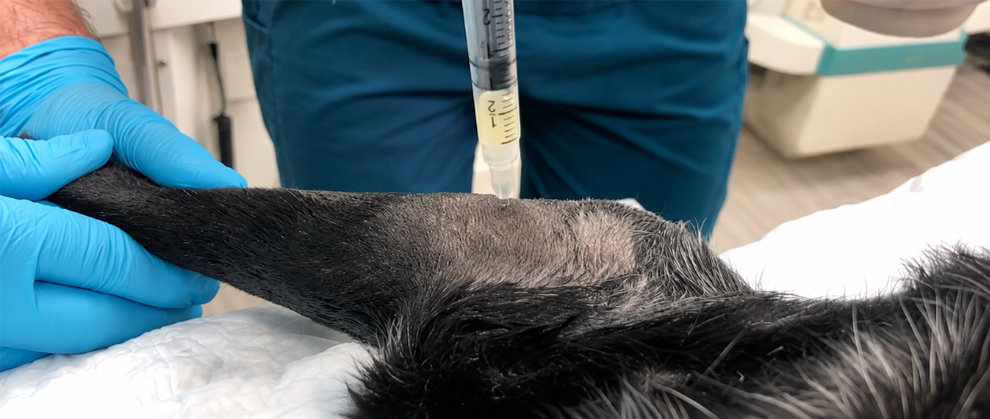
Osteoarthritis (OA) is one of the most common diseases treated in veterinary medicine and is widespread across age groups and dog breeds. Today, we now understand that this is not simply a disease of wear and tear in older animals. Furthermore, it is not a systemic disease, yet this is how it is most often treated.
OA is in fact a disease caused by chronic and progressively more severe inflammation within the synovium that leads to cartilage destruction and the characteristic hallmarks of the disease: often debilitating pain and reduced mobility. Because of the joint specific nature of the disease, OA is best addressed locally. Treatment would be ideally designed to target the cells directly involved in the vicious cycle of inflammation, namely the abundant macrophages and synoviocytes that drive the pain and joint damage.1
Although there are now a number of intra-articular (IA) treatments, not all directly target the inflammation causing the disease and its clinical signs. Radiosynoviorthesis (“restoration of the synovium using targeted radiotherapy”) is a novel, groundbreaking approach to address inflammation and provide long-lasting pain relief.1-4
We connected with board certified experts in pain management, sports and rehabilitation medicine, orthopedic surgery, and nuclear medicine who all have extensive experience in treating joint pain and mobility issues. These specialists shared their perspectives on using radiotherapy to treat OA.
Q: What is radiosynoviorthesis, and how does it work?
A: Dr. Stevenson
Radiosynviorthesis (RSO) is a very targeted type of radiotherapy and a game-changing approach in veterinary medicine to treat OA. It has a long history of successful use in human medicine, particularly in Europe where it has been used for decades to treat all types of arthritis—with exceptionally long-lasting results. Over a million human joints have been treated with RSO with more than 50,000 procedures being performed annually in Germany alone.5,6
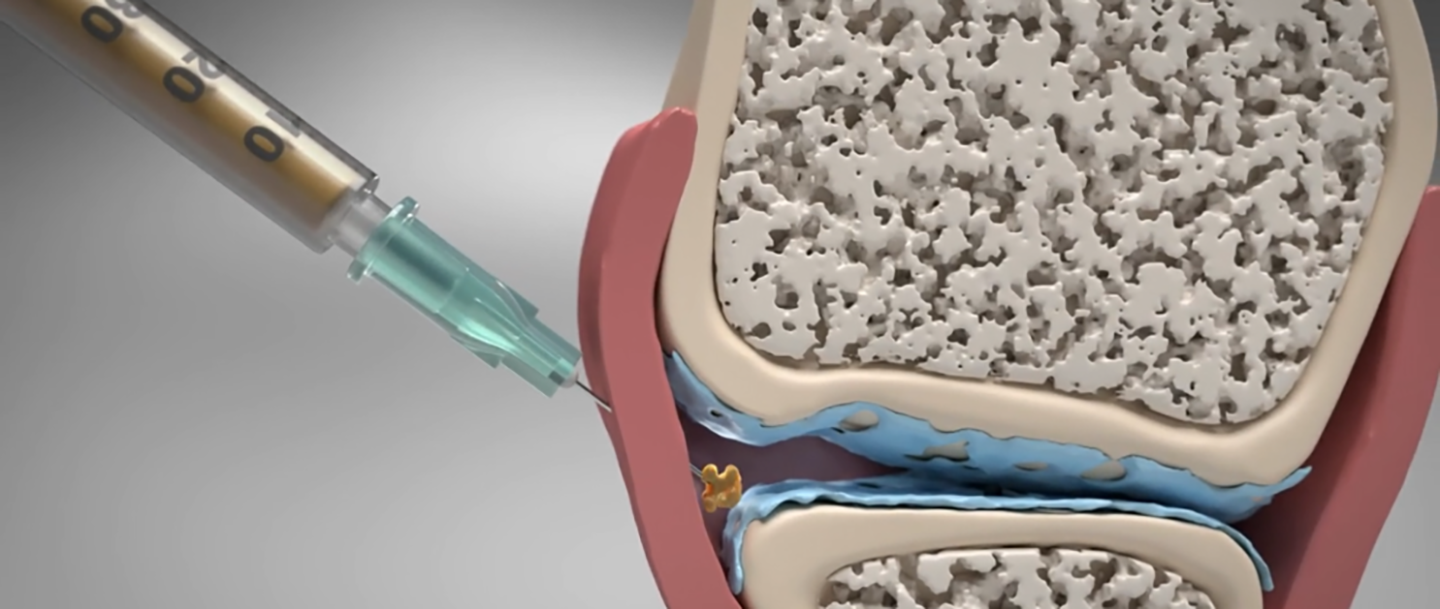
The proprietary radioisotope, tin-117m in a microparticle suspension, is available in the U.S. for IA treatment of OA in animals. The low-energy microparticles are taken up by macrophages and synoviocytes which are subsequently eliminated via non-inflammatory apoptosis. By emitting conversion electrons with a short range of tissue penetration, tin-117m enables precise non-systemic activity just within the joint with no impact on tissues such as bone, cartilage, tendons, and ligaments.1-4
Tin-117m is commercially available to treat animals in the U.S. as Synovetin OA®, a medical device that has been proven effective and safe in multiple studies, and with up to year-long pain relief. Since its introduction, Synovetin OA has now been used in thousands of joints with no reports of systemic adverse effects.1,4,7
Q: How is Synovetin OA different from other OA treatments?
A: Dr. Love
In dogs, conventional OA management typically includes weight control, NSAIDs, rehabilitation, monoclonal antibodies, and nutraceuticals as part of a multimodal approach. In contrast, Synovetin OA is injected directly into the affected joint with the goal of improving the intra-articular environment.
One of the major differences of Synovetin OA is the mechanism of action. NSAIDs, corticosteroids and a few nutraceuticals primarily target higher up in the inflammatory pathways and pain signaling. Other synthetic products are intended to improve joint biomechanics, lubrication, synovial function, and tissue support.
Synovetin OA specifically targets the inflammatory source of the disease that drives pain and lameness. Inflamed macrophages and synoviocytes engulf the tin-117m microparticles and are then cleared by them. This mechanism targets synovitis more specifically. Further, this localized therapy avoids the systemic side effects associated with conventional medications.1-4
Dr. Fischer
It is also novel in that the treatment itself, tin-117m, degrades and is practically gone from the dog’s joint in 60 days. Yet, the pain relief lasts up to a year or more. So, unlike systemic medications, it does not need to stay present in the body to elicit a long-term effect. This makes it a great choice for patients that do not tolerate NSAIDs or other medications, or where owner compliance is a concern.1,3
Dr. Love
Yes, duration is another significant difference. Synovetin OA offers pain relief and improved mobility for one year, though the effects often last longer. This allows many patients to decrease or even stop systemic medications.
Dr. Benjamino
And I’d like to point out that while the elbow was the originally studied joint, Synovetin OA has efficacy in other joints such as the hips, stifles, and tarsi. The mode of action is the same—targeting the synovitis and the inflammatory cascade within the joint.1,2 I would personally consider this therapy in any patients that have elbow issues, chronic hip dysplasia (particularly those that may not be candidates for total hip replacement), and tarsal changes (more commonly associated with osteochondritis dissecans).
Q: How well does RSO address inflammation?
A: Dr. Love
Unlike many OA therapies that primarily modulate pain perception systemically, Synovetin OA directly targets inflammatory cells and directly addresses synovitis at the cellular level within the joint itself.
Studies in dogs with elbow OA have shown durable improvements in lameness and pain scores for up to 12 months after a single injection. These benefits persist well beyond the physical half-life of tin-117m.1,2
Dr. Fischer
I agree. The duration of clinical response is really what demonstrates the continued effect of Synovetin OA. The fact that I have patients almost 12 months out from treatment who are still doing great highlights this. The tin-117m is no longer active in the joint, but it continues to have a clinical effect. And my personal experience mirrors that of the clinical trials that have been published demonstrating the significant treatment success achieved with Synovetin OA.1,2
Q: How does this approach address the long-term OA management?
A: Dr. Brunke
One of the most exciting aspects of RSO is that we are not just seeing pain relief for the time that tin-117m is active. Clinically, we see many dogs experience increasing comfort and improved mobility for well over a year after treatment, despite there being no active tin-117m remaining in the joint at that point. This observation alone raises important questions about how altering the inflammatory environment within the joint may influence the disease process long term.1
From a mechanistic standpoint, Synovetin OA targets synovitis, a major driver of osteoarthritis pain, cartilage damage and loss, and osteophyte formation. By reducing this inflammatory cascade locally within the joint, we may be addressing one of the major pathways contributing to ongoing disease.1
Dr. Benjamino
That’s right. In one study evaluating Lewis rats, the results support this idea. While not studied in dogs for this feature, one could theorize that if synovitis is blocked and there is still normal cartilage, etc. within the joint, it may help maintain joint health.1 Additional research in dogs would shed more light on this topic.
Dr. Brunke
The Lewis rat research is particularly compelling in this regard. In those studies, treatment demonstrated reductions in synovitis, cartilage degeneration, and osteophyte formation, in addition to analgesia. That is extremely important because many OA therapies primarily focus on symptom control instead of the disease process.1,8,9
Q: What do you particularly like about Synovetin OA?
A: Dr. Benjamino
In addition to the success rate I’ve seen with Synovetin OA, there are other important features. One that comes to mind for me is that it truly is a targeted therapy WITHOUT systemic distribution and systemic side effects. This is much different than what we see with systemic medications. Also, many of these patients are older and may have other comorbidities where systemic therapy can be harmful. Synovetin OA is a very safe treatment and this has been proven in peer reviewed studies as well as in clinical practice.1-4
Dr. Brunke
One of the biggest things I emphasize is the duration of effect between treatments. Many of my patients are maintaining meaningful improvement for extended periods of time, often well beyond what we commonly see with traditional intra-articular therapies alone. From a sports medicine and rehabilitation perspective, this can translate into sustained gains in mobility, improved muscle mass maintenance, improved willingness to exercise, and in some cases enabling reduction of chronic medication burden.10
I also think patient selection and multimodal management are important for optimizing outcomes. The best results tend to occur when we combine Synovetin OA with appropriate rehabilitation, weight optimization, strengthening programs, and addressing concurrent orthopedic or neurologic disease appropriately.
Dr. Benjamino
As a surgeon, I deal a lot with young patients/juveniles with elbow dysplasia and dogs with stifle disease, etc. In these patients, particularly those with elbow dysplasia, even with surgical intervention we KNOW we are NOT stopping the inflammatory cascade. While I am in strong support of early surgical intervention with these patients, I would argue that the best combined therapy would include the use of Synovetin OA in these joints following surgery. The use of this treatment in the young patient is a population that could benefit following surgery.
Dr. Love
General practitioners can consider discussing Synovetin OA with their patients who have mild to moderate OA, just as they do with other conventional treatments. Since it targets inflammation, administering it earlier in the joint treatment process may lead to better outcomes. As clinicians increasingly recognize the importance of synovitis and individualized multimodal OA care, Synovetin OA should become a more commonly considered option to treat chronic joint pain. In short, Synovetin OA is well-suited for any OA patient as part of a comprehensive, personalized treatment plan aimed at reducing pain, enhancing function, improving mobility, and supporting long-term quality of life.
Dr. Fischer
I agree. In my opinion, Synovetin OA should be on the table as a treatment option in any patient that has evidence of osteoarthritis or patients at significant risk of developing osteoarthritis, such as those with congenital joint disease.
While earlier intervention is considered better for a complete response and long-term joint health, I’ve treated patients in all stages of OA. Even in the case of owners with severely affected dogs that might see a decreased treatment response, I typically find they are the most impressed with how their dog feels after treatment. And, as a result, many of these patients have been able to reduce or eliminate the need for other pain-relieving medications.10
Q: What is your experience with Synovetin OA in your practice?
A: Dr. Love
My patients that have received Synovetin OA have had very good outcomes and I have happy owners. I have sporting dog patients that have had elbows, hips, and tibiotarsal joints injected and they are still training and competing. The newest data that has been published shows patients that receive repeat Synovetin OA injections are doing well with no side effects and good outcomes.1 And, I’ve seen positive responses across a wide spectrum of disease severity, ranging from early OA associated with developmental orthopedic disease to more advanced chronic OA cases. For that reason, Synovetin OA is suitable as a first-line treatment regardless of the severity of the disease.
Dr. Fischer
I have owners reporting treatment response as “miraculous,” “amazing,” and that their dog is “a new dog.” For example, I had one patient, Stella, with severe stifle and elbow OA. Her quality of life had significantly declined. After treating all four joints, she was playing and running up and down the driveway approximately one week later.
Something I want to highlight is the need for a good orthopedic workup prior to recommending Synovetin OA. Identifying the underlying cause of the pain through additional diagnostics, like CT, is key. Synovetin OA addresses inflammation, not structural changes in the joint. So, if the joint requires surgery to correct any structural issues that could be exacerbating the inflammation and pain, it’s best to address those first, then treat with Synovetin OA.
Dr. Benjamino
First of all, I’ve injected my own dog with impressive results. So, I’m a huge believer.
I have also been able to treat a number of hip cases and have been really impressed with the outcome and the owners’ experiences. I am a big fan of injecting joints other than the elbows, as I feel it can have a significant effect. In fact, my success rate mirrors those of published reports.1,2
I have multiple patients that schedule reinjection on a yearly basis. It’s great to see patients that were having significant mobility issues be able to ambulate more comfortably and live a mobile life once again.
Dr. Brunke
I’ve also treated my own dog with Synovetin OA. Having used it with excellent results in around 200 dogs to date, the choice for her was a no brainer. And her response has been great.
I’d like to share a couple of memorable cases. One involved Murphy, a Komodo dragon at the Smithsonian National Zoo, certainly not a standard sports medicine patient! We treated Murphy’s right elbow and both knees. It was an incredible collaborative effort and a great example of how this technology may have applications well beyond traditional canine OA management. The case also highlighted how important mobility is for quality of life across species.
Another rewarding case was Santino, a very large dog with significant shoulder OA. Shoulders can be particularly frustrating because we have relatively few durable treatment options compared to joints like elbows or stifles. Santino had dramatic improvement following treatment. One of the most rewarding outcomes was being able to substantially reduce most of his long-term arthritis medications because he was moving so much better and more comfortably afterward.
Cases like that really reinforce how impactful restoring function and mobility can be, not just for the patients, but also for the families caring for them.
References
- Bendele A, Doerr CA, Gonzales GR, et al. Evidence of osteoarthritis disease modification with a Sn-117m microparticle device: a review and validation in mammalian models. Front. Vet. Sci. 2-25;12:1-13 doi: 10.3389/fvets.2025.1621296.
- Aulakh KS, Lopez MJ, Hudson C, et al. Prospective clinical evaluation of intra-articular injection of tin-117m (117mSn) radiosynoviorthesis agent for management of naturally occurring elbow osteoarthritis in dogs: A pilot study. Vet Med (Auckl). 2021. Jun 4;12:117-128. doi: 10.2147/VMRR.S295309. PMID: 34113552; PMCID: PMC8187093.
- Donecker J, Fabiani M, Gaschen L, Aulakh KS. Treatment response in dogs with naturally occurring grade 3 elbow osteoarthritis following intra-articular injection of 117mSn (tin) colloid. PLoS One. 2021. Jul 19;16(7):e0254613. doi: 10.1371/journal.pone.0254613. PMID: 34280212; PMCID: PMC8289027.
- Lattimer JC, Selting KA, Lunceford JM, et al. Intra-articular injection of a tin-117m radiosynoviorthesis agent in normal canine elbows causes no adverse effects. Vet Radiol Ultrasound. 2019. Sep;60(5):567-574. doi: 10.1111/vru.12757. Epub 2019 Jun 2. PMID: 31155782.
- Das BK. Role of radiosynovectomy in the treatment of rheumatoid arthritis and hemophilic arthropathies. Biomed Imaging Interv J. 2007;3(4):1-5. doi: 10.2349/biij.3.4.e45.
- Liepe K. 117mSn colloid in the radiosynovectomy. Presented at 2015 EANM, Hamburg, Germany, by Willm Uwe Kampen for the Bone and Joint Committee of EANM.
- Arno MG; Barnhard JA, Webb KR, et al. Tin-117m radiosynoviorthesis safely and effectively manages canine osteoarthritis with minimal radiation exposure: A narrative review. JAVMA. 07Jan2026:1-5. https://doi.org/10.2460/javma.25.08.0564.
- Doerr C, et al. Poster presented at the Society of Nuclear Medicine & Molecular Imaging Annual Conference. San Diego, CA. 2016.
- Data on File. Pathology Report. Bolder BioPATH, Inc.; Boulder, CO.
- Data on File. March 2026 Treating Veterinarian Survey. Exubrion Therapeutics, Inc.