
To take the CE quiz, click here.
This quiz is open until October 2028.

Canine atopic dermatitis is a very common skin condition seen in general practice. This disease is not curable and requires lifelong management. Many antiallergy therapies for dogs with atopic dermatitis exist, each with advantages and disadvantages, and the treatment approach must be tailored for each patient. This article discusses current treatment options available for canine atopic dermatitis, including recently approved Janus kinase inhibitors and monoclonal antibodies as well as established therapies such as glucocorticoids, cyclosporine, and allergen-specific immunotherapy.
Take-Home Points
- Canine atopic dermatitis is a chronic disease that requires establishing an effective long-term allergy management plan tailored for the individual patient.
- Excellent client communication and sound clinical judgment are both paramount when deciding which chronic therapy is best suited for a particular case.
- Each drug class of antiallergy therapy carries its own pros and cons, which means the selection of therapies is not a “1-size-fits-all” approach.
- Particular factors to consider when selecting long-term antiallergy medications include patient and owner compliance, comorbidities, cost, response to previous therapies, and concurrent medications.
Canine atopic dermatitis is a chronic, complex, and often frustrating disease to manage. Over the past 2 years, 3 new antiallergy therapies (ilunocitinib, atinvicitinib, and tirnovetmab) have been approved for managing allergies in dogs, adding to the existing arsenal of innovative anticytokine (oclacitinib, lokivetmab, cyclosporine) and disease-modifying (allergy immunotherapy) treatments. As individual responses to therapies may vary, choosing the optimal treatment approach depends on a firm understanding of the current options in the dermatology armamentarium as well as each patient’s comorbidities and concomitant medications.
Janus Kinase Inhibitors
Janus kinase (JAK) inhibitors (JAKinibs) have had a marked impact on the acute and chronic management of allergic dermatitis in veterinary medicine, providing rapid relief from pruritus compared to therapies such as allergen-specific immunotherapy (ASIT), antihistamines, and cyclosporine. In addition, this class of antiallergy medications provides an option other than steroids for rapid relief, thus avoiding the unwanted side effects of corticosteroids.1-3 Caution must be used with all members of this drug class, which have been associated with risks for secondary infections.4-6 The product labels for all 3 U.S. FDA–approved products state that neoplastic conditions have been reported, but there are no claims that these products are associated with increased risk for neoplasia.
All JAKinibs approved for use in veterinary medicine are classified as immunomodulators, targeting the JAK enzyme on the cytoplasmic aspect of cytokine receptors on various cells, thus interfering with multiple downstream biological effects.4-6 These effects depend on the type of JAK enzyme (e.g., JAK1, JAK2, JAK3, tyrosine kinase 2 [TYK2]) being targeted.7
The Role of Selectivity
With the emergence of 2 new JAKinibs (ilunocitinib and atinvicitinib) since the FDA approval of oclacitinib in 2013, JAK specificity has become an important topic of discussion when comparing the different JAKinibs available in veterinary medicine (Table 1).
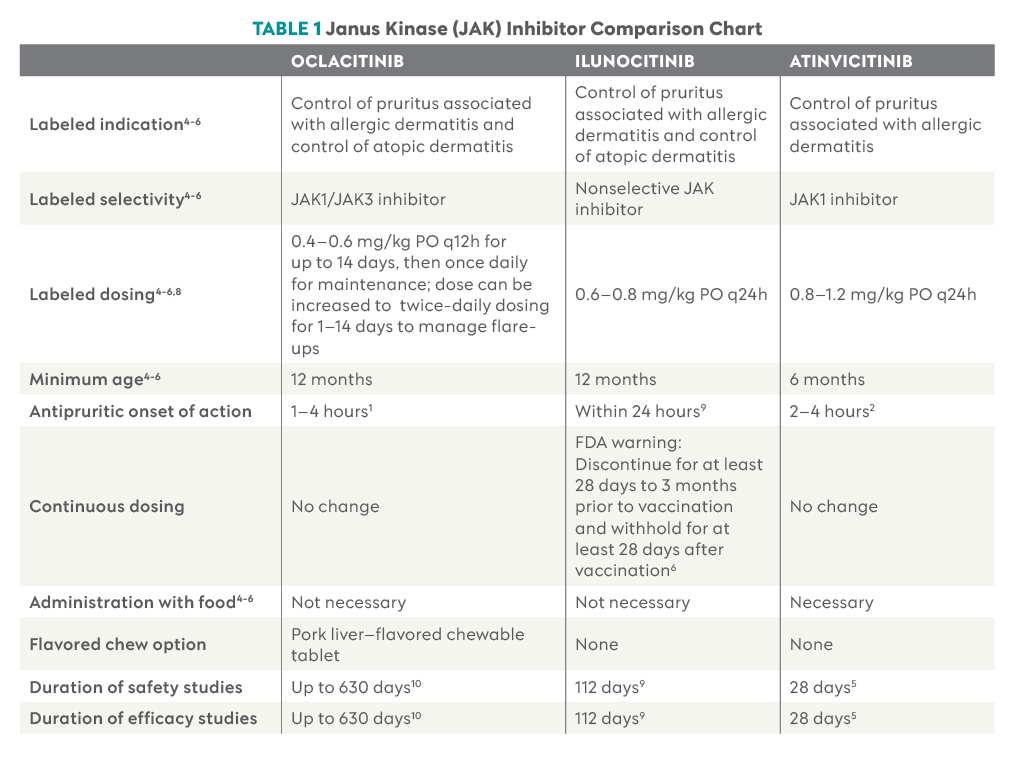
Oclacitinib selectively inhibits JAK1- and JAK3-dependent enzymes involved in allergy and inflammation (interleukin [IL]-2, IL-4, IL-6, and IL-13) in addition to pruritus (IL-31), with little effect on JAK2 (involved in hematopoiesis).7 Ilunocitinib is labeled as a nonselective JAKinib with high potency for JAK1, JAK2, and TYK2,6 which could theoretically raise clinical concern for a broader effect on cytokine activity, including on cytokines involved with hematopoiesis. Conversely, atinvicitinib has been shown to have high selectivity for JAK1 enzymes11 and is therefore marketed as a “second-generation” JAKinib.
Although the discussion surrounding selectivity might involve declaring one drug in this class to be more effective or safer than another, there are no true data to support these claims based on selectivity alone. In human medicine, the relative weight put on the selectivity of a JAKinib in relation to patient safety still requires further investigation.12 In theory, increased selectivity for JAK1 should result in an improved safety profile compared to broader selectivity; however, at this time, selectivity is not a predictor of safety and efficacy in human or veterinary medicine.12,13 Cell- and enzyme-based selectivity models are the sources of current selectivity data,7,11 whereas ex vivo data are lacking and might even produce contrasting results.13,14 The response of a patient to any JAKinib could depend on dose, pharmacokinetics, frequency of dosing, target cell spectrum, and various other factors.15
Head-to-Head Studies
One noninferiority study involving ilunocitinib and oclacitinib for the control of pruritus in canine atopic dermatitis found ilunocitinib to be noninferior to oclacitinib.9 Furthermore, a significantly greater number of dogs in the ilunocitinib treatment group were determined to have achieved at least 50% reduction in pruritus by day 84 compared to the oclacitinib treatment group (90% ilunocitinib versus 72% oclacitinib). Clinical remission of pruritus, defined as achieving an owner-assessed pruritus score of less than 2 out of 10, was achieved in 77% of ilunocitinib-treated dogs versus 53% of oclacitinib-treated dogs. Assessment of dermatitis by investigators in the same study showed a statistically greater number of dogs achieving at least 50% reduction from baseline in the ilunocitinib group compared to oclacitinib.
There are currently no published head-to-head studies involving atinvicitinib compared with either ilunocitinib or oclacitinib. Additional clinical experience and prospective studies are needed to provide better insight into the differences in safety and efficacy among the JAKinibs, as well as which clinical factors influence these differences.
Long-Term Administration
The use of oclacitinib in dogs has been the subject of independent studies in addition to pharmacovigilance monitoring for more than 10 years.16-18 A prospective, open-label study evaluating chronic administration of Apoquel (Zoetis) in allergic dogs was conducted for 630 days (mean 407 days), showing a positive impact on quality of life in > 91% of dogs and no serious adverse events attributable to oclacitinib.10 Over a 5-year pharmacovigilance period evaluating > 91 million dogs, the estimated frequency of adverse events was determined to be < 1 animal reacting per 10,000 animals treated.18 Reported adverse events for oclacitinib include vomiting, diarrhea, lethargy, anorexia, leukopenia, aggression, skin disorders not otherwise specified, and papilloma.18 Further studies are still needed to determine long-term safety in ilunocitinib-treated dogs, as current data only followed dogs up to 112 days,9 and in atinvicitinib-treated dogs, with current data available up to 28 days.5
The most commonly reported adverse events in dogs receiving ilunocitinib include gastrointestinal upset, lethargy, urinary tract infection, and anorexia, while gastrointestinal upset, otitis externa, hematuria, and bacterial skin infection have been reported in dogs receiving atinvicitinib.5,6 Abnormal blood analysis findings, including leukopenia, elevated liver values, and hypercholesterolemia and/or hypertriglyceridemia, have been reported with all JAKinibs.4-6
Based on initial laboratory findings in vaccine-naïve puppies receiving ilunocitinib at 3 times the labeled dosing, the FDA issued a black box warning that an inadequate immune response to vaccines could occur while receiving ilunocitinib.6 The label recommendations state that ilunocitinib should be discontinued at least 28 days prior to vaccination and withheld for at least 28 days postvaccination. Contrastingly, a subsequent study evaluating the serologic response after booster vaccinations in previously vaccinated dogs showed that ilunocitinib given at 3 times the labeled dosing did not significantly attenuate the serologic response to vaccinations (adenovirus type 2, parvovirus, distemper virus, and rabies).19 The decision of whether to continue with ilunocitinib dosing during vaccination should be made after an informed discussion with the dog owner in regard to the FDA warning.
Anti–IL-31 Monoclonal Antibodies
Since the discovery of IL-31 as a key pruritogenic cytokine involved in canine allergic dermatitis, therapies targeting this mediator have proven to be effective in both short- and long-term management of canine atopic dermatitis. In particular, a caninized monoclonal antibody (mAb) binding and neutralizing IL-31, lokivetmab, was licensed in 2016 for allergic and canine atopic dermatitis. In 2026, a new mAb, tirnovetmab, was licensed with the same indications and mechanism of action, though the exact binding site on IL-31 differs from that of lokivetmab. In clinically treated dogs diagnosed with allergic dermatitis, antipruritic benefit is noted within 24 hours for both mAbs.20,21
Dosing Frequency
Lokivetmab is labeled for administration every 4 to 8 weeks.21 Tirnovetmab provides antipruritic relief for 6 to 8 weeks22 but can be dosed as often as every 4 weeks. In studies evaluating the long-term administration of lokivetmab, dosing intervals may vary between individuals, with approximately 45% requiring 4 to 5 weeks, 40% needing every 6 to 7 weeks, and 15% needing 7 to 8 weeks.23,24
Safety and Efficacy
Overall, preliminary safety claims regarding tirnovetmab are comparable to those of lokivetmab, including no restrictions on age or concomitant medications.21,22 In addition, more common adverse events noted with either mAb are similar, including injection-site sensitivity, dermatitis, bacterial skin infection, vomiting, diarrhea, and lethargy, although these are relatively infrequent.21,22
Several studies have underscored the long-term safety and efficacy of lokivetmab for the chronic management of canine atopic dermatitis, with no serious concerns regarding adverse events.23-25 Lokivetmab appears to maintain consistent control of pruritus in most patients (up to 17% reported loss of efficacy over time), with high client satisfaction in addition to reduced need for other medications.23,25
Prospective studies evaluating the difference in clinical response in dogs treated with lokivetmab versus tirnovetmab are still needed.
Corticosteroids
Use for Acute Allergy Flares
Without question, oral corticosteroids can be used for rapid reduction in allergic flare-ups in many dogs suffering from atopic dermatitis. Intermittent use of short-acting oral corticosteroids, notably prednisone/prednisolone (0.5 to 1 mg/kg PO q24h initially, then taper), is a reasonable approach in most cases of infrequent, acute allergic flare-ups up to 30 days. However, it is important to note that in a study evaluating client satisfaction while their dogs were treated with prednisone/prednisolone, 70% of owners stated they were willing to pay more for a therapy that involved fewer adverse effects.26 In the same study, 90% of dogs were reported to experience at least 1 adverse event by day 14, with polyuria and polydipsia being the most common, regardless of patient size and even at tapered doses.26
This highlights the importance for clinicians to discuss the multiple nonsteroidal options (e.g. JAKinibs, anti–IL-31 mAbs) in cases of acute allergy flares. Treatment of atopic dermatitis with long-acting injectable corticosteroids is not recommended even in the acute setting.27
Chronic Use
In general, it is not advised in most cases to use oral corticosteroids for long-term management of atopic dermatitis given the potential for adverse events, including recurrent urinary tract infections, hepatopathy, diabetes mellitus, and cutaneous changes (e.g., poor hair coat, calcinosis cutis, comedones, cutaneous atrophy). Where possible, topical corticosteroids (e.g., hydrocortisone, triamcinolone, betamethasone, mometasone) should be used instead of systemic corticosteroids due to fewer systemic effects, although cutaneous atrophy as a potential adverse event still precludes long-term, consistent application of topical steroids. Clients should be made aware of the potential risks of long-term corticosteroid administration. Finding the lowest dose and frequency of steroids during chronic therapy is key to reducing the incidence of unwanted side effects.
Cyclosporine
Cyclosporine, a calcineurin inhibitor reducing the activity of T cells and IL-2, has been approved for the control of canine atopic dermatitis for over 20 years. It is effective and relatively safe for long-term control of canine atopic dermatitis.28,29 Although this immunomodulator can control allergic inflammation as well as pruritus, it is not sufficient for acute flares of allergic signs. Concurrent administration with a 3-week tapering course of prednisone (0.5 to 1 mg/kg PO q24h) is often recommended, as cyclosporine takes time to effectively control atopic dermatitis (4 to 6 weeks).30
Due to the innovation of faster antipruritic therapeutics such as JAKinibs and mAbs, cyclosporine may not be used today as often as previously. It is important to note that anecdotally, cyclosporine may still be effective when JAKinibs and/or anti–IL-31 mAbs are not effectively controlling allergic disease because of a difference in mechanism of action. The anti-inflammatory nature of cyclosporine has also been anecdotally reported to control pododermatitis such as interdigital furunculosis, which can be seen concurrently with atopic dermatitis.
Adverse Events and Drug Interactions
Additional reasons for choosing other therapies for allergy control, besides cyclosporine’s delayed onset of action, include gastrointestinal upset, increased incidence of urinary tract infections, gingival hyperplasia, and interaction with multiple drugs that are P-glycoprotein substrates or metabolized by cytochrome P450.31
Advantages
One major advantage of cyclosporine is the potential ability to maintain adequate allergy control with every-other-day dosing or, less commonly, twice-weekly dosing.27 At the least, a reduction in daily dosing may be achieved in some dogs if alternate-day dosing is not possible. Furthermore, cyclosporine is commercially available as an oral liquid formulation, which allows more precise dosing (5 mg/kg), a better ability to titrate the dose compared to the capsule formulation, and an alternative formulation for dogs not accepting of pills/tablets.
Allergen-Specific Immunotherapy
ASIT still remains the only treatment for canine atopic dermatitis that addresses the underlying cause and modifies the mechanism of the disease.32 Although the exact mode of action is not completely described, an increase in regulatory T cells (FoxP3+CD4+), IL-10, and immunoglobulin (Ig) G4, along with a decrease in IgE, has been noted in dogs successfully treated with ASIT.33 Currently, there are 4 different routes of administration: subcutaneous injection, sublingual, intralymphatic, and epicutaneous (transdermal).
Formulations
The subcutaneous route is the longest-used formulation in veterinary dermatology. Success rates vary depending on the study but are between 60% and 70% in most cases.32 Various protocols exist, with injection frequencies ranging between 1 and 4 weeks. Sublingual immunotherapy is administered daily but allows an option for owners who are uncomfortable with giving injections.
Within the past few years, research has focused on intralymphatic immunotherapy administered once monthly.34 Reports typically describe an aluminum precipitate adjuvant as well as ultrasound-guided injection of the popliteal lymph node, which makes this approach less than ideal as a conventional treatment in everyday practice. Once-daily transdermal (epicutaneous) immunotherapy applied to the medial pinna has been described in an unpublished study, with preliminary results showing a safe and effective outcome in dogs with atopic dermatitis.35
Deciding on a specific formulation of ASIT may depend on factors such as availability, clinician experience and training, patient tolerance, client compliance, and cost. Nevertheless, allergens should be selected based on intradermal allergy testing and/or allergy serology, in addition to considering the patient’s seasonal pattern and allergen exposure in the particular geographic region.
In deciding to pursue ASIT, referral to a board-certified veterinary dermatologist is highly recommended.8 Adherence to therapy might be an issue for dog owners in the general practice setting, as close to one-third of owners do not refill immunotherapy after the initial vials are dispensed.36 In addition, the success rate of immunotherapy is significantly higher in cases that are closely monitored with regular follow-up evaluations by the veterinarian.37 Strong client education is needed, which should consist of highlighting the value and expectations of immunotherapy.38 ASIT may not be ideal for all clients.
Expectations
Clinical benefit from immunotherapy is delayed, taking 3 to 9 months to observe initial improvement. It is recommended to continue ASIT for at least 12 months to determine overall efficacy while maintaining concurrent antiallergy medications for symptomatic relief during the build-up phase.27 Possible adverse reactions include a rare risk of anaphylaxis (angioedema, urticaria, collapse, dyspnea, vomiting, diarrhea), increase in pruritus, localized injection site reaction, and gastrointestinal signs.
Choosing Drugs for Control of Acute Pruritus
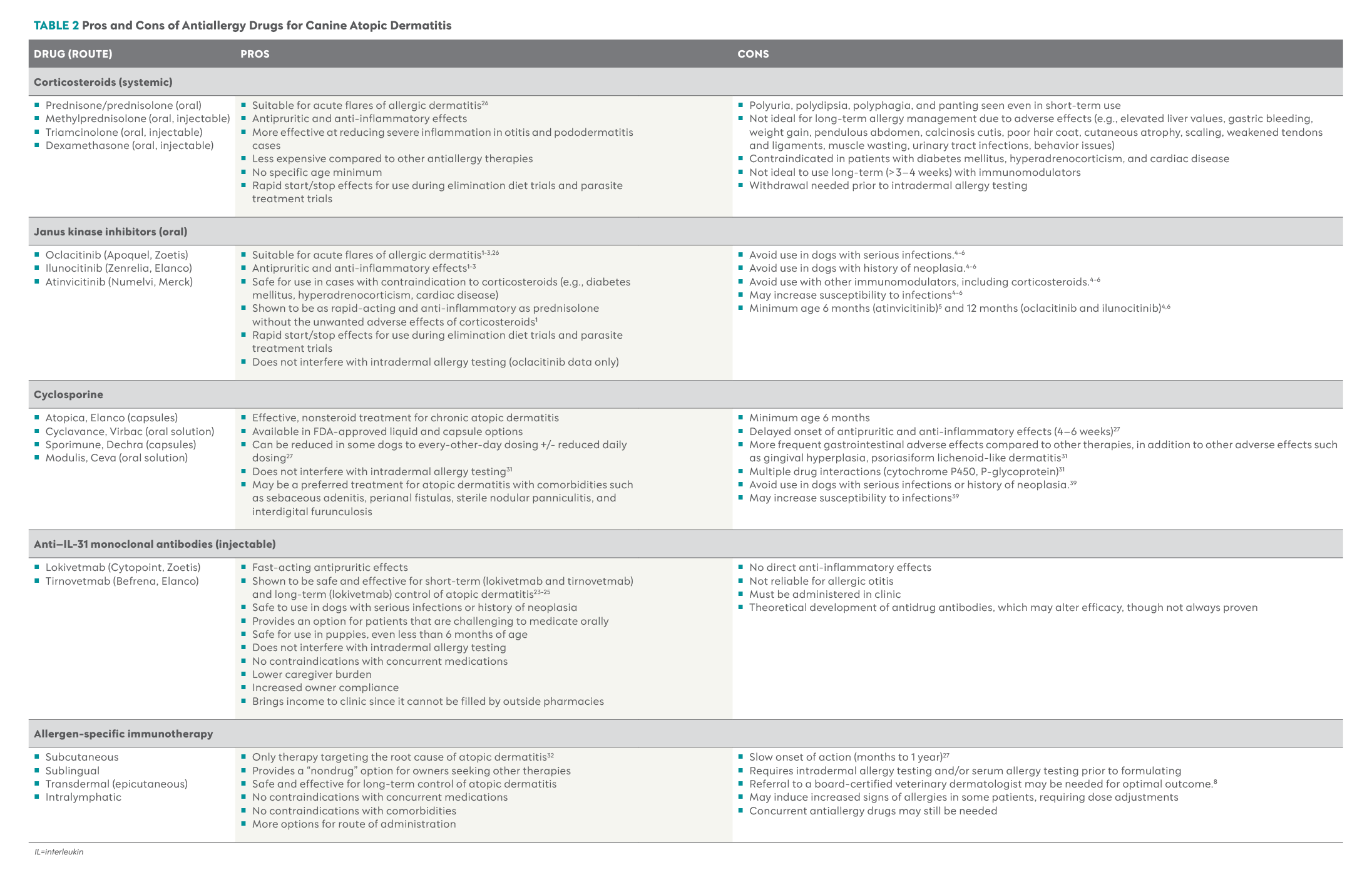
Establishing acute control of allergic pruritus should involve fast-acting drugs that ideally have minimal side effects, such as JAKinibs and anti–IL-31 mAbs (Box 1). In cases of moderate to severe inflammation, JAKinibs are likely to provide better targeted therapy than anti–IL-31 mAbs given their broader activity against proinflammatory cytokines. JAKinibs and anti–IL-31 mAbs are typically preferred over systemic corticosteroids due to adverse effects of steroids (e.g., polyuria, polydipsia, polyphagia), which can be frustrating for the pet owner. Table 2 summarizes the pros and cons of each drug class.
- Oclacitinib
- Ilunocitinib
- Atinvicitinib
- Lokivetmab
- Tirnovetmab
- Corticosteroids (oral or topical)
*Cyclosporine and allergen-specific immunotherapy are not suitable for acute allergic flare-ups, although they can be successfully used for chronic atopic dermatitis.
When financial cost is a concern and/or severe pododermatitis or otitis (e.g., ceruminous gland hyperplasia, canal ulceration) is present, a tapering course of prednisone/prednisolone may be preferred over other therapies. Cyclosporine is not recommended for cases of acute allergic dermatitis given its delayed onset of action. Nevertheless, cyclosporine may be advantageous in cases not responsive to JAKinibs or anti–IL-31 mAbs as well as in cases with concurrent dermatopathies such as interdigital furunculosis.
Creating a Long-Term Treatment Plan
Once a diagnosis of atopic dermatitis has been made, a thorough discussion with the pet owner is vital to determine the best choice for chronic management. Continuation of JAKinibs or anti–IL-31 mAbs may be an option, but ASIT might be ideal in many cases. The decision for long-term allergy therapy should be based on key factors such as patient age, seasonality of allergy signs, concurrent medications, comorbidities, patient and client compliance, long-term financial cost, and the client’s full understanding of the risks and benefits of the specific therapies according to clinical experience and product labeling. Furthermore, client education should also acknowledge the reality that many allergy cases require modifications to 1 or more agents used in the pet’s treatment plan, as atopic dermatitis is a dynamic disease. Routine follow-up evaluations and communication are essential.8
Long-term management of chronic atopic dermatitis requires a multimodal approach in most dogs. It is essential for the clinician to understand the indications for and potential risks of using any of the available anchor treatments.
- JAKinibs: Individual members of this drug family should never be used concurrently with other JAKinibs. Overlap with cyclosporine and oclacitinib has been found to be safe over a 21-day period but should not be used long-term given the lack of clinical data.
- One prospective study evaluated combination therapy consisting of prednisolone (0.5 mg/kg PO q24h 2 days a week) and oclacitinib (0.5 mg/kg PO q24h on 2 other days a week) with 3 days of no drugs during the remainder of the week, repeating this cycle over a 60-day period.40 This was found to be effective and safe for control of allergic pruritus and inflammation as a protocol to reduce the overall cost of oclacitinib over time and to reduce the need for systemic corticosteroids. However, JAKinib coadministration with other systemic corticosteroids has not been evaluated, and this combination should therefore generally be avoided.
- Cyclosporine: Given the delayed onset of action of this drug, concurrent administration of a tapering, anti-inflammatory dosing of prednisone has been shown to be effective and safe for short-term management.27,30 Long-term coadministration of these drugs is not recommended due to lack of clinical data. Oclacitinib and cyclosporine can be given for up to 21 days concurrently with no serious adverse events noted, although this is not recommended for long-term use.41
- Anti–IL-31 mAbs: There are no specific restrictions with any drugs, including antiallergy medications such as JAKinibs, cyclosporine, and corticosteroids. A recent publication concluded that the combination of lokivetmab and oclacitinib can be safely recommended, noting up to 61% treatment success despite failure to adequately respond to monotherapy (either lokivetmab or oclacitinib alone).42
- ASIT: There are no drug interactions when giving an individual antiallergy drug with ASIT. Most atopic dogs receiving ASIT, regardless of the formulation, require symptomatic relief from 1 or more antiallergy drugs during the buildup phase. Over time, ASIT might allow the discontinuation of other drugs, or at least a reduction in their dosage.
Summary
The expanding arsenal of veterinary therapeutics targeting the control of canine atopic dermatitis provides multiple options when prescribing an individualized treatment plan. With these options comes the responsibility of veterinarians to familiarize themselves with the potential risks and benefits of all available FDA- and USDA-approved systemic therapies for allergies, as the treatment discussion may change from patient to patient. Effective client education is essential to successfully executing treatment recommendations and providing an optimal outcome in the care of dogs with atopic dermatitis.
References
- Gadeyne C, Little P, King VL, Edwards N, Davis K, Stegemann MR. Efficacy of oclacitinib (Apoquel®) compared with prednisolone for the control of pruritus and clinical signs associated with allergic dermatitis in client-owned dogs in Australia. Vet Dermatol. 2014;25(6):512-518, e86. doi:10.1111/vde.12166
- Kowalski T, Prohaczik A, Locke K, Samson C, Hope K. The second-generation Janus kinase inhibitor atinvicitinib significantly reduces pruritus 2-4 hours after dosing dogs in a canine interleukin-31 model. Abstract. Vet Dermatol. 2026;37(2):179-180. doi:10.1111/vde.70046
- Forster S, Trout CM, Despa S, Boegel A, Berger D, King S. Efficacy and field safety of ilunocitinib for the control of atopic dermatitis in client-owned dogs: a multicentre, double-masked, randomised, placebo-controlled clinical trial. Vet Dermatol. 2025;36(5):647-659. doi:10.1111/vde.13344
- Apoquel (oclacitinib tablet). Package insert. Zoetis; 2020.
- Numelvi (atinvicitinib tablet). Package insert. Merck; 2025.
- Zenrelia (ilunocitinib tablet). Package insert. Elanco; 2025.
- Gonzales AJ, Bowman JW, Fici GJ, Zhang M, Mann DW, Mitton-Fry M. Oclacitinib (APOQUEL®) is a novel Janus kinase inhibitor with activity against cytokines involved in allergy. J Vet Pharmacol Ther. 2014;37(4):317-324. doi:10.1111/jvp.12101
- Miller J, Simpson A, Bloom P, et al. 2023 AAHA management of allergic skin diseases in dogs and cats guidelines. JAAHA. 2023;59(6):255-284. doi:10.5326/JAAHA-MS-7396
- Forster S, Boegel A, Despa S, Trout C, King S. Comparative efficacy and safety of ilunocitinib and oclacitinib for the control of pruritus and associated skin lesions in dogs with atopic dermatitis. Vet Dermatol. 2025;36(2):165-176. doi:10.1111/vde.13319
- Cosgrove SB, Cleaver DM, King VL, et al. Long-term compassionate use of oclacitinib in dogs with atopic and allergic skin disease: safety, efficacy and quality of life. Vet Dermatol. 2015;26(3):171-179, e35. doi:10.1111/vde.12194
- Kowalski T, Schuette S. The second-generation Janus kinase inhibitor atinvicitinib is a potent and highly selective inhibitor of JAK1. Abstract presented at: 36th ESVD-ECVD Congress; August 27–29, 2026; Lille, France. https://doi.org/10.1111/vde.70046
- Gadina M. JAK inhibitors: is specificity at all relevant? Semin Arthritis Rheum. 2024;64S:152327. doi:10.1016/j.semarthrit.2023.152327
- Virtanen A, Spinelli FR, Telliez JB, O’Shea JJ, Silvennoinen O, Gadina M. JAK inhibitor selectivity: new opportunities, better drugs? Nat Rev Rheumatol. 2024;20(10):649-665. doi:10.1038/s41584-024-01153-1
- McInnes IB, Byers NL, Higgs RE, et al. Comparison of baricitinib, upadacitinib, and tofacitinib mediated regulation of cytokine signaling in human leukocyte subpopulations. Arthritis Res Ther. 2019;21(1):183. doi:10.1186/s13075-019-1964-1
- Bonelli M, Kerschbaumer A, Kastrati K, et al. Selectivity, efficacy and safety of JAKinibs: new evidence for a still evolving story. Ann Rheum Dis. 2024;83(2):139-160. doi:10.1136/ard-2023-223850
- Marsella R, Doerr K, Gonzales A, Rosenkrantz W, Schissler J, White A. Oclacitinib 10 years later: lessons learned and directions for the future. JAVMA. 2023;261(S1):S36-S47. doi:10.2460/javma.22.12.0570
- Nederveld SM, Krautmann MJ, Mitchell J. Safety of the selective JAK1 inhibitor oclacitinib in dogs. J Vet Pharmacol Ther. 2025;48(3):135-145. doi:10.1111/jvp.13503
- Khan SS, Nederveld CA, Mandello K. A six years global pharmacovigilance review of suspected adverse reactions from oclacitinib in dogs: 1 January 2016 to 31 December 2021. Abstract presented at: North American Veterinary Dermatology Forum; May 9-12, 2023; Seattle, Washington. https://doi.org/10.1111/vde.13182
- Fent GM, Jacela J, Plazola-Ortiz R, et al. Immunologic response to first booster vaccination in dogs treated with Zenrelia™ (ilunocitinib tablets) at up to three times the recommended therapeutic dose compared to untreated controls. BMC Vet Res. 2025;21(1):481. doi:10.1186/s12917-025-04929-z
- Moyaert H, Van Brussel L, Borowski S, et al. A blinded, randomized clinical trial evaluating the efficacy and safety of lokivetmab compared to ciclosporin in client-owned dogs with atopic dermatitis. Vet Dermatol. 2017;28(6):593-e145. doi:10.1111/vde.12478
- Cytopoint. Package insert. Zoetis; 2015.
- Summary of studies supporting USDA product licensure: Tirnovetmab. United States Department of Agriculture. Modified February 13, 2026. Accessed July 16, 2026. https://www.aphis.usda.gov/veterinary-biologics/196-958005
- Gober M, Amodie D, Mellencamp M, Hillier A. Long term use of lokivetmab (Cytopoint®) in atopic dogs. BMC Vet Res. 2025;21(1):203. doi:10.1186/s12917-025-04645-8
- Souza CP, Rosychuk RAW, Contreras ET, Schissler JR, Simpson AC. A retrospective analysis of the use of lokivetmab in the management of allergic pruritus in a referral population of 135 dogs in the western USA. Vet Dermatol. 2018;29(6):489-e164. doi:10.1111/vde.12682
- Kasper B, Zablotski Y, Mueller RS. Long-term use of lokivetmab in dogs with atopic dermatitis. Vet Dermatol. 2024;35(6):683-693. doi:10.1111/vde.13286
- Gober M, Hillier A. Perception and usage of short-term prednisone and prednisolone in dogs. BMC Vet Res. 2023;19(1):91. doi:10.1186/s12917-023-03644-x
- Olivry T, DeBoer DJ, Favrot C, et al. Treatment of canine atopic dermatitis: 2015 updated guidelines from the International Committee on Allergic Diseases of Animals (ICADA). BMC Vet Res. 2015;11:210. doi:10.1186/s12917-015-0514-6
- Olivry T, Rivierre C, Jackson HA, Murphy KM, Davidson G, Sousa CA. Cyclosporine decreases skin lesions and pruritus in dogs with atopic dermatitis: a blinded randomized prednisolone-controlled trial. Vet Dermatol. 2002;13(2):77-87. doi:10.1046/j.1365-3164.2002.00283.x
- Radowicz SN, Power HT. Long-term use of cyclosporine in the treatment of canine atopic dermatitis. Vet Dermatol. 2005;16(2):81-86. doi:10.1111/j.1365-3164.2005.00435.x
- Dip R, Carmichael J, Letellier I, et al. Concurrent short-term use of prednisolone with cyclosporine A accelerates pruritus reduction and improvement in clinical scoring in dogs with atopic dermatitis. BMC Vet Res. 2013;9:173. doi:10.1186/1746-6148-9-173
- Palmeiro BS. Cyclosporine in veterinary dermatology. Vet Clin North Am Small Anim Pract. 2013;43(1):153-171. doi:10.1016/j.cvsm.2012.09.007
- Mueller RS. Update on allergen immunotherapy. Vet Clin North Am Small Anim Pract. 2019;49(1):1-7. doi:10.1016/j.cvsm.2018.08.001
- Fischer NM, Rostaher A, Favrot C. A comparative study of subcutaneous, intralymphatic and sublingual immunotherapy for the long-term control of dogs with nonseasonal atopic dermatitis. Vet Dermatol. 2020;31(5):365-e96. doi:10.1111/vde.12860
- Timm K, Mueller RS, Nett-Mettler CS. Long-term effects of intralymphatic immunotherapy (ILIT) on canine atopic dermatitis. Vet Dermatol. 2018;29(2):123-e49. doi:10.1111/vde.12517
- Muse R, Rosenberg A, Nicholas J. Evaluation of antibody levels and clinical response to transdermal immunotherapy in six dogs: a pilot study. Abstract presented at: North American Veterinary Dermatology Forum; April 27-30, 2025; Orlando, Florida. https://doi.org/10.1111/vde.13359
- Tater KC, Cole WE, Pion PD. Allergen-specific immunotherapy prescription patterns in veterinary practice: a US population-based cohort study. Vet Dermatol. 2017;28(4):362-e82. doi:10.1111/vde.12426
- Fennis EEM, van Damme CMM, Schlotter YM, et al. Efficacy of subcutaneous allergen immunotherapy in atopic dogs: a retrospective study of 664 cases. Vet Dermatol. 2022;33(4):321-e75. doi:10.1111/vde.13075
- Williams C, Milum AW, Andritsch S, von Fricken ME, Painter M. Applying the health belief model to identify factors associated with owner persistence to allergen-specific immunotherapy. Vet Dermatol. Published online April 8, 2026. doi:10.1111/vde.70072
- Atopica (cyclosporine capsules). Package insert. Elanco; 2020.
- Ferreira TS, Villalobos WR, Gmyterco VC, Fonseca DS, de Farias MR. Evaluation of oclacitinib maleate and prednisolone combined therapy for the control of atopic dermatitis in dogs: a controlled clinical trial. Vet Dermatol. 2025;36(2):177-185. doi:10.1111/vde.13327
- Panteri A, Strehlau G, Helbig R, Prost C, Doucette K. Repeated oral dose tolerance in dogs treated concomitantly with ciclosporin and oclacitinib for three weeks. Vet Dermatol. 2016;27(1):22-e7. doi:10.1111/vde.12278
- Bachtel JC, Snidow M. Efficacy of combination oclacitinib and lokivetmab therapies after monotherapeutic failure in 44 dogs: a retrospective study. Vet Dermatol. 2026;37(2):287-292. doi:10.1111/vde.70034
CE Quiz
This article has been submitted for RACE approval for 1 hour of continuing education credit and will be opened for enrollment upon approval. To receive credit, take the test at vetfolio.com. Free registration is required. Questions and answers online may differ from those below. Tests are valid for 2 years from the date of approval.
1. Which of the following therapies is capable of modifying the mechanism of atopic dermatitis?
a. Prednisone
b. Cyclosporine
c. Allergen-specific immunotherapy
d. Tirnovetmab
2. A 10-year-old spayed female Rottweiler is being treated with low-dose prednisone and mycophenolate for immune-mediated thrombocytopenia. To address concurrent pruritus due to atopic dermatitis, which of the following therapies is safe to give with this drug combination?
a. Atinvicitinib
b. Lokivetmab
c. Cyclosporine
d. Triamcinolone (injection)
3. The selectivity of a particular Janus kinase inhibitor is directly related to its effect on the safety of rabies vaccination.
a. True
b. False
4. A 3-year-old male neutered Labrador retriever has a chronic history of nonseasonal atopic dermatitis in addition to chronic recurrent interdigital furunculosis of the thoracic paws. Which of the following therapies has the greatest potential to manage pruritus due to atopic dermatitis in addition to the chronic interdigital furunculosis?
a. Allergen-specific immunotherapy
b. Oclacitinib
c. Cyclosporine
d. Lokivetmab
5. Recurrent urinary tract infections are a possible adverse effect of which antiallergy drug?
a. Oclacitinib
b. Prednisone
c. Tirnovetmab
d. Lokivetmab