
To take the CE quiz, click here.
This quiz is open until August 2028.

The microbiota–gut–brain axis (MGBA) describes bidirectional pathways that enable gut microbiota to affect neurologic functions, cognition, and behavior while the brain modulates gut physiology, functions, and microbiota composition. Rodent and human studies have shown that the MGBA may contribute to development of anxiety, depression, autism spectrum disorders, bipolar disorder, schizophrenia, Parkinson disease, amyotrophic lateral sclerosis, chronic fatigue syndrome, and epilepsy. In veterinary medicine, studies have evaluated the role of the MGBA in dogs with behavioral disorders, idiopathic epilepsy, and canine cognitive dysfunction syndrome, otherwise known as MGBA diseases.
Take-Home Points
- Studies have evaluated the role of the MGBA in dogs with behavioral disorders, idiopathic epilepsy, and canine cognitive dysfunction syndrome.
- Studies suggest that dysbiosis interferes with normal MGBA functions and can result in dysregulated immune signaling, increased neuroinflammation, oxidative stress, and disruptions in blood–brain barrier integrity.
- The bidirectional nature of the MGBA implies not only that the brain can influence gut health but also that gut-targeted interventions may be therapeutic for dogs with behavioral disorders, idiopathic epilepsy, and canine cognitive dysfunction syndrome.
- Outcomes for MGBA diseases are optimal when gut microbiota and mental health are treated concurrently.
- Because comorbidities are common among patients with MGBA diseases, management is challenging and prognosis is often poor.
The concept of the microbiota–gut–brain axis (MGBA) stems from growing evidence highlighting the intricate communication between the microbiota, gut, and brain. The axis is bidirectional and integrates neural, endocrine, immune, and metabolic pathways. Gut microbes influence neurologic functions, cognition, and behavior, and the brain and nervous system modulate gut physiology, functions, and microbiota composition.1,2 Microbiota can interact with the brain via multiple routes, including gut hormone signaling, the vagus nerve, the immune system, and microbial metabolites (e.g., short-chain fatty acids, neurotransmitters, precursors).1-3
In human medicine, studies have shown that gut microbiota affect cognition, mood, and overall psychological wellbeing in healthy persons as well as those with neuropsychologic and neurologic disorders.1-3 Changes in gut microbiota population can lead to neurotransmitter imbalances, oxidative stress, and neuroinflammation.1-3 Gut dysbiosis has been associated with anxiety, depression, autism spectrum disorders, bipolar disorder, schizophrenia, eating disorders, Parkinson disease, amyotrophic lateral sclerosis, migraines, multiple sclerosis, post-traumatic stress disorder, chronic fatigue syndrome, and epilepsy.3-6 However, the exact mechanisms are not well explored, and observed microbial changes across studies are inconsistent.
Approaches to the mental health and neurologic disorders of veterinary patients can be expanded by the valuable insights gained from the growing number of studies regarding human mental health, neurologic disorders, and the role of the MGBA. Understanding this area of research is critical, as the bidirectional nature of the MGBA implies that not only can the brain influence gut health but gut-targeted interventions may provide mental health and neuroprotective benefits.1-6
Therapeutics that improve gut health and reestablish normal MGBA communications could be applied to veterinary patients. To date, veterinary studies of the role of the MGBA include canine behavioral disorders and neurologic diseases such as canine cognitive dysfunction syndrome (CCDS) and idiopathic epilepsy (IE).7
Dysbiosis and the MGBA
In healthy individuals, the microbial ecosystem is balanced. A disturbed balance can lead to a state of dysbiosis, which may be characterized by reduced bacterial diversity, depletion of beneficial bacteria, and/or proliferation of potential pathogens resulting in changes in metabolic functions.8 In human microbiota research, there are concerns about the different methods attempted to identify or define dysbiosis, such that some authors state there is no common definition of dysbiosis.9 This author acknowledges that those same concerns exist in veterinary medicine, making it difficult to compare MGBA studies. In addition, there is currently no distinct identifiable dysbiosis pattern in dogs with MGBA-associated diseases.
What is known from human and rodent studies is that health, including mental health, depends on a stable MGBA maintaining a homeostatic balance of gastrointestinal bacteria. Microbial diversity and stability are often used as key indicators of gut health, whereas decreased diversity and instability are associated with chronic disease and metabolic dysfunction.5-7
Stressors, especially chronic stress, increase sympathetic nervous system and hypothalamic–pituitary–adrenal axis activity that dysregulates gut functions and affects microbial ecosystem balance. Dysbiosis can also result from infections, poor diet, inactivity, environmental factors, and antibiotic use. Dysbiosis interferes with the normal MGBA by leading to dysregulated immune signaling, increased neuroinflammation, oxidative stress, and disruptions in blood–brain barrier integrity.2,7 The human literature indicates increasing recognition that dysbiosis is associated with a range of neurologic disorders, including developmental and neurodegenerative diseases, neuroimmune conditions, and behavioral syndromes.2,4,5 Recognition of the role of the MGBA in human studies strongly suggests that brain and gut microbiota may both need to be targeted to fully and effectively reverse the core signs associated with neuropsychologic, neurologic, and neurodegenerative disorders.5-7
Veterinary studies investigating the role of the MGBA in dogs with different behavioral phenotypes and memory demonstrate some results similar to those seen in human studies.10-14 Kubinyi et al assessed cognition in 29 client-owned dogs by using a memory test and analyzing fecal samples to determine whether short-term memory and age are linked to gut microbiota composition.15 In older dogs, they found a lower proportion of Fusobacteria; in dogs with better memory performance, they found fewer Actinobacteria. These results may align with studies of human Alzheimer disease that report a high abundance of Actinobacteria. A few microbiota studies comparing dogs with IE versus healthy controls reported mixed results.16-19 More research is needed, but evidence that the MGBA plays a role in the mental and neurologic health of veterinary patients is increasing.
MGBA-Associated Diseases and Comorbidities
Understanding the role of the MGBA in dogs with behavioral and neurologic disorders is imperative, as MGBA-associated diseases have historically been difficult to treat and manage. Veterinary patients with behavioral disorders, CCDS, and/or IE are frequently euthanized due to poor quality of life (TABLE 1).

In addition, MGBA diseases are often associated with comorbidities, which complicate diagnosis and therapeutics (TABLE 2).32 The term “comorbidity” describes the co-occurrence of 2 distinct diseases in the same individual at a rate exceeding what would be expected by chance.
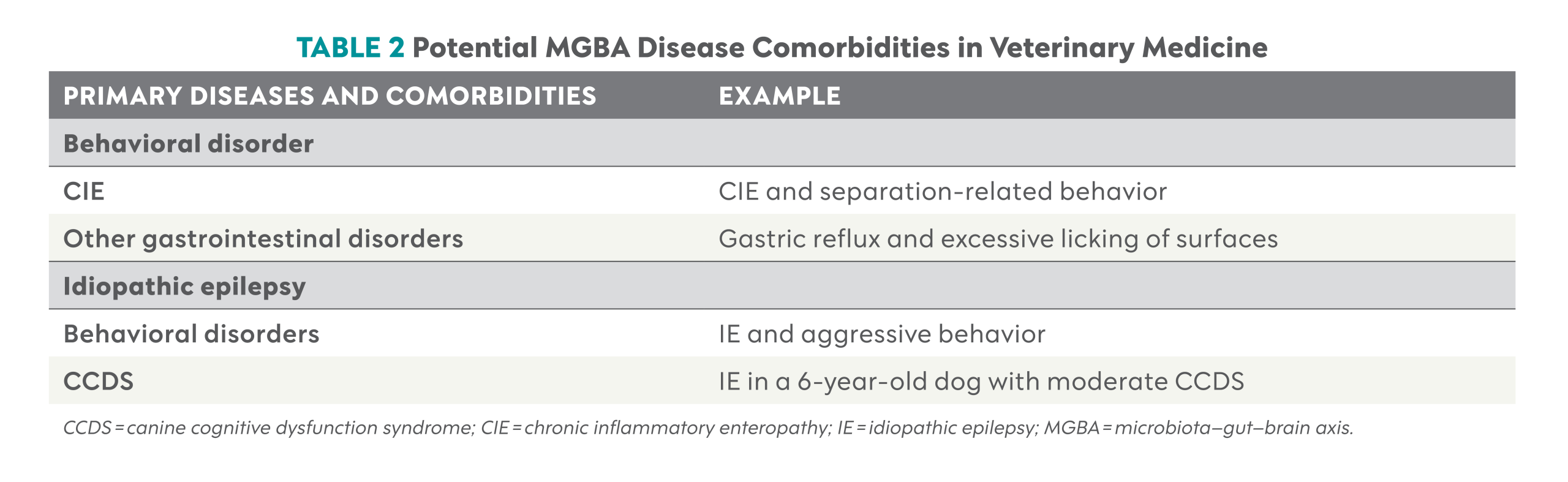
Veterinary patients with MGBA disease may be presented to the general practitioner with a primary complaint describing a behavioral disorder (e.g., anxiety, noise phobia). Dogs with MGBA disease can also exhibit recurring or chronic gastrointestinal issues. Studies suggest that 20% to 30% of companion animal visits to veterinarians are for vomiting or diarrhea or both.33 To determine if these patients have MGBA-associated diseases, the general practitioner will need to obtain a thorough history to evaluate both mental and gastrointestinal health. For the patient with behavioral concerns, questions about gastrointestinal health (e.g., appetite, stool quality) should be investigated. For the patient with common and/or uncommon gastrointestinal signs, the patient’s mental health should be assessed.34
In the author’s clinical experience, clients easily and frequently report changes in characteristics such as stools and appetite but often do not realize that their dog has underlying concurrent behavioral disorders. Due to the frequency of the comorbidities of gastrointestinal diseases and behavioral disorders, the author now investigates the mental health of all patients with recurring or chronic gastrointestinal signs. If the patient is found to have gastrointestinal signs and behavioral disorders, the diagnosis is MGBA-associated disease with both gut and brain dysfunction. It is strongly recommended that the MGBA disease diagnosis be discussed with the client, as these patients are often not cured; management involves addressing both the behavioral disorder and the gastrointestinal concerns.
Studies have revealed that dogs with IE often have concurrent behavioral disorders and/or early-onset CCDS.32,35-38 Belén et al defined such IE patients as having “neurobehavioral comorbidities” to emphasize the challenges of management.32 IE may initially be seen as an emergency situation, but the general practitioner should be aware of and carefully evaluate these patients for behavioral and/or CCDS comorbidities as part of their management. CCDS, a translational model for human Alzheimer disease, is diagnosed by exclusion, as advancing age is associated with changes in all body systems and many disease states can contribute to the behavioral changes indicated by the DISHAA tool (a canine cognitive dysfunction syndrome rating scale, with categories of Disorientation; social Interactions; Sleep–wake cycles; House soiling, learning, and memory; Activity; and Anxiety).39 Saral et al evaluated a small group of senior dogs in an exploratory study by using physiologic indicators and microbiota profiling integrated with pain evaluation and cognitive testing.40 Preliminary findings highlighted potential interactions between pain, microbiota composition, and immune dysregulation.40
Proper diagnosis and management of patients with MGBA diseases with comorbidities can be challenging. General practitioners may want to consider consulting with or referral to veterinary specialists (e.g., internists, nutritionists, neurologists) applicable for patients with more advanced MGBA diseases.
Behavioral Disorders and Gastrointestinal Diseases
According to a recent consensus, chronic inflammatory enteropathy (CIE) describes a group of gastrointestinal disorders with persistent or recurrent gastrointestinal signs and variable mucosal inflammation.33 The consensus states that the pathogenesis in dogs is complex and can be driven by genetics, immunology, environmental factors, and gastrointestinal luminal components.33 The consensus does not clearly acknowledge the MGBA except for mention of “behavioral biomarkers” (e.g., detection of discomfort based on behavioral cues) as being a potential predictor for relapse.33
It has been this author’s clinical experience that many patients with CIE have concurrent behavioral disorders. In a cross-sectional, case-control, questionnaire-based study, Ludvigsson et al evaluated 50 dogs with CIE and 50 matched healthy dogs.41 The researchers’ clinical impression was that dogs with CIE, both treatment naïve and receiving treatment, can experience emotional compromise. By assessing gastrointestinal disease activity scoring and emotional health, the researchers found that mean negative activation score was higher among dogs with CIE than among healthy dogs, which indicated a more negative emotional predisposition. The dogs with CIE reportedly more often performed displacement behaviors corresponding with “sometimes” to “often,” indicative of higher emotional arousal compared with healthy dogs. The owners of dogs with CIE more often reported agreement with scores ≥ 3 on statements regarding signs of distress when they prepared to leave their dog alone. All of these findings were considered indicative of a relationship between CIE and compromised emotional health. It is also noteworthy that the CIE dogs in the study had low gastrointestinal disease activity scores yet still demonstrated compromised emotional health.41 The results clearly support the researchers’ and this author’s clinical impression that there is a strong relationship between CIE and signs consistent with compromised emotional health (e.g., behavioral disorders).
Another retrospective study looking at the relationship between behavior and gastrointestinal disease evaluated 24 client-owned dogs at a behavioral medicine service and referred to an internal medicine service for management of chronic gastrointestinal signs.42 Nineteen dogs received multimodal behavioral (e.g., environmental management, behavior medications, training techniques, behavior modification, safety equipment) and gastrointestinal (e.g., diet modification, fiber supplementation, probiotics, fecal transplantation) treatments. Clinical improvement in both areas after comanagement for behaviors and chronic gastrointestinal signs was noted for 76% (13/17).42
The MGBA and Uncommon Behavioral Signs of Gastrointestinal Disease
Behavioral signs of gastrointestinal disease, which are not as obvious, include abnormal appetite (e.g., pica), foreign body ingestion, and excessive licking.34 Pica has been described as a nonspecific sign of potential nutrient deficiencies and neurologic conditions; however, a recent retrospective study suggested that pica may be a clinical sign of chronic gastroenteritis.43 Another study of dogs requiring surgical foreign body removal reported that the dogs had concurrent behavioral disorders, including anxiety, fear, or impulsive behavioral disorders.44
Excessive licking includes air licking, obsessive repetitive surface licking, and excessive grooming. Frank et al evaluated 7 dogs for “fly biting” (a behavior previously categorized as hallucinatory, locomotory, or oral/obsessive compulsive) and found that most of the dogs had underlying gastrointestinal disease.45 Similarly, “star gazing” by a Yorkshire terrier was linked to reflux and esophagitis; signs resolved after appropriate gastrointestinal treatment.46 In another study of excessive surface licking, it was noted that 14 out of 19 dogs had gastrointestinal abnormalities, leading the authors to recommend considering gastrointestinal disorders in the differential diagnosis of dogs that exhibit excessive licking of surfaces.47
An array of behavioral disorders can arise, increase, or be exacerbated by chronic gastrointestinal pain. The behavioral comorbidities associated with chronic gastrointestinal pain may include self-protective aggression, noise sensitivities, stress displacement, inhibition of learning and performance, anxiety, stress-displacement behaviors (e.g., destruction, urine marking, abnormal repetitive behaviors), resource guarding, and/or separation-associated distress.34
Functional gastrointestinal disorders comprise a complex condition in human gastroenterology characterized by abdominal discomfort; epigastric pain; postprandial fullness; or early satiety in the absence of organic, metabolic, or systemic causes. Kaufmann et al retrospectively evaluated 29 dogs with dyspepsia that they classified as a functional gastrointestinal disorder.48 They reported that functional dyspepsia is an emerging functional gastrointestinal disorder characterized by chronic gastrointestinal discomfort and vomiting in the absence of confirmed organic disease seen especially in toy- and small-breed, middle-aged, female dogs. They suggested that functional dyspepsia could potentially be an MGBA disturbance requiring multimodal therapy.
Another functional gastrointestinal disorder is irritable bowel syndrome (IBS), a well-known gastrointestinal concern for humans, associated with chronic signs but no associated structural or biochemical disorder. It has been reported that human patients with IBS experience high rates of anxiety and depression. In veterinary patients, IBS, defined as recurrent gastrointestinal signs (e.g., vomiting, diarrhea, constipation) with abdominal bloating and visceral pain with no histologic inflammation, has been reported and may be another MGBA disease; however, no studies have evaluated IBS patients for behavioral disorders.34
This author’s clinical experience has been that when a client describes unusual or suspect behavior(s) of gastrointestinal or gastrointestinal-like signs, it is useful to have them document those events on video for the general practitioner to review. Clients’ verbal descriptions of the events may not be enough for the practitioner to determine if the behaviors are truly normal or are abnormal and associated with gastrointestinal disease. It is also useful to know if those events tend to be associated with stress or potential changes in routines, thereby suggesting a potential MGBA-associated disease.
MGBA-Associated Diseases and Potential Therapeutics
In veterinary medicine, behavioral disorders are treated with protocols that use conditioning techniques to create new emotional and behavioral patterns integrated with environmental management. Psychoactive medications may be used to adjust the chemical mediators of fear-related states. For patients with IE, anticonvulsants are often prescribed. For patients with CCDS, selegiline, also known as l-deprenyl, is currently the only FDA-approved drug for treatment. Behavior modification and drugs are usually considered as therapies for the brain, although drugs may either directly or indirectly affect the gut microbiota.
Numerous reviews and systematic analyses of rodents and human mental health research have evaluated the effects of prebiotics, probiotics, synbiotics, and postbiotics as dietary supplements and fecal microbiota transplantation (FMT).4-6 Dietary supplements and FMT would be considered gut and microbiota treatments. Studies of rodents and humans have shown some positive results in terms of improving behavioral and neurologic disorders after microbiota modulation using dietary supplements and FMT.4-6 The Sacoor et al review of the few relevant studies of canine anxiety concluded that use of these dietary supplements was promising; however, more research is needed.49
Four studies have evaluated FMT and the MGBA in dogs.50-53 Two studies evaluating the use of FMT in dogs with CIE reported that owners noticed increased activity and perceived improved quality of life (i.e., playfulness, social interactions, enjoying longer walks).50,51 Stated reasons for the increases included “alterations in gut-brain axis”; however, placebo effect or decreases in corticosteroids and inflammation could not be ruled out.50,51 Noting that intestinal microbes directly and indirectly synthesize neurotransmitters including γ-aminobutyric acid, noradrenaline, dopamine, and serotonin, the authors stated that further investigation of their study population would include metagenomic sequencing and metabolomic analysis before and after FMT.50 A study of 9 dogs with drug-resistant IE and comorbid attention-deficit/hyperactivity disorder–like, anxiety-like, and fear behaviors underwent 3 colonic FMTs administered 2 weeks apart.52 Overall, improved behavior and quality of life was reported for all dogs and a 50% reduction in seizure cluster days for 4 dogs. Another study compared the effects of saline with oral FMT over 14 days in 20 wolf cyan police dogs.53 The dogs were subjected to 1 hour of road transportation and evaluated for serum stress indicators.53 FMT appeared to reduce the diarrhea rate and stress indicators.53 Other dietary supplements containing nutrients and/or botanicals are marketed as targeting behavioral disorders, but for many, research is limited or nonexistent.54,55
MGBA-Associated Disease Management
For patients with CIE, this author always asks the client about the patient’s mental health, having learned that when a patient has both CIE and mental health issues, the best approach is to manage both conditions simultaneously. If the behavioral component is severe, the client is strongly encouraged to work with a veterinary behaviorist for appropriate medical and behavioral modifications. For milder cases, the client is directed to other sources for behavior treatments and plans. In the author’s clinical experience, such patients are not “cured,” but targeted MGBA management (i.e., concurrent treatment of both the CIE and behavior) can reduce frequency and intensity of CIE episodes and/or behavioral issues. The best outcomes tend to be for younger patients that have dedicated owners and that receive earlier interventions involving nutrition, appropriate behavior modifications, and medications.
The management approach used by the author is like that of a food allergy trial, in which the patient is allowed only the selected diet and specific treats, eliminating any other food sources such as treats, chews, supplements (unless prescribed), flavored medications, and preventives. The strict food allergy concept reinforces client education about the role of the MGBA and allows for evaluation of the selected diet and specific treats affecting the patient’s microbiota. Although trial and error in diet selection may be needed, the client is told that strict adherence to the nutrition plan often decreases the number of diet trials and reduces the time needed to obtain positive results.
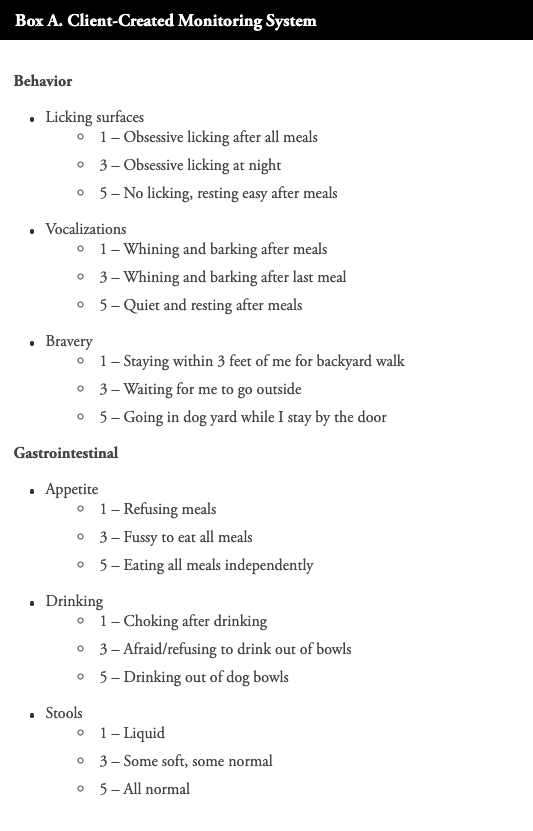
Clients are asked to record the patient’s gastrointestinal signs (e.g., fecal score, gastrointestinal events, appetite, body weight, body condition score, muscle condition score) as well as the prominent signs of the patient’s behavioral disorder (CASE EXAMPLE). Creating simple daily scoring systems for both gastrointestinal signs and behavior that can be recorded, tabulated, and trended will enable the general practitioner to determine the effectiveness of concurrent treatments.
During management (and preferably lifelong), only 1 change at a time is recommended. For example, if a change in drug therapy is needed, no changes are made to the nutrition plan until sufficient time has passed to assess the response to the new medications. Similarly, if a diet change is needed, it is implemented without altering medications so that the effects of the new diet on the patient’s CIE and behavioral signs can be accurately assessed. Clients should also be provided with “rescue” medications and nutritional adjustments for inevitable setbacks, such as episodes of loose stools or excessive behavioral responses.
Over time, maintaining logs of numerically assessed gastrointestinal and behavioral signs may help clients anticipate issues, enabling them to avoid triggering events or make preemptive changes to medications, nutrition, or behavior plans. The log will guide the general practitioner and client in managing the patient for improved health and quality of life.
Bliss was a 3-year-old intact male miniature poodle referred for a telemedicine nutrition consultation for recurrent bouts of inappetence and weight loss. His body weight at presentation was 6.27 kg (13.8 lb) and his body condition score (BCS) was 3/9. An internist diagnosed lymphoplasmacytic chronic inflammatory enteropathy, and a behaviorist was treating generalized anxiety disorder and noise phobias.
The client described the gastrointestinal events as starting with refusing food and water and repeated burping. Bliss would eventually experience bilious vomiting and/or loose stool with blood and mucus. A severe flare resulted in total anorexia, reluctance to drink from a bowl, liquid diarrhea, and weight loss.
Client Concerns and Treatment Goals
The client was feeding Bliss multiple times a day, either an unbalanced homemade diet or a canned veterinary therapeutic gastrointestinal low-fat diet with multiple supplements; results were poor. The client reported that the multiple feedings were not sustainable and that in the next couple of years she and her family were moving to France. Treatment goals were to develop a nutrition and behavior treatment plan that would eliminate or at least minimize gastrointestinal events and improve behavioral disorders. Treatment Protocol The behaviorist’s current treatment plan included daily medications (buspirone 7.5 mg q12h and gabapentin 25 mg q12h), rescue medications (alprazolam 1 mg [1/4 tablet 2 hours before stressful events], 50 mg of gabapentin before going for grooming, and dexmedetomidine oromucosal gel [Sileo, Zoetis] 30 minutes before thunderstorms), and desensitization programs.
The nutritionist discussed with the client and shared with the behaviorist a nutrition plan to include the following:
- Information about diet trials to find a diet, feeding schedule, and rescue programs that are sustainable and minimize gastrointestinal events to stabilize appetite, water intake, body weight, BCS, and muscle condition score
- The client was instructed that, because Bliss had historically lost weight with the recurrent gastrointestinal events, maintaining a BCS of 6/9 would be acceptable and preferred.
- High-value treats for desensitization programs
- Supplements, particularly Visbiome Vet (ExeGi Pharma), 1 capsule q24h
- Client education about the role of the microbiota–gut–brain axis and value of using a food allergy approach to minimize number of diet trials
- Value of implementing only 1 change at a time with nutrition plan and behavior medications
- Daily monitoring of gastrointestinal and behavioral events
- The client was encouraged to create her own monitoring system with numerical scoring of both gastrointestinal and behavior events that would reflect her observations and work with her schedule (Box A). The monitoring system would be shared with the referring general practitioner, nutritionist, and behaviorist.
Monitoring and Outcome
The nutritionist provided a homemade recipe for the first trial diet. On 11/3/21, Bliss was fully transitioned onto the homemade diet and the client reported that Bliss had improved with a better appetite and weight gain. However, during the next 2 weeks it was clear from the monitoring scores that his gastrointestinal and behavioral parameters were deteriorating and he was once again losing weight (FIGURE A).

Figure A. Decreasing gastrointestinal and behavior scores of patient after being fed a homemade diet.*
The nutritionist then transitioned Bliss to a hydrolyzed dry diet, which, over months, stabilized his gastrointestinal and behavior scores. Over time, it became evident Bliss’s behavior scores often declined before a gastrointestinal episode. That information was used to perfect behavior and gastrointestinal rescue plans that the client could institute when she noted a decline in behavior scores. The client also learned to avoid or modify certain situations that affected Bliss’s emotional stability. For example, the client noted a sudden deterioration in both behavior and gastrointestinal scores on and after Bliss’s grooming day on 2/5/22 (FIGURE B). Bliss had been given his prescribed behavior modification medications for the appointment, but his usual groomer was not available. The client felt Bliss was reasonably stable, so she agreed to leave him for his appointment with the different groomer. Despite instituting rescue therapies, Bliss’s behavior and gastrointestinal scores deteriorated for approximately the next 6 days until he restabilized. From this recorded event, the client always made sure Bliss’s usual groomer was there for his scheduled appointments.

Figure B. Gastrointestinal and behavior scores of patient being fed a hydrolyzed dry diet. The decrease in scores resulted from a stressful grooming event (gray).*
After 3 years of monitoring and consulting with this veterinary team, Bliss and his family moved to France. At the time of this publication, Bliss is still being fed his hydrolyzed diet, receiving behavior medications, and has a good quality of life, according to the client.
*Line positions have been adjusted slightly to improve visual clarity. These adjustments do not alter the underlying data, trends, or interpretation of the results.
Summary
Studies indicate that behavioral disorders, IE, and CCDS in dogs should be considered as diseases associated with abnormalities in the MGBA. MGBA diseases are often associated with comorbidities that make diagnosis difficult, management lifelong, and prognosis poor. Understanding MGBA diseases helps practitioners improve outcomes and educate clients. Client compliance and involvement are paramount to improving quality of life for patients with MGBA diseases. Further research involving MGBA diseases is needed to increase awareness and understanding and develop reliable and successful medical and dietary approaches for patients with these diseases.
References
- Loh JS, Mak WQ, Tan LKS, et al. Microbiota-gut-brain axis and its therapeutic applications in neurodegenerative diseases. Signal Transduct Target Ther. 2024;9(1):37. doi:10.1038/s41392-024-01743-1
- Park JC, Chang L, Kwon HK, Im SH. Beyond the gut: decoding the gut-immune-brain axis in health and disease. Cell Mol Immunol. 2025;22(11):1287-1312. doi:10.1038/s41423-025-01333-3
- Jang SH, Woo YS, Lee SY, Bahk WM. The brain-gut-microbiome axis in psychiatry. Int J Mol Sci. 2020;21(19):7122. doi:10.3390/ijms21197122
- Faysal M, Zehravi M, Sutradhar B, et al. The microbiota-gut-brain connection: a new horizon in neurological and neuropsychiatric disorders. CNS Neurosci Ther. 2025;31(9):e70593. doi:10.1111/cns.70593
- Yassin LK, Skrabulyte-Barbulescu J, Alshamsi SH, et al. The microbiota-gut-brain axis in mental and neurodegenerative disorders: opportunities for prevention and intervention. Front Aging Neurosci. 2025;17:1667448. doi:10.3389/fnagi.2025.1667448
- Mohiuddin M, Asghar T, Hameed H, et al. The psychobiotic revolution: comprehending the optimistic role of gut microbiota on gut-brain axis during neurological and gastrointestinal disorders. World J Microbiol Biotechnol. 2025;41(10):401. doi:10.1007/s11274-025-04632-z
- Del Treste A, Sacchettino L, Costanza D, et al. Intestinal dysbiosis relating to gut-brain axis and behavior in dogs: a systematic review with text mining approach. Animals (Basel). 2026;16(6):986. doi:10.3390/ani16060986
- Oba PM, Roberts LJ, Geary EL, Suchodolski JS, Swanson KS. Effects of diet type on the core fecal bacterial taxa and the dysbiosis index of healthy adult dogs. Front Vet Sci. 2025;12:1572875. doi:10.3389/fvets.2025.1572875
- Porcari S, Mullish BH, Asnicar F, et al. International consensus statement on microbiome testing in clinical practice. Lancet Gastroenterol Hepatol. 2025;10(2):154-167. doi:10.1016/S2468-1253(24)00311-X
- Homer B, Judd J, Mohammadi Dehcheshmeh M, Ebrahimie E, Trott DJ. Gut microbiota and behavioural issues in production, performance, and companion animals: a systematic review. Animals (Basel). 2023;13(9):1458. doi:10.3390/ani13091458
- Fernández-Pinteño A, Pilla R, Suchodolski J, et al. Age-related changes in gut health and behavioral biomarkers in a beagle dog population. Animals (Basel). 2025;15(2):234. doi:10.3390/ani15020234
- Pellowe SD, Zhang A, Bignell DRD, Peña-Castillo L, Walsh CJ. Gut microbiota composition is related to anxiety and aggression scores in companion dogs. Sci Rep. 2025;15(1):24336. doi:10.1038/s41598-025-06178-4
- Salamon A, Szabó A, Felföldi T, et al. Human-like associations between gut microbiome composition and inattention, hyperactivity, and impulsivity in dogs. BMC Biol. 2025;23(1):352. doi:10.1186/s12915-025-02410-9
- Ma X, Lazarowski L, Zhang Y, et al. Associations between memory performance and Bifidobacterium pseudolongum abundance in the canine gut microbiome. iScience. 2024;27(5):109611. doi:10.1016/j.isci.2024.109611
- Kubinyi E, Bel Rhali S, Sándor S, Szabó A, Felföldi T. Gut microbiome composition is associated with age and memory performance in pet dogs. Animals (Basel). 2020;10(9):1488. doi:10.3390/ani10091488
- Verdoodt F, Hesta M, Goossens E, et al. The fecal metabolome and microbiome are altered in dogs with idiopathic epilepsy compared to healthy dogs. Sci Rep. 2025;15(1):27024. doi:10.1038/s41598-025-09919-7
- Silvestrino M, Pirolo M, Bianco A, et al. Idiopathic epilepsy in dogs is associated with dysbiotic faecal microbiota. Anim Microbiome. 2025;7(1):31. doi:10.1186/s42523-025-00397-w
- Muñana KR, Jacob ME, Callahan BJ. Evaluation of fecal Lactobacillus populations in dogs with idiopathic epilepsy: a pilot study. Anim Microbiome. 2020;2(1):19. doi:10.1186/s42523-020-00036-6
- García-Belenguer S, Grasa L, Valero O, Palacio J, Luño I, Rosado B. Gut microbiota in canine idiopathic epilepsy: effects of disease and treatment. Animals (Basel). 2021;11(11):3121. doi:10.3390/ani11113121
- Fredsø N, Koch BC, Toft N, Berendt M. Risk factors for survival in a university hospital population of dogs with epilepsy. J Vet Intern Med. 2014;28(6):1782-1788. doi:10.1111/jvim.12443
- Packer RMA, Shihab NK, Torres BBJ, Volk HA. Clinical risk factors associated with anti-epileptic drug responsiveness in canine epilepsy. PLoS One. 2014;9(8):e106026. doi:10.1371/journal.pone.0106026
- Gesell FK, Hoppe S, Löscher W, Tipold A. Antiepileptic drug withdrawal in dogs with epilepsy. Front Vet Sci. 2015;2:23. doi:10.3389/fvets.2015.00023
- Wessmann A, Volk HA, Parkin T, Ortega M, Anderson TJ. Evaluation of quality of life in dogs with idiopathic epilepsy. J Vet Intern Med. 2014;28(2):510-514. doi:10.1111/jvim.12328
- Cagnotti G, Ferrini S, Ala U, et al. Analysis of early assessable risk factors for poor outcome in dogs with cluster seizures and status epilepticus. Front Vet Sci. 2020;7:575551. doi:10.3389/fvets.2020.575551
- North MN, Gruen ME. Considerations for behavioral euthanasia. Todays Vet Pract. 2025;15(6):52-61.
- Hitchcock M, Workman MK, Guthrie AP, Ruple A, Feuerbacher EN. Factors associated with behavioral euthanasia in pet dogs. Front Vet Sci. 2024;11:1387076. doi:10.3389/fvets.2024.1387076
- Powdrill-Wells N, Taylor S, Melfi V. Reducing dog relinquishment to rescue centres due to behaviour problems: identifying cases to target with an advice intervention at the point of relinquishment request. Animals (Basel). 2021;11(10):2766. doi:10.3390/ani11102766
- Powell L, Stefanovski D, Siracusa C, Serpell J. Owner personality, owner-dog attachment, and canine demographics influence treatment outcomes in canine behavioral medicine cases. Front Vet Sci. 2021;7:630931. doi:10.3389/fvets.2020.630931
- Fast R, Schütt T, Toft N, Møller A, Berendt M. An observational study with long-term follow-up of canine cognitive dysfunction: clinical characteristics, survival, and risk factors. J Vet Intern Med. 2013;27(4):822-829. doi:10.1111/jvim.12109
- Schütt T, Toft N, Berendt M. Cognitive function, progression of age-related behavioral changes, biomarkers, and survival in dogs more than 8 years old. J Vet Intern Med. 2015;29(6):1569-1577. doi:10.1111/jvim.13633
- What to know about cognitive decline in older dogs. University of Illinois College of Veterinary Medicine. March 2, 2026. Accessed April 5, 2026. https://vetmed.illinois.edu/pet-health-columns/canine-cognitive-dysfunction
- Belén R, Jorge P, Carolina M, Sylvia GB. Neurobehavioral comorbidities in canine idiopathic epilepsy: new insights into cognitive and emotional domains. Animals (Basel). 2025;15(11):1592. doi:10.3390/ani15111592
- Heilmann RM, Jergens AE, Kathrani A, et al. ACVIM-endorsed statement: consensus statement and systematic review on guidelines for the diagnosis and treatment of chronic inflammatory enteropathy in dogs. J Vet Intern Med. 2026;40(1):aalaf017. doi:10.1093/jvimsj/aalaf017
- Albright JD, Haug LI. Bidirectional communication: the gut-brain axis in companion animal health. Vet Clin North Am Small Anim Pract. 2026;56(3):649-663. doi:10.1016/j.cvsm.2026.01.008
- Shihab N, Bowen J, Volk HA. Behavioral changes in dogs associated with the development of idiopathic epilepsy. Epilepsy Behav. 2011;21(2):160-167. doi:10.1016/j.yebeh.2011.03.018
- Packer RMA, McGreevy PD, Salvin HE, Valenzuela MJ, Chaplin CM, Volk HA. Cognitive dysfunction in naturally occurring canine idiopathic epilepsy. PLoS One. 2018;13(2):e0192182. doi:10.1371/journal.pone.0192182
- Watson F, Packer RMA, Rusbridge C, Volk HA. Behavioural changes in dogs with idiopathic epilepsy. Vet Rec. 2020;186(3):93. doi:10.1136/vr.105222
- Levitin H, Hague DW, Ballantyne KC, Selmic LE. Behavioral changes in dogs with idiopathic epilepsy compared to other medical populations. Front Vet Sci. 2019;6:396. doi:10.3389/fvets.2019.00396
- Olby NJ, Araujo JA, Gruen ME, et al. The Canine Cognitive Dysfunction Syndrome Working Group guidelines for diagnosis and monitoring of canine cognitive dysfunction syndrome. JAVMA. 2025;264(4):498-505. doi:10.2460/javma.25.10.0668
- Saral B, Atilgan D, Adiay D, et al. An exploratory study of behavioral, cognitive, physiological, and microbiota profiles in senior dogs. Front Behav Neurosci. 2026;20:1689807. doi:10.3389/fnbeh.2026.1689807
- Ludvigsson U, Heath S, Tooley C, et al. Dogs with chronic enteropathy and low disease activity show signs consistent with compromised emotional health compared to matched healthy control dogs. JAVMA. 2026;264(7):857-866. doi:10.2460/javma.25.09.0623
- Jennings R, Lilly ML, Bohland K, Rudinsky A, Winston J. Concurrent management of behavioral and gastrointestinal disorders in dogs with early-life trauma improves clinical outcomes. J Vet Intern Med. 2025;39(6):jvim70255. https://doi.org/10.1111/jvim.70258
- Perez J, Ford S, Lynch H. Pica as a clinical sign of a chronic enteropathy in dogs and cats. JAVMA. 2025;263(8):1027-1032. doi:10.2460/javma.25.02.0079
- Masson S, Guitaut N, Medam T, Béata C. Link between foreign body ingestion and behavioral disorder in dogs. J Vet Behav. 2021;45:25-32. https://doi.org/10.1016/j.jveb.2021.04.001
- Frank D, Bélanger MC, Bécuwe-Bonnet V, Parent J. Prospective medical evaluation of 7 dogs presented with fly biting. Can Vet J. 2012;53(12):1279-1284.
- Poirier-Guay MP, Bélanger MC, Frank D. Star gazing in a dog: atypical manifestation of upper gastrointestinal disease. Can Vet J. 2014;55(11):1079-1086.
- Bécuwe-Bonnet V, Bélanger MC, Frank D, Parent J, Hélie P. Gastrointestinal disorders in dogs with excessive licking of surfaces. J Vet Behav. 2012;7(4):194-204. https://doi.org/10.1016/j.jveb.2011.07.003
- Kaufmann H, Duboc H, Freiche V. Functional dyspepsia: from human to dog, a retrospective study of 29 cases illustrating a complex entity. BMC Vet Res. 2025;21(1):600. doi:10.1186/s12917-025-05038-7
- Sacoor C, Marugg JD, Lima NR, Empadinhas N, Montezinho L. Gut-brain axis impact on canine anxiety disorders: new challenges for behavioral veterinary medicine. Vet Med Int. 2024;2024:2856759. doi:10.1155/2024/2856759
- Toresson L, Ludvigsson U, Olmedal G, et al. Repeated fecal microbiota transplantation in dogs with chronic enteropathy can decrease disease activity and corticosteroid usage. JAVMA. 2025;264(5):571-580. doi:10.2460/javma.25.08.0563
- Toresson L, Spillmann T, Pilla R, et al. Clinical effects of faecal microbiota transplantation as adjunctive therapy in dogs with chronic enteropathies-a retrospective case series of 41 dogs. Vet Sci. 2023;10(4):271. doi:10.3390/vetsci10040271
- Watanangura A, Meller S, Farhat N, et al. Behavioral comorbidities treatment by fecal microbiota transplantation in canine epilepsy: a pilot study of a novel therapeutic approach. Front Vet Sci. 2024;11:1385469. doi:10.3389/fvets.2024.1385469
- Lin QY, Du JJ, Xu H, et al. Effects of fecal microbial transplantation on police performance and transportation stress in Kunming police dogs. Appl Microbiol Biotechnol. 2024;108(1):46. doi:10.1007/s00253-023-12935-0
- Tynes VV, Landsberg GM. Nutritional management of behavior and brain disorders in dogs and cats. Vet Clin North Am Small Anim Pract. 2021;51(3):711-727. doi:10.1016/j.cvsm.2021.01.011
- Nicotra M, Iannitti T, Di Cerbo A. Nutraceuticals, social interaction, and psychophysiological influence on pet health and well-being: focus on dogs and cats. Vet Sci. 2025;12(10):964. doi:10.3390/vetsci12100964
- Yang B, Zhong S, Wang J, Yu W. Dietary modulation of the gut microbiota in dogs and cats and its role in disease management. Microorganisms. 2025;13(12):2669. doi:10.3390/microorganisms13122669
- Tuigunov D, Sinyavskiy Y, Nurgozhin T, et al. Precision nutrition and gut-brain axis modulation in the prevention of neurodegenerative diseases. Nutrients. 2025;17(19):3068. doi:10.3390/nu17193068
- Blanquet L, Serra D, Marrinhas C, Almeida A. Exploring gut microbiota-targeted therapies for canine idiopathic epilepsy. Int J Mol Sci. 2025;26(4):1742. doi:10.3390/ijms26041742
- Blanchard T, Eppe J, Mugnier A, Delfour F, Meynadier A. Enhancing cognitive functions in aged dogs and cats: a systematic review of enriched diets and nutraceuticals. Geroscience. 2025;47(3):2925-2947. doi:10.1007/s11357-025-01521-z
CE Quiz
This article has been submitted for RACE approval for 1 hour of continuing education credit and will be opened for enrollment upon approval. To receive credit, take the test at vetfolio.com. Free registration is required. Questions and answers online may differ from those below. Tests are valid for 2 years from the date of approval.
1. Which of the following has been associated with microbiota–gut–brain axis (MGBA) dysfunction?
a. Dysbiosis
b. Parvovirus infection
c. Intervertebral disk disease
d. Dental disease
2. Which statement best describes the current diet recommendations for a dog with MGBA disease?
a. Homemade raw diets improve gut dysbiosis.
b. Canned diets are often more palatable.
c. Veterinary therapeutic diets with functional ingredients to support gastrointestinal and brain health should be recommended.
d. Over-the-counter high-fat diets have been shown to benefit dogs with idiopathic epilepsy (IE).
3. Which of the following would not be considered a direct gut and microbiota treatment?
a. Prebiotics
b. Alprazolam
c. Probiotics
d. Fecal microbiota transplantation
4. Which statement about comorbidities in dogs with behavioral disorders is most accurate?
a. Studies suggest that dogs with chronic atopy often have behavioral disorders.
b. Studies show that dogs with behavioral disorders are at high risk for canine cognitive disorder syndrome (CCDS).
c. Research has shown that dogs delivered via cesarean birth often have dysbiosis and behavioral disorders.
d. Chronic inflammatory enteropathy (CIE) and other gastrointestinal diseases can be a comorbidity in a dog with a behavioral disorder.
5. Which best describes comorbidities in dogs with IE?
a. Dogs with IE can have behavioral disorders, CCDS, or both.
b. Dogs with IE more often have CIE and dysbiosis.
c. Canine atopic disease is frequently seen concurrently with IE in dogs but not cats.
d. Only dogs with drug-resistant IE often have CIE.