


Oncology
Clinical Approaches to Common Ocular Tumors
In companion animals, intraocular tumors are relatively uncommon, but those that do occur can be primary, metastatic, or locally invasive.

Ophthalmology
Acute Glaucoma: A True Emergency
Clinical signs of canine glaucoma are traditionally divided into acute and chronic, but in most cases, most dogs present with an acute attack of glaucoma, including congestion, edema, fixed dilated pupils, and loss of sight.
Ophthalmology
Diagnosing Acute Blindness in Dogs
Acute vision loss in the dog is generally considered an emergency and warrants prompt evaluation by a veterinarian to confirm vision loss, localize the causative lesion, and institute therapy.
Ophthalmology
Feline Ocular Conditions
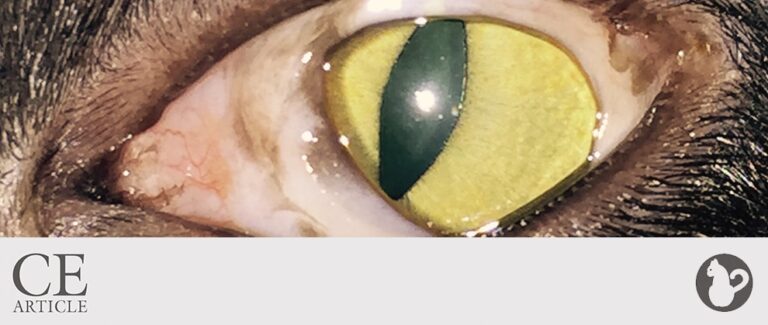
The following table outlines the prevalence of feline ocular diagnoses in cats presented to Banfield Pet Hospitals in 2014.
Ophthalmology
Runny Eyes: Feline Herpesvirus Infection
The authors describe the anatomy of the feline conjunctiva and cornea, pathogenesis of feline herpesvirus, and ocular manifestations of the disease, including specific diagnosis and therapy.
Neurology
The Practitioner’s Guide to Neurologic Causes of Canine Anisocoria
When evaluating patients with asymmetric pupils, the practitioner needs to determine whether one or both pupils are abnormal in size and localize the lesion responsible for anisocoria.

Ophthalmology
Clinical Approach to Canine Eyelid Disease: Blepharitis
Eyelid disease in dogs can present a challenge for the veterinarian. Biopsy and clinical description can help differentiate among infectious, immune-mediated, and neoplastic eyelid disease.
Ophthalmology
Answers to What, Where, Why, and When? Corneal Opacities in Dogs and Cats
Disorders of the cornea are common in veterinary practice. Here’s what to look for and how to maximize the chance for saving a patient’s vision.